The reality of 2026 is becoming impossible to ignore.
While the media focuses on temporary supply chain hiccups and fluctuating gas prices, a much deeper crisis is quietly unfolding in the agricultural sector.
The consolidation of seed production into the hands of a few global corporations has created a fragile system.
When shipping slows or production concentrates in fewer hands, availability narrows quickly.
Your three-month food supply is a great start. But it is not a permanent solution.
True food sovereignty doesn’t come from a bucket of freeze-dried meals.
It comes from the ability to produce your own food, year after year, without relying on external systems.
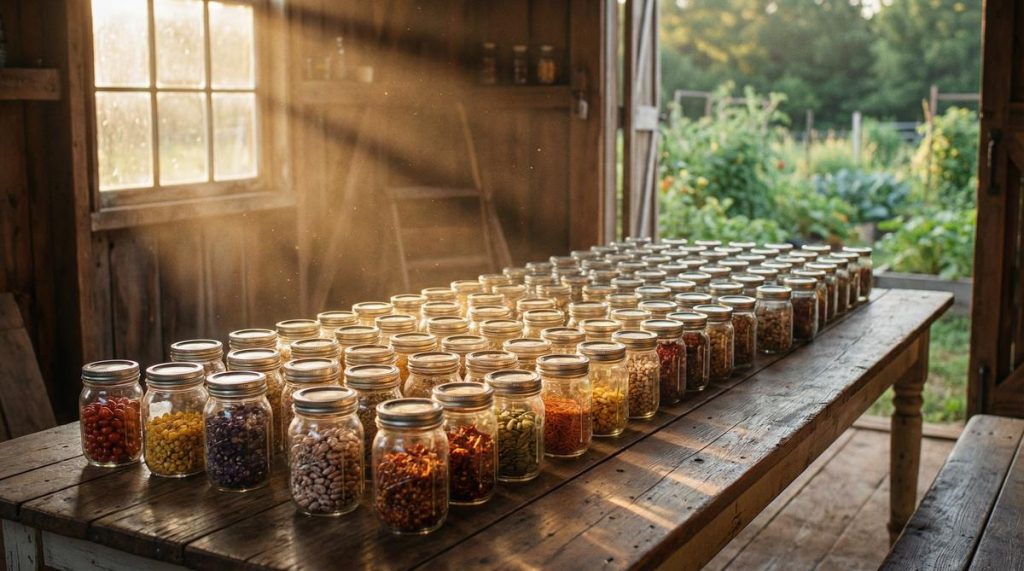
And that begins with one critical asset: Heirloom Seeds.
The Illusion of Modern Food Security
Food has never looked more advanced.
We’re promised lab-grown meat, vertical farms stacked in warehouses, and AI systems that decide what gets planted, where, and when.
On the surface, it feels like food security has been solved by technology.
But complexity doesn’t equal resilience.
Modern food systems are highly efficient—and highly centralized.
They rely on energy, data, global shipping, patented inputs, and uninterrupted coordination.
When those systems work, grocery shelves stay full.
When they don’t, households are left waiting for solutions they don’t control.
If the past few years taught anything, it’s that our supply chains are fragile and one disaster away from breaking.
Consider the sheer distance your food travels. The average meal in the United States travels over 1,500 miles from farm to plate. That journey requires diesel fuel, refrigerated trucks, functioning highways, and a complex web of logistics that can be severed by a single cyberattack, grid failure, or geopolitical conflict.
And we cannot rely on the government to make sure store shelves stay stocked.
When the system breaks, the illusion shatters. The “just-in-time” delivery model means most grocery stores only hold about three days’ worth of food. Once panic buying begins, those shelves are stripped bare in hours.
This is why a deep pantry is only the first step. True security requires the ability to produce calories independently of the grid.
Why Heirloom Seeds Are Your Ultimate Insurance Policy
Heirloom seeds, as their name suggests, have been passed down through generations using open pollination.
To be considered an heirloom variety, a plant typically must have been in cultivation for decades—often 40 years or more.
All heirloom seeds are open-pollinated, which means they reproduce naturally and grow true to type.
The seeds you save from this year’s harvest will produce the same plant next season.
That continuity is what makes heirloom seeds different.
Over years of cultivation, heirloom varieties adapt to the regions where they are grown.
Through repeated planting and seed saving, they often develop resilience to local pests, diseases, and growing conditions.
They weren’t engineered for laboratory performance or long-distance shipping.
They were selected because they survived.
The Problem with Hybrid and Patented Seeds
Heirloom seeds are not hybrids—crossbred for uniformity and single-season performance.
They are not genetically modified in a lab.
With many hybrid or patented seeds, the growing cycle ends at the checkout counter.
If you try to save seeds from a hybrid plant, the next generation will likely be sterile or produce a completely different, inferior crop. This is known as “hybrid vigor” loss, and it forces the grower back to the seed company every single spring.
The system is structured around buying again. It is a subscription model for your survival.
Furthermore, patented seeds often come with legal restrictions that make saving them a violation of intellectual property laws. You do not truly own the food you grow if you do not own the right to replant its seeds.
Heirloom seeds were developed for continuity, not contracts. They represent true ownership of your food supply.
The Economics of Seed Saving in 2026
Grocery costs rise during disruption—and rarely return to previous levels.
A seed that produces both food and future seed acts as a hedge against long-term inflation.
Consider the economics:
A single heirloom tomato plant can produce 10 to 15 pounds of fruit.
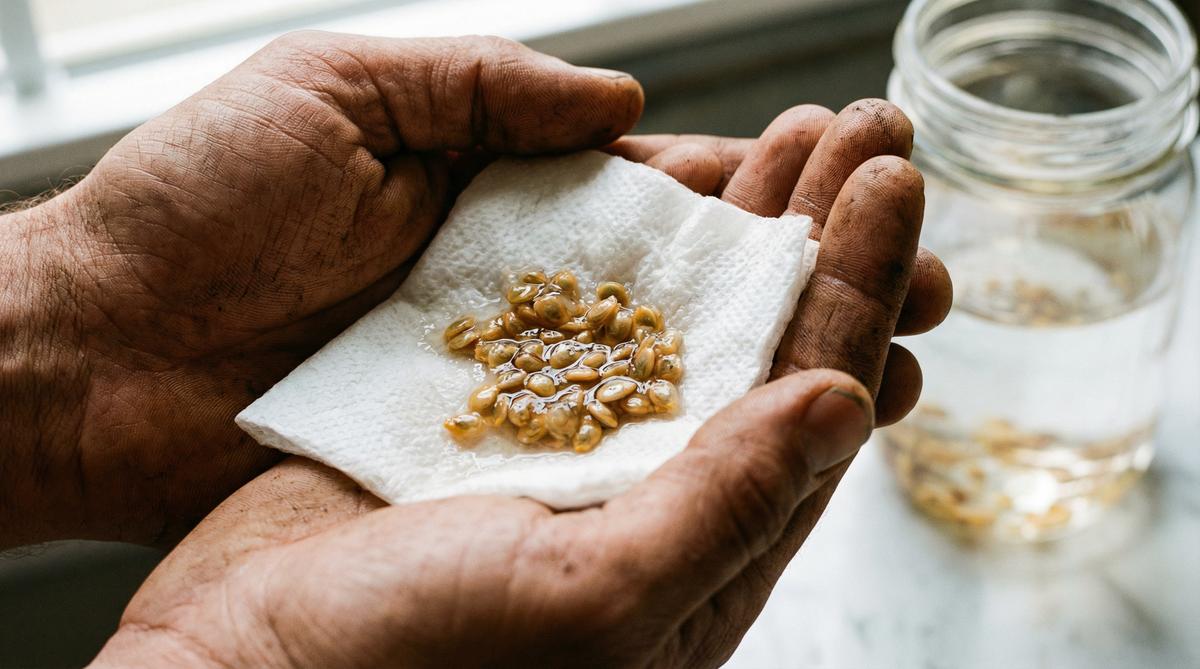
From that fruit, you can save hundreds of viable seeds.
Those seeds can be planted the following year, traded with neighbors, or stored for future use.
It is an exponential return on investment that no financial asset can match.
In a hyper-inflationary environment, or a scenario where digital currency systems fail, physical assets with intrinsic value become the new currency. Seeds are lightweight, easily concealable, and possess the ultimate intrinsic value: the ability to sustain human life.
During historical economic collapses, those who controlled the food supply controlled their own destiny. A robust seed bank is essentially a localized, inflation-proof savings account that pays dividends in calories rather than depreciating fiat currency.
How Long Do Seeds Actually Last?
A common misconception is that seeds must be planted immediately.
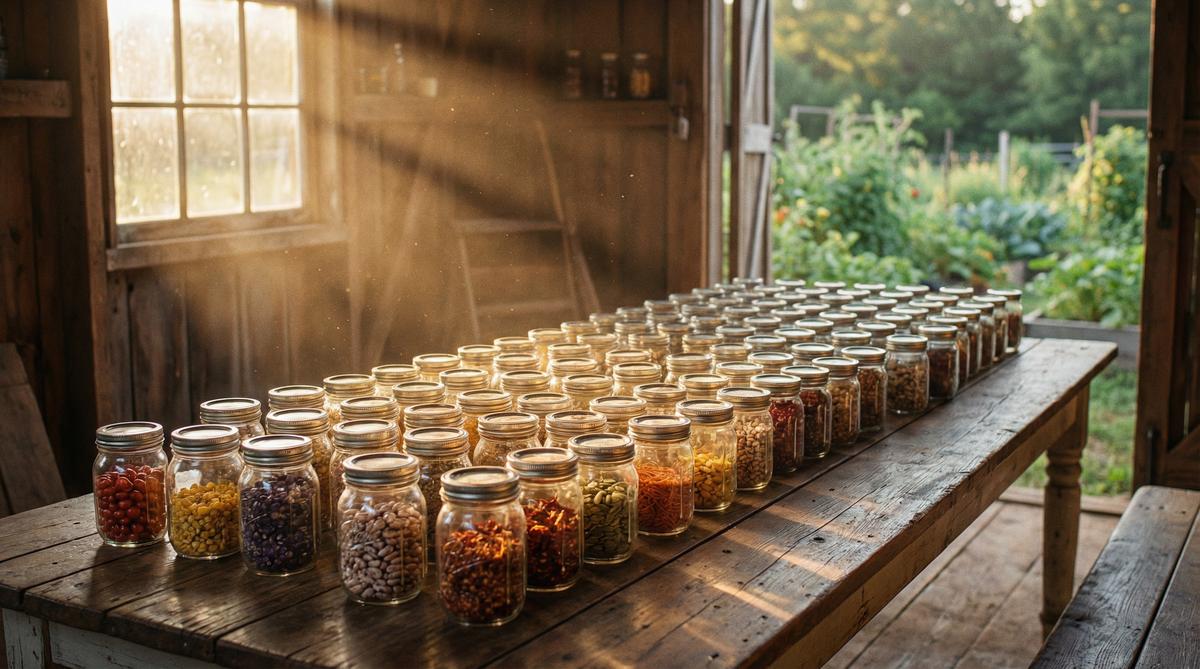
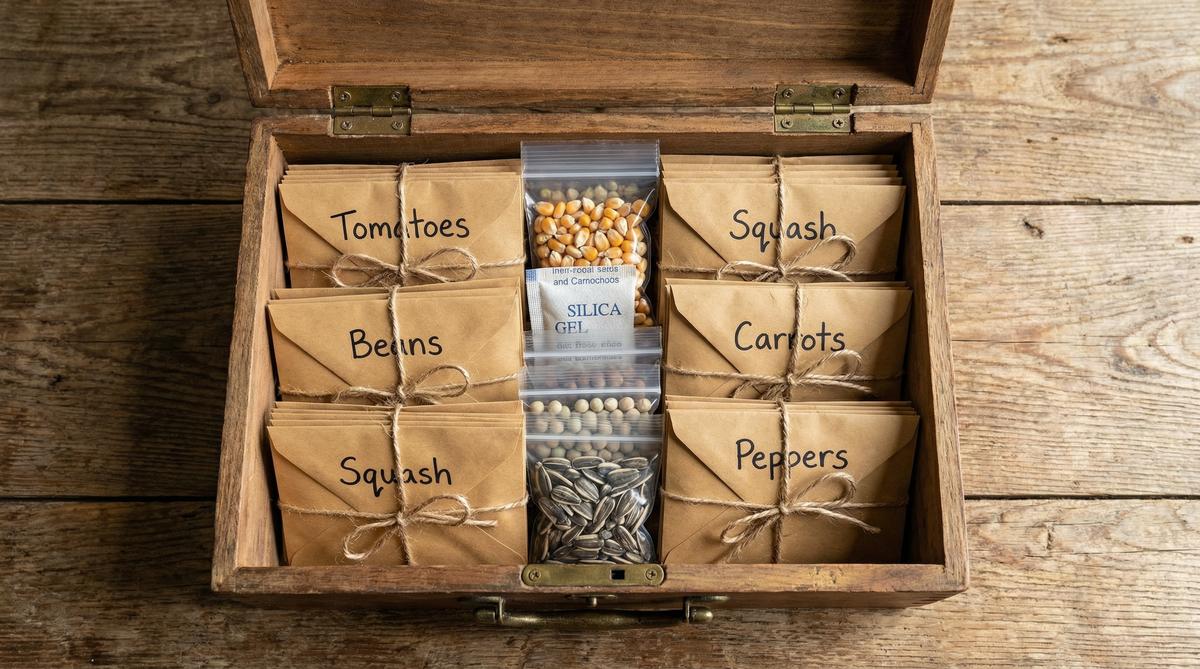
When stored correctly—in a cool, dark, and dry environment—many heirloom seeds remain viable for years.
Here is a quick reference guide for common seed longevity under proper storage conditions (below 50°F and less than 40% humidity):
| Seed Type | Average Longevity |
|---|---|
| Tomatoes | 4 years |
| Peppers | 2 years |
| Beans | 3 years |
| Carrots | 3 years |
| Lettuce | 5 years |
| Cucumbers | 5 years |
| Squash | 4 years |
| Radish | 5 years |
Data sourced from agricultural viability studies.
Proper storage is simple: keep them in their original packaging, place them in a sealed glass jar or Mylar bag, and store them in a cool basement or refrigerator.
Building Your Seed Bank: A Step-by-Step Guide
Owning heirloom seeds is only the first step.
Planting them, learning your soil, saving seed properly, and repeating the cycle year after year is what turns preparation into capability.
Here is how to start building true food sovereignty today:
Step 1: Secure Your Foundation
Start with a comprehensive heirloom seed vault.
Look for non-hybrid, 100% heirloom varieties that are packaged for long-term storage.
You want a mix of high-calorie staples (beans, corn, squash) and nutrient-dense vegetables (spinach, broccoli, carrots).
Step 2: Plant a Practice Garden
Do not wait for a crisis to plant your first seed.
Gardening requires skill, and your local soil and climate will present unique challenges.
Start small. Plant a few varieties this spring to learn the process.
Step 3: Learn to Save Seeds
Seed saving is a critical skill.
Some seeds, like beans and peas, are incredibly easy to save—just let the pods dry on the vine until they rattle, then shell and store them.
Others, like tomatoes and cucumbers, require a simple fermentation process to remove the germination-inhibiting gel coating before drying. This mimics the natural rotting process that occurs when fruit falls to the ground.
You must also learn about isolation distances. If you plant two different varieties of squash too close together, they will cross-pollinate, and the seeds you save will produce an unpredictable hybrid next year.
Mastering this skill ensures your food supply is truly infinite. It transforms you from a consumer into a producer.
Step 4: Build a Community Network
True resilience is rarely achieved alone.
The lone wolf survival fantasy is exactly that—a fantasy. In a prolonged crisis, a single family cannot maintain security, tend crops, preserve food, and handle medical emergencies simultaneously.
Connect with other local gardeners and preppers.
Trade seeds, share knowledge, and build a localized food network that operates outside the centralized system.
If you grow an abundance of tomatoes and your neighbor has mastered growing potatoes, you both benefit from trade. This localized barter economy, built on the foundation of heirloom seeds, is the ultimate defense against national economic instability.
Start attending local farmer’s markets, join community garden groups, and quietly identify like-minded individuals in your area who understand the value of self-reliance.
The Time to Act is Now
The window of opportunity to secure your food sovereignty is rapidly closing.
As we move deeper into 2026, the signs of agricultural strain are everywhere. From fertilizer shortages and unpredictable weather patterns to geopolitical conflicts disrupting global shipping lanes, the centralized food system is flashing red warning lights.
Waiting until the grocery store shelves are empty is a guaranteed path to failure. By the time the general public realizes there is a problem, the solution will already be out of reach.
Heirloom seeds aren’t complicated.
They’re practical.
If you can plant, grow, and save your own seed, you reduce your dependence on systems you don’t control.
That’s not nostalgia.
It’s preparation.
The time to build your seed bank, prepare your soil, and learn the critical skills of cultivation and preservation is right now, while the system is still functioning.
Take control of your food sovereignty today. Your family’s future resilience depends on the actions you take before the crisis arrives.
Essential Resources for Your Self-Reliance Journey
Building true independence requires knowledge, tools, and community. Explore these resources from our network to strengthen your preparedness plan:
1. Master Your Homestead Skills
Ready to take your self-reliance to the next level? Discover practical DIY projects, off-grid systems, and homesteading guides at Homesteader Depot.
2. Stay Ahead of the Curve
For unfiltered analysis on the economic and political forces threatening our supply chains, join the community at American Downfall.
3. Premium Preparedness Intelligence
Get deep-dive reports and advanced survival strategies delivered straight to your inbox with The Ready Report.
4. Optimize Your Health for Survival
Physical resilience is just as important as food security. Explore natural health protocols and premium supplements at Seven Nutrition.
5. Daily Health Defense
Stay informed on alternative medicine and holistic health strategies to keep your family strong when medical systems fail at Freedom Health Daily.