
As global financial systems fracture and the dominance of the US dollar faces unprecedented challenges, the illusion of infinite wealth is shattering. The era of relying on a fragile, globally entangled financial system is coming to an end. When a nation loses control of its economic destiny, it loses its sovereignty. But true sovereignty isn’t granted by a central bank—it’s built by individuals. The end of dollar dominance doesn’t have to mean the end of your family’s prosperity. It simply means it’s time to decouple your life from a failing paradigm and build resilience starting in your own backyard.
The Historical Parallel: The Great Depression’s Shadow Economy
During the Great Depression, the centralized financial system collapsed entirely. Banks failed, cash became scarce, and millions found themselves without the means to purchase basic necessities.
But ordinary people didn’t just give up. They adapted.
When the formal economy failed, a robust shadow economy emerged. People returned to the oldest form of commerce known to humanity: barter.
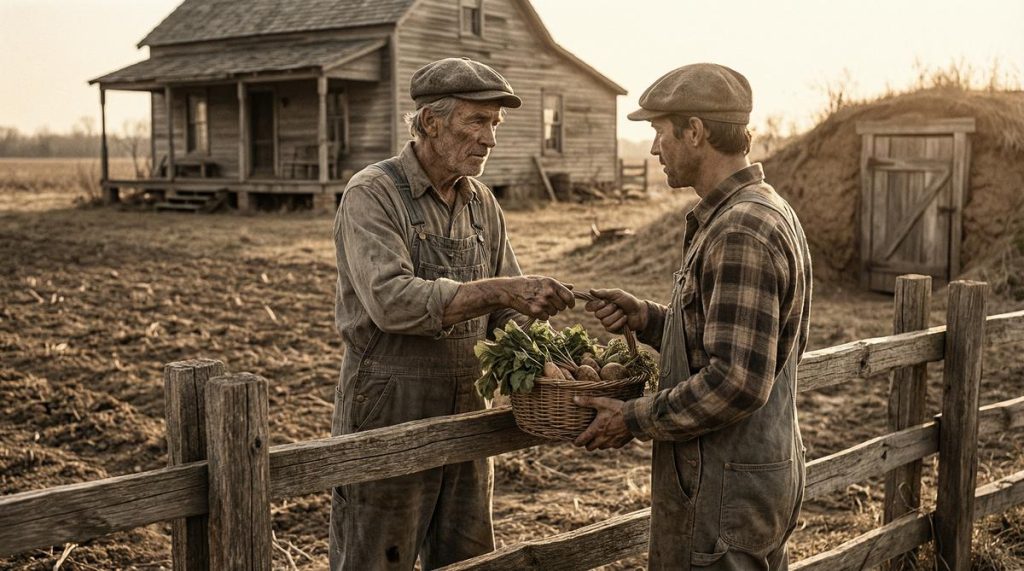
Neighbors traded eggs for milk. Mechanics fixed tractors in exchange for firewood. Doctors accepted chickens and produce as payment for medical services.
They didn’t wait for the government to save them. They created their own local economies based on tangible value, skills, and mutual trust.
This wasn’t just a temporary fix; it was a lifeline that kept communities alive when the official currency was practically worthless. The people who thrived weren’t the ones with the most paper money—they were the ones with the most practical skills and tangible goods.
In rural areas, this barter system was even more pronounced. Farmers who couldn’t sell their crops for cash traded them directly for labor, tools, and other necessities. The local general store often became a clearinghouse for these trades, operating on a system of credit and mutual obligation rather than hard currency.
This historical precedent proves that economic survival doesn’t depend on the strength of the national currency. It depends on the strength of your local community and your ability to produce tangible value. When the abstract numbers on a screen lose their meaning, the real wealth of a community is revealed in its skills, its resources, and its willingness to cooperate.
The Teachable Strategy: Establishing a Local Barter Network
You don’t need to wait for a total economic collapse to start building your own local barter network.
The strategy is simple: identify what you can produce or provide, and find others in your community who have what you need.
This is about creating a parallel economy that operates independently of the banking system. It’s about turning your skills and resources into a currency that can’t be inflated away.
The most valuable barter items are always the essentials: food, water purification, medical supplies, and practical skills like carpentry, gardening, or mechanical repair.
But it’s not just about having things to trade; it’s about knowing how to trade them effectively. A successful barter network requires communication, negotiation, and a deep understanding of what your community actually needs.
Step-by-Step Instructions: How to Start Bartering Today
Building a barter network takes time and trust. Here is exactly how you can start doing it this week.
Step 1: Inventory Your Assets and Skills
Take a hard look at what you have to offer. Do you have a thriving garden? Can you fix small engines? Do you know how to preserve food? Write down every tangible good and practical skill you possess. This is your new bank account. Don’t underestimate the value of simple skills like sewing, baking, or basic carpentry. In a localized economy, these everyday abilities become highly sought-after commodities.
Step 2: Identify Your Needs
What are the gaps in your own preparedness? Maybe you need firewood, or perhaps you lack medical training. Knowing what you need is just as important as knowing what you can offer. Create a prioritized list of the goods and services you would be willing to trade for. This will help you focus your efforts when you start reaching out to others.
Step 3: Start Small and Local
Don’t try to build a massive network overnight. Start with your immediate neighbors or a local community group. Propose a simple trade: “I have extra tomatoes this week; would you be willing to trade for some of your fresh eggs?” Keep the initial trades low-stakes to build trust and establish a working relationship.
Step 4: Establish Value Equivalencies
Barter isn’t always a one-to-one trade. You need to establish mutual agreement on value. An hour of mechanical work might be worth a week’s worth of fresh produce. Communication and fairness are key. Be prepared to negotiate, but always aim for a trade that feels equitable to both parties. A successful barter relationship is built on mutual benefit, not exploitation.
Step 5: Expand Your Network
Once you have a few successful trades under your belt, start expanding. Attend local farmer’s markets or community meetings. Look for people who share your mindset and have complementary skills. Word of mouth is the most powerful tool for growing a barter network. As you build a reputation as a fair and reliable trading partner, others will naturally want to participate.
Step 6: Formalize the Process (Optional)
As your network grows, you may find it helpful to formalize the process slightly. This could involve creating a simple ledger to track trades, or even establishing a local “time bank” where members can exchange hours of labor rather than specific goods. The goal is to create a system that is transparent, sustainable, and easy for everyone to use.

Longer-Term Strategies for Economic Independence
A local barter network is just the beginning. To truly insulate yourself from a failing dollar, you need to build comprehensive self-reliance.
1. Master Food Production
The ultimate currency is food. If you can feed your family, you are wealthy. The 4 Foot Farm Blueprint provides the exact framework you need to start growing your own food, no matter how much space you have. By mastering food production, you not only secure your own survival but also create a valuable commodity that can be traded within your local network.
2. Secure Your Essential Gear
You can’t build a resilient life without the right tools. Homesteader Depot offers the essential gear required to step away from fragile supply chains and take control of your own foundational needs. From hand tools to off-grid energy solutions, having the right equipment is crucial for maintaining your independence.
3. Prioritize Health Independence
When systems fail, access to medical care becomes scarce. You must become your own first responder. Freedom Health Daily and Freedom Health Alerts provide critical insights into maintaining your health independently. For natural, herbal remedies that you can stockpile and use, turn to Seven Holistics. A healthy family is a resilient family.
4. Stay Informed on the Threat Landscape
You cannot prepare for what you do not understand. American Downfall tracks the macro-economic shifts and geopolitical threats that are driving the need for self-reliance. Meanwhile, The Pattern Ledgers offers deep analysis on the cycles of history and how they apply to our current crisis. Knowledge is power, and staying informed is the first step toward true independence.
5. Build a Comprehensive Survival Plan
True resilience requires a holistic approach. Survival Stronghold offers advanced strategies for securing your home and family, while The Ready Report delivers actionable intelligence for everyday preparedness. A comprehensive survival plan ensures that you are ready for whatever challenges the future may hold.
And of course, continue to follow the Self Reliance Report for your daily guide to building a life of true independence.
The era of relying on a fragile, globally entangled financial system is over. The future belongs to those who recognize this reality and take immediate, decisive action. Start building your local economy today.