The United States is systematically dismantling the global trade network it spent 80 years building, retreating behind a wall of protectionism that is sending shockwaves through global supply chains. As America pulls back, the rest of the world is not waiting—nations are building new financial and logistical infrastructure that bypasses Washington entirely. This isn’t just about tariffs; it’s about the vacuum left behind when a superpower isolates itself. When the global supply chains fracture, the only security is what you can produce, protect, and provide yourself. It’s time to stop relying on a fragile system and start building your own local resilience.
The Historical Parallel: The Fall of Aksum
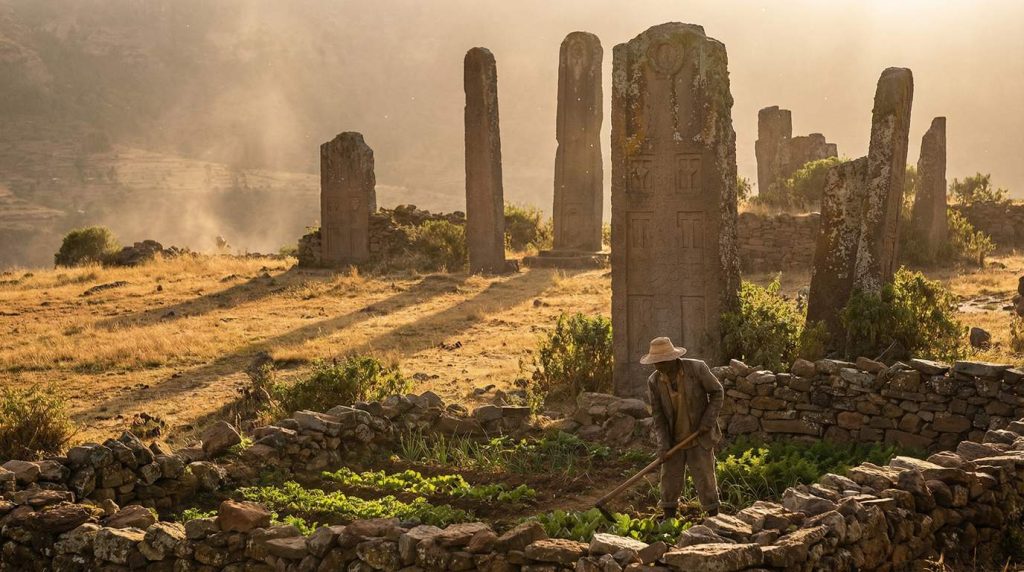
In the first century C.E., the Kingdom of Aksum arose in the highlands of northern Ethiopia as a true superpower of the ancient world.
Aksum’s wealth and power came from one strategic advantage: it controlled the Red Sea trade routes.
They were the gatekeepers between the Roman Empire and the riches of India, exporting gold, ivory, and frankincense while importing silk, spices, and steel.
Their currency was trusted across the known world, and they thrived on this interconnectedness.
But an empire built on trade is only as strong as its connections.
In the seventh century, the geopolitical landscape shifted dramatically, and a new dominant power assumed naval control of the Red Sea.
Aksum wasn’t conquered in a massive, fiery invasion. They were simply bypassed.
The trade routes shifted, and the wealth stopped flowing.
As Islamic forces took control of the Red Sea and the Nile, Aksum was forced into economic isolation.
Without the flow of global trade, the centralized state could no longer hold itself together.
They became an isolated island in a world that had moved on.
But the people who survived the decline of Aksum were not the ones who waited for the trade ships to return.
They were the ones who adapted.
They shifted their focus inward, relying on the fertile highlands to build local, resilient agricultural communities.
They decentralized.
The end of an empire is the beginning of local sovereignty.
When the ships stopped coming, the people of Aksum didn’t starve; they remembered how to feed themselves.
They turned their attention from the distant horizons back to the soil beneath their feet.
They built terraces into the mountainsides to capture rainfall and maximize arable land.
They cultivated indigenous crops like teff, a hardy grain that could withstand the harsh highland climate.
They understood that true wealth wasn’t measured in foreign gold, but in the ability to sustain life when the world turned its back.
This shift from a global, mercantile economy to a localized, agrarian one wasn’t a step backward; it was a necessary evolution for survival.
It is a lesson written in the stones of their ancient capital, a warning to any civilization that believes its prosperity is guaranteed by external forces.
The Aksumites proved that when the center cannot hold, the periphery must become self-sufficient.
The Teachable Strategy: Building a Local Barter and Supply Network
When global trade routes bypass you, you must create your own local trade routes.
The survivors of Aksum didn’t invent new technologies; they returned to the fundamental principles of local agriculture and community trade.
Today, we call this building a local barter and supply network.
This isn’t about hoarding gold or silver; it’s about cultivating relationships and tangible goods that hold value when the dollar doesn’t.
You need to establish a micro-economy within your community before the macro-economy fails.
This strategy requires minimal equipment and can be started this week.
It is genuinely useful for self-reliance because it creates a safety net that no government can dismantle.
A local barter network is the ultimate decentralized system.
It operates outside the purview of banks, regulators, and international supply chains.
It relies on trust, mutual benefit, and the undeniable value of physical goods and practical skills.
When the grocery store shelves are empty because a cargo ship is stuck in a port halfway across the world, your local network will be the difference between thriving and suffering.
It is the modern equivalent of the Aksumite terraces—a system built to capture and retain value within your immediate environment.
Step-by-Step Instructions: Establishing Your Local Network
Step 1: Identify Your Tangible Assets
Take inventory of what you can produce or provide.
This could be eggs from your chickens, vegetables from your garden, or skills like carpentry, sewing, or mechanical repair.
Your assets are the foundation of your trading power.
Do not underestimate the value of knowledge; knowing how to purify water or forage for medicinal plants is as valuable as a cord of firewood.
Write down everything you can offer, no matter how small it may seem.
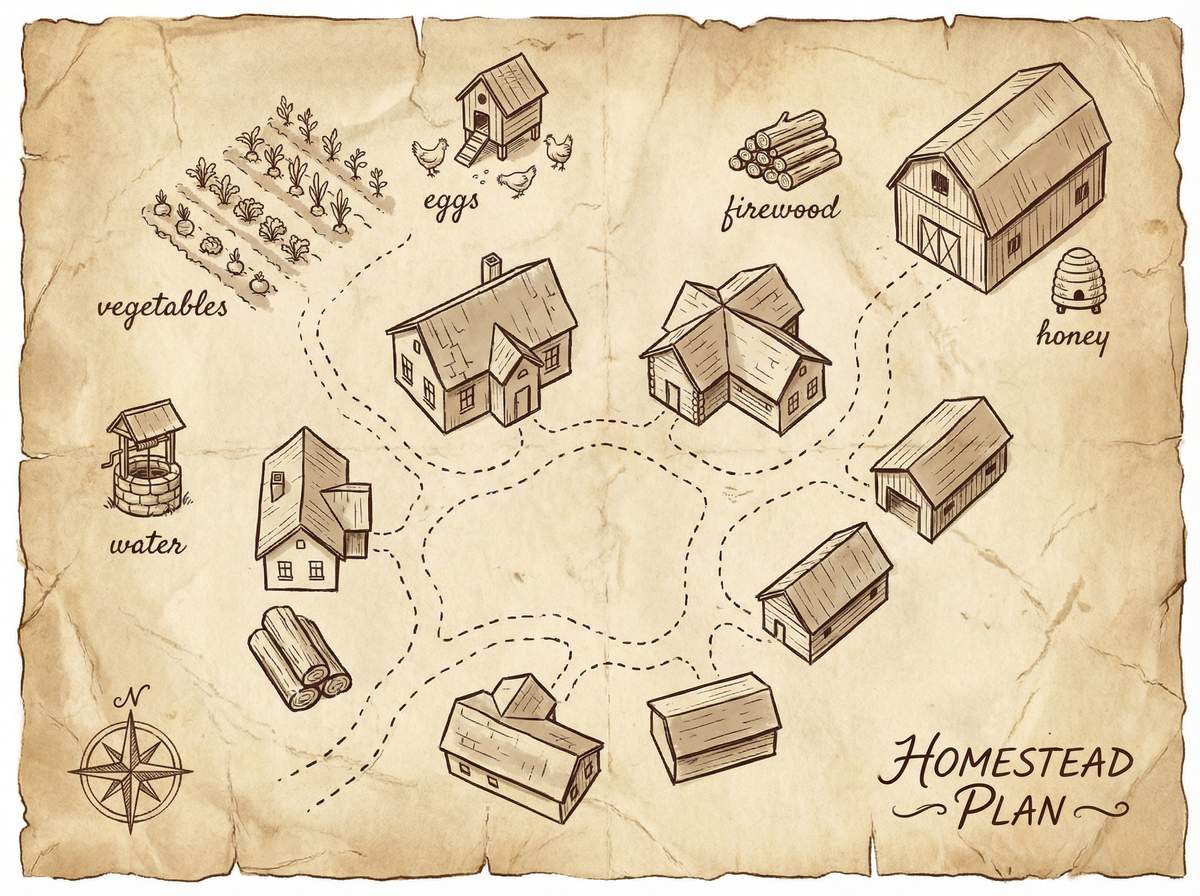
Step 2: Map Your Local Resources
Identify the producers in your immediate area.
Who has a surplus of firewood? Who raises cattle? Who has a well with clean water?
Create a mental or physical map of these essential resources.
Look beyond the obvious; the neighbor who constantly tinkers with small engines might be your most valuable contact when the grid goes down.
Step 3: Initiate Small Trades
Don’t wait for a crisis to start trading.
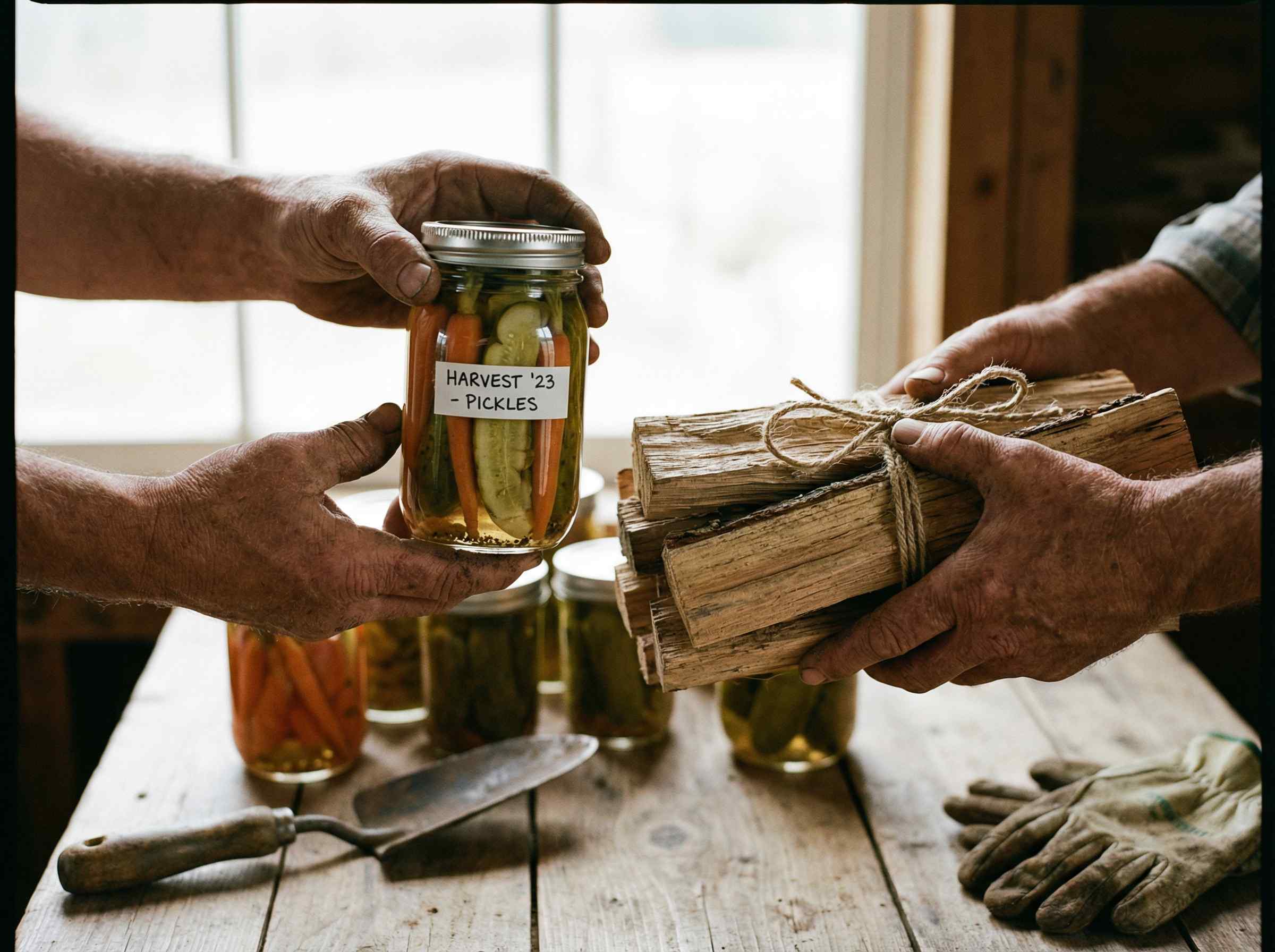
Approach a neighbor and offer a dozen eggs for a jar of honey.
These small, initial trades build trust and establish the precedent for future, larger transactions.
It normalizes the concept of exchange without currency.
It also helps you gauge the reliability and fairness of your potential trading partners.
Step 4: Establish a Communication Protocol
Determine how you will communicate with your network if traditional methods fail.
This could be a designated meeting place, a bulletin board at a local community center, or a simple two-way radio setup.
In a true crisis, information is as critical as food or water.
Knowing where and when to meet to exchange goods or share news is vital for the network’s survival.
Step 5: Diversify Your Offerings
Don’t rely on a single asset.
If you only trade tomatoes, your trading power vanishes in the winter.
Learn to preserve food, purify water, or repair essential tools to ensure you always have something of value to offer.
The more diverse your skill set and production capabilities, the more resilient your position within the network becomes.
Step 6: Formalize the Network
Once you have established a few reliable trading partners, consider formalizing the arrangement.
This doesn’t mean creating a corporation; it means establishing regular meeting times or a shared ledger of needs and surpluses.
A weekly swap meet in a neighbor’s barn can become the cornerstone of your local economy.
It creates a predictable rhythm of exchange that everyone can rely on.
Step 7: Protect the Network
A successful barter network will inevitably attract attention.
You must be prepared to protect your resources and your trading partners.
This involves operational security—not broadcasting your surpluses to the general public.
It also involves mutual defense; a threat to one member of the network is a threat to the entire system.
Longer-Term Strategies and Next Steps
Building a local network is just the beginning of true self-reliance.
To truly insulate yourself from the retreat of global trade, you must expand your capabilities across all areas of your life.
The goal is not just to survive the collapse of the global system, but to build a localized system that is inherently superior.
This requires a commitment to continuous learning and the acquisition of hard skills.
It requires a shift in mindset from consumer to producer.
When the global food supply chains are at risk, the 4 Foot Farm Blueprint is not just about gardening; it’s about food sovereignty.
Real wealth is the land under your feet and the tools in your hands, and Homesteader Depot provides the knowledge to build a life that doesn’t rely on a fragile global system.
Centralized global systems abdicate and collapse, but decentralized people survive and rebuild. The Self Reliance Report offers the timeless playbook for protecting your own in the age of personal sovereignty.
The skills that outlast empires are the ability to make, fix, and provide, and Survival Stronghold elevates those who are prepared to be the builders of the next era.
Your body is the only empire that cannot be abdicated. While global systems retreat, your health sovereignty is the one thing you build and keep, starting from the inside out with Seven Holistics.
When the empire retreats, the medical supply chains go with it. Freedom Health Daily ensures your ability to source and protect your own wellness is your most important investment right now.
For those looking to stay ahead of the curve on critical health warnings, Freedom Health Alerts provides the timely information you need.
Understanding the broader political and economic shifts is crucial, which is why American Downfall serves as the beacon for recognizing these historical parallels.
To prepare for the most severe scenarios, Ready Report offers premium, actionable intelligence for the serious prepper.
And to track the underlying trends that dictate these global movements, The Pattern Ledgers provides the analytical edge required to navigate the coming changes.
The world is moving on. It’s time to build your own stronghold.