The Sassanid Empire didn’t fall because of superior enemy tactics; it collapsed because decades of endless wars completely drained its treasury and crushed its citizens with taxation. Today, as America burns billions overseas and the national debt skyrockets past $39 trillion, we are watching the exact same pattern of economic exhaustion unfold. When a centralized system bleeds itself dry, the cost is always passed down to the people through inflation, taxation, and broken supply chains. You cannot rely on a bankrupt system to feed your family. True security requires stepping outside that system entirely.
The Historical Parallel: When the System Fails, the People Produce
When ordinary people are squeezed by wartime economies and imperial exhaustion, they have historically turned to one reliable solution: hyper-local production.
During World War II, the global supply chain was entirely redirected toward the war effort. Commercial agriculture, transportation, and raw materials were seized by the state. The citizens left behind faced strict rationing, soaring costs, and empty shelves.
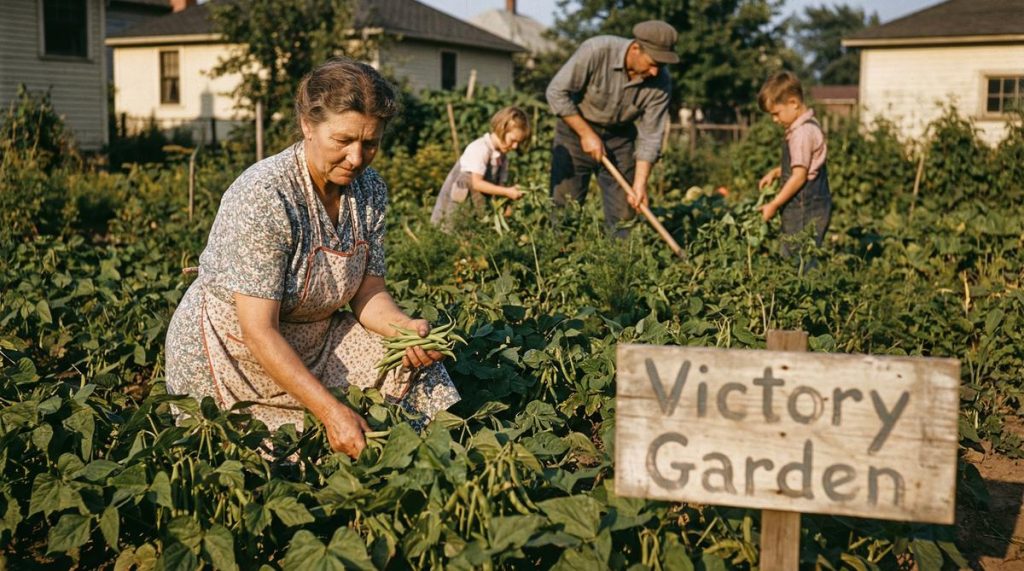
Their response was the Victory Garden movement.
Instead of waiting for government rations, millions of families transformed their front yards, empty lots, and rooftops into high-yield food production zones. By 1944, nearly 20 million Victory Gardens produced an astonishing 40% of all fresh vegetables consumed in the United States.
They didn’t just survive the economic squeeze; they thrived by taking control of their own supply lines. When the empire demands everything, the only way to protect your family is to produce your own necessities.
This wasn’t a cute hobby for suburbanites. It was a matter of national survival and personal resilience. The government didn’t mandate these gardens; the people built them because they recognized that the centralized system could no longer provide for them. They understood that every tomato grown at home was one less dependency on a fragile, overextended supply chain.
We are entering a similar era of exhaustion today. The signs are everywhere: rising food costs, shrinking package sizes, and unpredictable availability of basic goods. The modern equivalent of the Victory Garden isn’t just about vegetables; it’s about reclaiming your independence from a system that views you as a revenue source rather than a citizen.
The Teachable Strategy: High-Yield Container Gardening
You don’t need acres of land to build a resilient food supply.
The most actionable skill you can start this week is High-Yield Container Gardening. This method allows you to bypass the fragile commercial food system, even if you live in an apartment or have terrible soil.
By utilizing vertical space and nutrient-dense soil mixes, you can produce a continuous harvest of calorie-dense crops right on your patio or balcony.
This isn’t just a hobby; it is a direct rebellion against an economic system that is bleeding you dry.
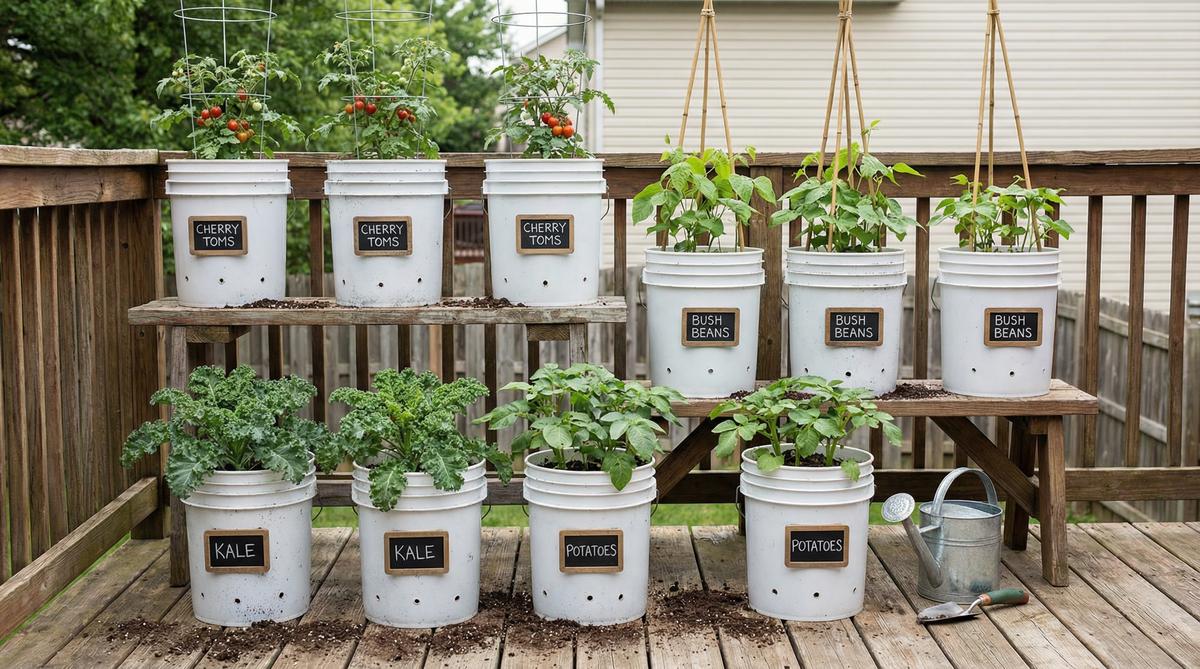
Container gardening offers several distinct advantages over traditional row cropping, especially in uncertain times. First, it is entirely portable — if you need to relocate, your food supply can move with you. Second, it allows for precise control over soil quality and moisture, significantly reducing the risk of crop failure due to poor local conditions. Finally, it maximizes space efficiency, turning even the smallest urban balcony into a productive micro-farm.
The key to success is understanding that you are not just growing plants; you are engineering a high-efficiency biological system. Every input — sunlight, water, and nutrients — must be optimized for maximum caloric output.
Step-by-Step Instructions: Starting Your Supply Line
Building your initial container garden requires minimal investment and can be done in a single weekend.
Materials List: Food-grade 5-gallon buckets (6–10), peat moss or coco coir, vermiculite, high-quality compost, wire cages or bamboo stakes, seeds or seedlings (potatoes, bush beans, cherry tomatoes, kale), drill with 1/2-inch bit, watering can or hose.
Step 1: Secure Your Containers
You do not need expensive planters. Food-grade 5-gallon buckets (often free from local bakeries or restaurants) are perfect. Drill five half-inch drainage holes in the bottom of each bucket. Ensure the buckets are thoroughly cleaned and have never contained toxic chemicals.
Step 2: Mix the “Victory” Soil
Do not use cheap topsoil. Create a high-yield mix: 1/3 peat moss (or coco coir) for moisture retention, 1/3 vermiculite for aeration, and 1/3 high-quality compost for nutrients. This specific ratio ensures that roots have the oxygen they need while retaining enough moisture to survive hot days.
Step 3: Select High-Calorie Crops
Focus on calories and nutrition, not just garnishes. Plant potatoes, bush beans, cherry tomatoes, and kale. These crops provide substantial energy and grow exceptionally well in confined spaces. Avoid crops that require massive amounts of space for minimal caloric return, like iceberg lettuce or celery.
Step 4: Implement Vertical Trellising
Maximize your yield by growing upward. Insert a simple wire cage or bamboo teepee into the buckets for climbing plants like beans and tomatoes. Vertical growth not only saves space but also improves air circulation, reducing the risk of fungal diseases.
Step 5: Establish a Watering Routine
Container soil dries out faster than ground soil. Water deeply early in the morning, ensuring the excess drains completely to prevent root rot. Consistency is critical; erratic watering can lead to blossom end rot in tomatoes and split skins in root vegetables.
Step 6: Implement Succession Planting
Don’t plant everything at once. Stagger your planting every two weeks to ensure a continuous harvest throughout the growing season. As one crop finishes, immediately replace it with another to maximize the productivity of your limited space.
Step 7: Master Basic Pest Control
In a container environment, pests can quickly decimate a crop. Learn to identify common threats like aphids and spider mites. Use natural deterrents like neem oil or insecticidal soap rather than harsh chemicals that can degrade your soil quality over time.
Longer-Term Strategies for Total Independence
Once your initial supply line is established, you must expand your resilience across all areas of your life.
First, you need to master the art of preserving what you grow. Learning to can, dehydrate, and ferment your harvest ensures that your food supply lasts through the winter. For comprehensive guides on homesteading skills and preservation, Homesteader Depot is an invaluable resource.
Second, consider the broader implications of a failing system. When the economy is exhausted, health systems often follow. You must take control of your physical well-being. Explore natural remedies and preventative care at Seven Holistics and stay informed on daily health independence through Freedom Health Daily.
If you want to maximize your food production in minimal space, the 4 Foot Farm Blueprint provides the exact frameworks you need.
Security is just as critical as sustenance. As economic pressure mounts, desperation increases. You must harden your home and build a defensive mindset. Survival Stronghold offers the tactical knowledge required to protect what you have built.
Stay ahead of the political and societal shifts that are driving this collapse by reading American Downfall. Understanding the macro trends allows you to prepare locally.
For premium, deep-dive preparedness strategies, The Ready Report is essential reading.
Furthermore, you must protect your financial assets from the very debasement that destroyed the Sassanids. Learn how to navigate financial patterns and secure your wealth at The Pattern Ledgers.
Finally, remain vigilant about emerging health threats that often accompany societal decline by following Freedom Health Alerts.
By taking these steps, you are not just surviving; you are building a parallel system. You are ensuring that when the empire finally bleeds itself dry, your family will remain untouched.
Explore more strategies for true independence right here at the Self Reliance Report.
The collapse of an empire is not a sudden event; it is a slow, grinding process of exhaustion. The Sassanids didn’t realize they were doomed until the treasury was empty and the armies were broken. We are witnessing the same slow bleed today. The only rational response is to build your own localized systems of production and resilience. Start with a single container garden. Master the skills of preservation. Build a network of like-minded individuals. The future belongs to those who prepare for it today.