
PART 1 — BRIEF CONTEXT
In times of economic isolation, history has shown that self-reliance becomes not just a virtue but a necessity.
As tariffs rise and trade walls are erected, being prepared with practical skills can safeguard our families and communities.
Today, we explore how past empires dealt with such challenges and how those lessons can empower us to thrive independently.
The Historical Parallel: When the Ming Dynasty Closed Its Borders
The Ming Dynasty, a once-mighty empire, provides a stark lesson in the dangers of economic isolation.
Over 500 years ago, the Ming rulers decided that their empire could thrive without the rest of the world.
They burned their grand fleets, closed their ports, and constructed the Great Wall to keep the outside world at bay.
But isolation came with severe consequences.
The closing off of trade routes meant that foreign goods, which had once flowed freely, became scarce.
This scarcity led to economic turmoil and widespread starvation among the common people.
Yet, as the empire’s formal economy faltered, ordinary citizens demonstrated remarkable resilience.
Local communities adapted by developing hyper-local black markets.
These clandestine markets thrived, providing essential goods and services that were otherwise unattainable.
Coastal regions saw the rise of secret smuggling operations, where brave souls risked their lives to bring in the supplies that their villages desperately needed.
The story of a small coastal village aptly illustrates the resilience and ingenuity of the Ming peasants.
With the imperial decree to cease all maritime activities, the local fishermen found themselves cut off from their traditional livelihood.
But necessity, as they say, is the mother of invention.
They began night fishing trips, using smaller, stealthier boats.
By avoiding the attention of the imperial patrols, they not only provided for their families but also traded their catches for other essential goods, reviving the spirit of trade in the shadows.
Food preservation techniques also saw a resurgence.
With the cessation of trade, local food sources needed to be stored efficiently.
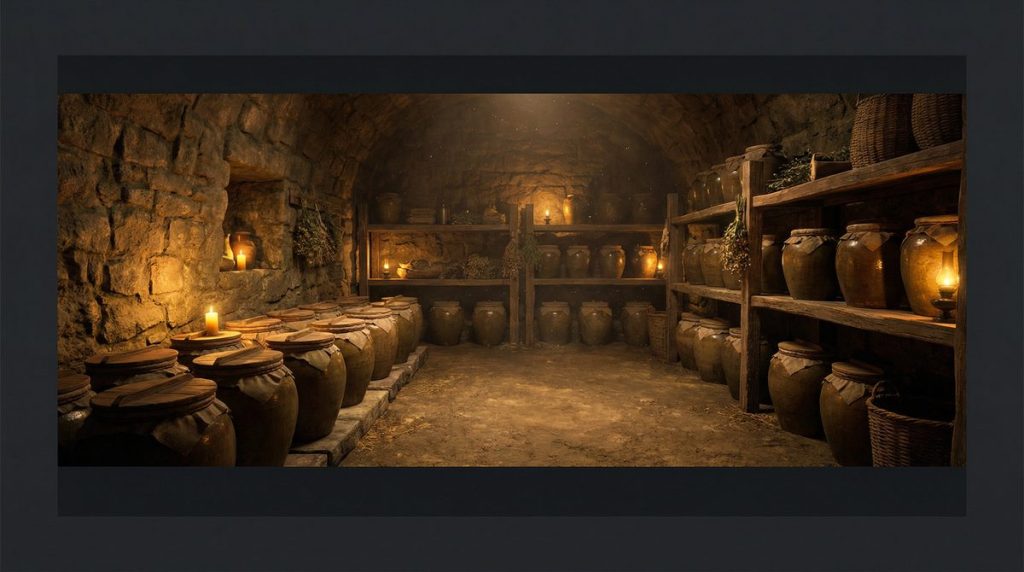
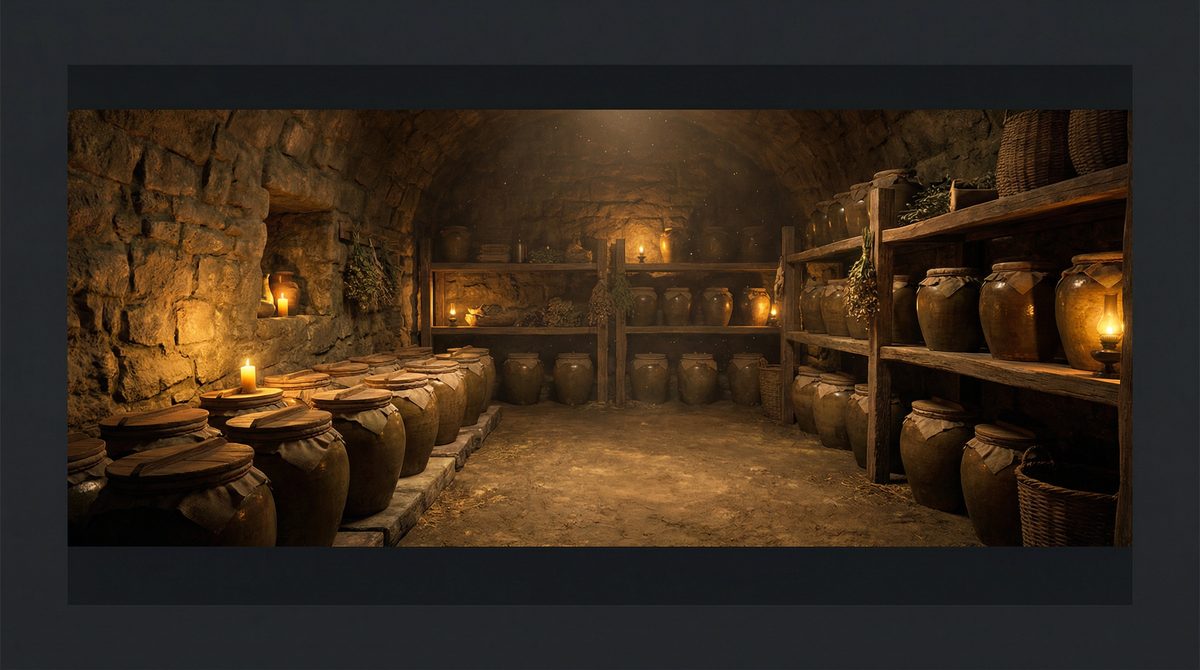
In response, people turned to ancient methods of fermentation and salt curing — techniques that required no electricity and relied solely on local resources.
These methods not only preserved food but also enhanced its nutritional value, helping communities survive the harsh times.
In the hinterlands, where agricultural produce was abundant but perishable, villagers began rediscovering and refining age-old preservation techniques.
They would gather in communal fermenting sessions, sharing knowledge on the best ways to preserve cabbage, turnips, and other vegetables.
The pungent aroma of fermenting vegetables became a familiar scent — a testament to their collective effort to overcome adversity.
The Ming peasants showed us that in the absence of a stable economy, ingenuity and self-reliance became their lifelines.
They embraced local solutions and built networks that sustained them through the isolation.
The Teachable Strategy: Build Your Own Shadow Pantry
One standout technique from this era is the creation of a “Shadow Pantry” through fermentation and salt curing.
Fermentation and salt curing are ancient preservation methods that transform perishable produce into long-lasting, nutrient-rich staples.
Unlike modern refrigeration, which relies on electricity and a complex supply chain, these methods are self-sufficient and sustainable.
The science behind fermentation is fascinating.
It involves the natural breakdown of sugars by bacteria, yeasts, and other microorganisms.
This process not only preserves the food but also enhances its digestibility, increases its vitamin content, and introduces beneficial probiotics.
These probiotics are crucial for gut health, which in turn supports the immune system.
Fermented foods can help maintain a balanced gut flora — a vital factor in overall health. For more on the health benefits of fermented foods, Seven Holistics covers natural remedies and gut health strategies in depth.
Salt curing, on the other hand, uses salt to draw out moisture from food, creating an environment where spoilage-causing bacteria cannot thrive.
The beauty of this method lies in its simplicity and effectiveness.
The reduction in moisture content not only preserves the food but also concentrates its flavors, turning simple ingredients into culinary staples.
Why is this superior?
In a world where the grid might fail or supply chains could snap, these methods allow us to preserve food without relying on external systems.
They empower us to maintain nutrition and health, regardless of external circumstances.
Step-by-Step: How to Ferment Cabbage (Sauerkraut) the Old Way
To start building your own Shadow Pantry, let’s focus on salt-curing and fermenting cabbage — a staple that has nourished civilizations for centuries.
Materials List:
- 1 medium-sized cabbage
- 1/4 cup of non-iodized salt (kosher or sea salt)
- A large ceramic or glass crock
- A clean weight (e.g., a smaller jar filled with water)
- Cheesecloth or a breathable cloth
- Twine or a rubber band
- Prepare the Cabbage: Remove the outer leaves and set them aside. Chop the cabbage into thin strips and place in a large bowl.
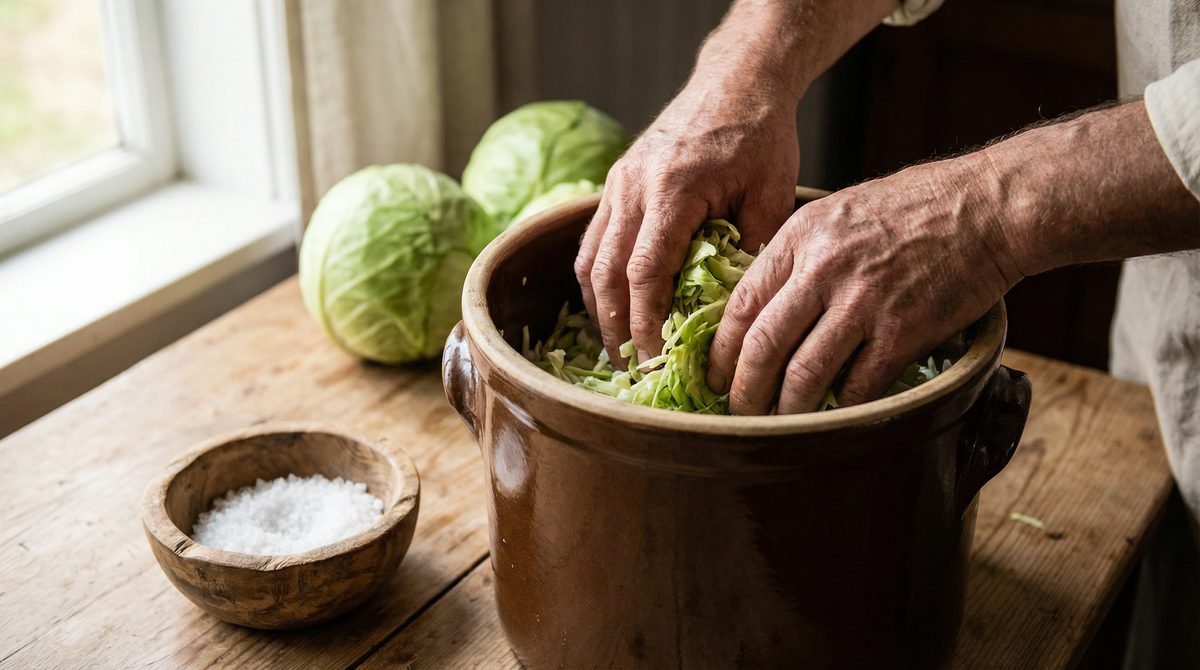
- Salt the Cabbage: Sprinkle the salt over the cabbage. Massage it in for about 10 minutes until the cabbage becomes limp and releases liquid. This step is crucial — sufficient liquid prevents mold growth.
- Pack the Crock: Transfer the salted cabbage into your crock. Press it down firmly with your fists or a pestle to release more liquid. The cabbage must be submerged under its own liquid. If not, add a little brine (1 tablespoon of salt dissolved in 1 cup of water).
- Weigh It Down: Place the reserved cabbage leaves on top. Add the clean weight to keep the cabbage submerged. The weight must be heavy enough to prevent the cabbage from floating above the liquid.
- Cover and Store: Cover the crock with cheesecloth and secure with twine or a rubber band. Store in a cool, dark place for 1–4 weeks. Check regularly to ensure the cabbage stays submerged. If surface mold forms, simply skim it off — the fermented cabbage underneath is protected by the acidic environment.
- Taste and Store: After one week, begin tasting. When it reaches your desired sourness, transfer to jars and refrigerate. Cold temperatures slow fermentation and preserve it for months.
Longer-Term Strategies: Building Real Food Independence
Building a Shadow Pantry is just the beginning.
To truly embrace self-reliance, consider these longer-term strategies:
Strategy 1 — Grow and Save Your Own Seeds.
Grow your own produce and save seeds for future planting.
This ensures a continuous supply of fresh ingredients for your fermentation projects.
The 4 Foot Farm Blueprint is the best resource for growing food in small spaces — even if you have no yard at all.
Seed saving not only provides food security but also preserves heirloom varieties that are well-suited to local climates.
Strategy 2 — Build a Local Barter Network.
Trade salt, preserved foods, and other goods with neighbors to diversify your pantry.
The Pattern Ledgers covers the financial patterns and economic cycles that make barter networks essential — not optional — in the years ahead.
A robust barter system can reduce dependency on cash transactions and foster genuine community resilience.
Strategy 3 — Expand Your Preservation Skill Stack.
Learn additional preservation techniques, from dehydration to pressure canning.
Homesteader Depot carries the tools and supplies you need to get started, and Survival Stronghold offers comprehensive preparedness guides that go deep on long-term food security.
Stay informed about health trends and preparedness strategies by following Freedom Health Daily for daily health independence tips.
Sign up for Freedom Health Alerts for timely updates on health and safety threats that could affect your supply chain.
For the bigger picture on societal and economic fragility, American Downfall is tracking the same patterns the Ming Dynasty ignored — and the consequences that followed.
Develop a comprehensive emergency plan with resources from The Ready Report — because knowing what to do before a crisis hits is the only preparation that counts.
By embracing these ancient methods and building on them, you can ensure that regardless of external circumstances, you and your family will remain nourished and resilient.
Visit Self Reliance Report for more insights and strategies on becoming truly self-reliant in today’s unpredictable world.