
The Supreme Court just struck down the administration’s emergency tariff regime, but the victory lap was short-lived.
Within hours, a new plan emerged: a sweeping 15% global tariff enacted under different executive authority.
The wall is being rebuilt before the dust has even settled.
Right now, the average American household is already paying an estimated $600 to $700 per year in hidden tariff costs. The Strait of Hormuz is choked off by conflict, driving the fastest rise in gasoline prices in three decades, and the national debt just breached $39 trillion.
We are watching a superpower try to tax its way out of a structural decline.
But when global trade routes freeze and the central economy falters, the solution isn’t found in Washington. It is found in your own backyard.
The Historical Parallel: The Fall of the Songhai Superpower
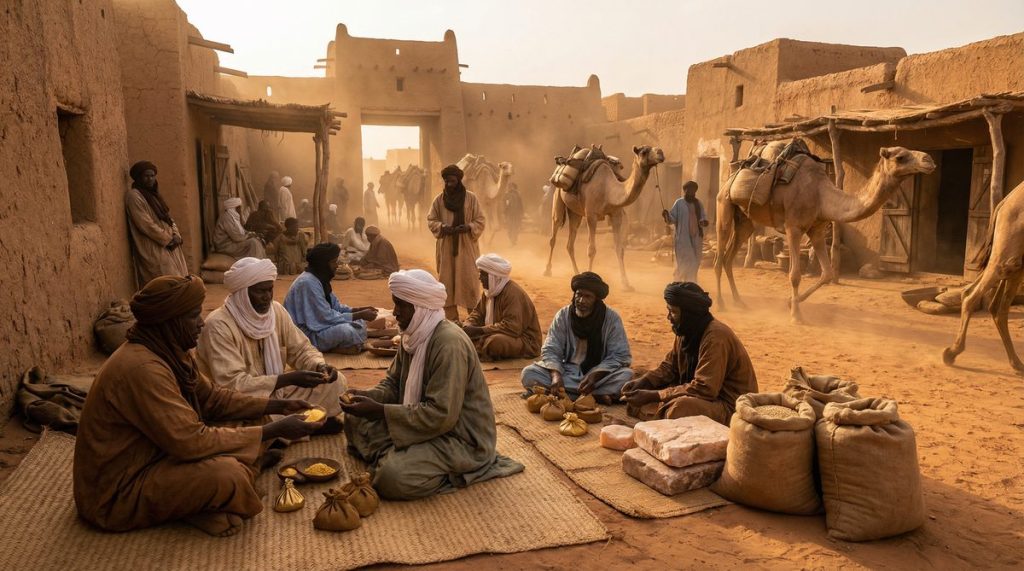
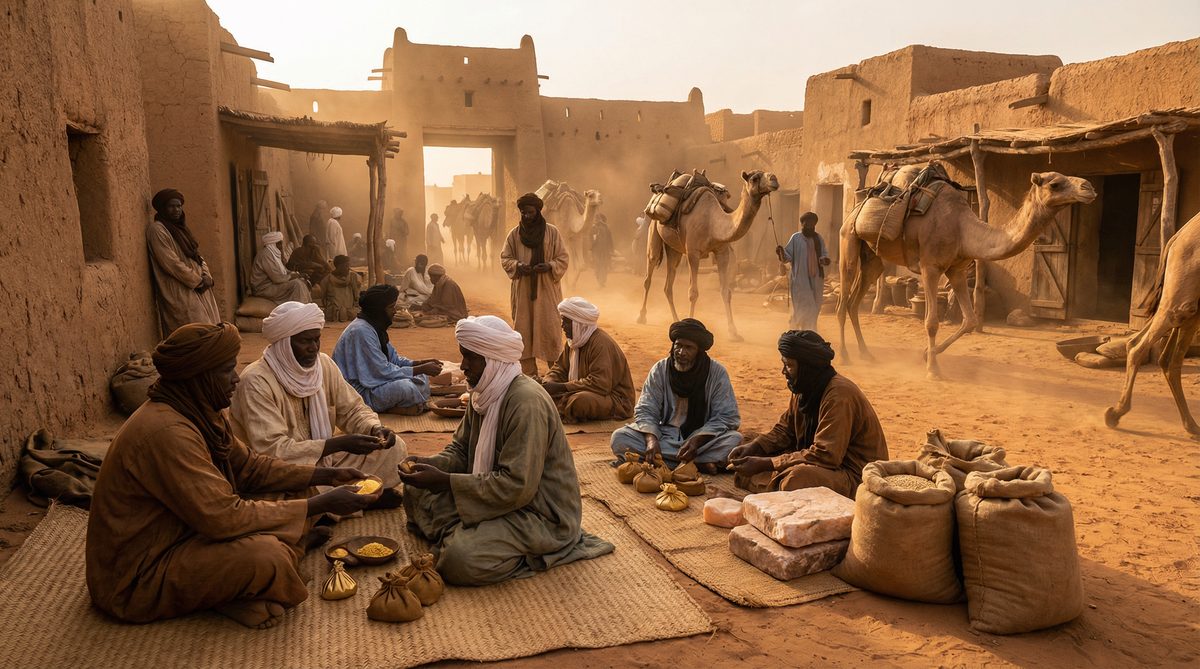
In the late 16th century, the Songhai Empire was the wealthiest and most powerful superpower in West Africa.
They controlled the vast trans-Saharan trade routes, holding a near-absolute monopoly on the flow of gold and salt.
Their capital, Gao, was a bustling metropolis of commerce, and the city of Timbuktu was a global center of scholarship and wealth.
The Songhai emperors believed their economic dominance was permanent.
They assumed that the world had no choice but to trade with them, on their terms, no matter the cost.
They built a massive, centralized bureaucracy to manage this wealth, taxing every ounce of gold and every slab of salt that crossed their borders.
But empires that rely entirely on centralized trade routes are inherently fragile.
In 1591, a Moroccan invasion force crossed the brutal Sahara Desert and shattered the Songhai military at the Battle of Tondibi.
The defeat was swift, but the economic collapse was instantaneous.
Overnight, the central trade routes collapsed.
The imperial economy evaporated.
The gold and salt that once flowed freely stopped moving, and the massive, centralized supply chain failed completely.
The empire fragmented into dozens of smaller, isolated kingdoms.
But the ordinary people didn’t vanish.
When the centralized system broke down, survival depended entirely on local resilience.
Families who had relied exclusively on the imperial markets and the empire’s currency starved.
They had outsourced their survival to a system that no longer existed.
Conversely, families who had maintained hyper-local trade networks thrived.
They survived by trading grain, livestock, and practical skills with their immediate neighbors.
They didn’t need the empire’s gold, because they had tangible goods and a community that trusted them.
They reverted to a localized barter economy, insulating themselves from the collapse of the superpower.
People just like you faced this exact scenario before — and here is exactly what they did to survive.
The Teachable Strategy: The Hyper-Local Barter Network
The strategy that saved families during the collapse of the Songhai Empire is the exact same strategy you need to implement today: The Hyper-Local Barter Network.
When national supply chains break down and fiat currency loses its purchasing power, cash becomes secondary to tangible value.
You cannot eat a stock portfolio.
You cannot heat your home with a bank statement.
You cannot defend your property with a digital currency.
You need to establish a local trade network before the crisis hits.
This means identifying what you can produce, what your neighbors can produce, and how to exchange value without relying on a fragile central currency.
A hyper-local barter network is a decentralized, resilient economic system that operates entirely outside the control of the state.
It is immune to tariffs, inflation, and supply chain disruptions.
It relies on the oldest form of commerce known to man: the direct exchange of value for value.
Step-by-Step Instructions: Building Your Network
Here is exactly how you build an off-grid barter network in your community.
Step 1: Audit Your Tangible Assets
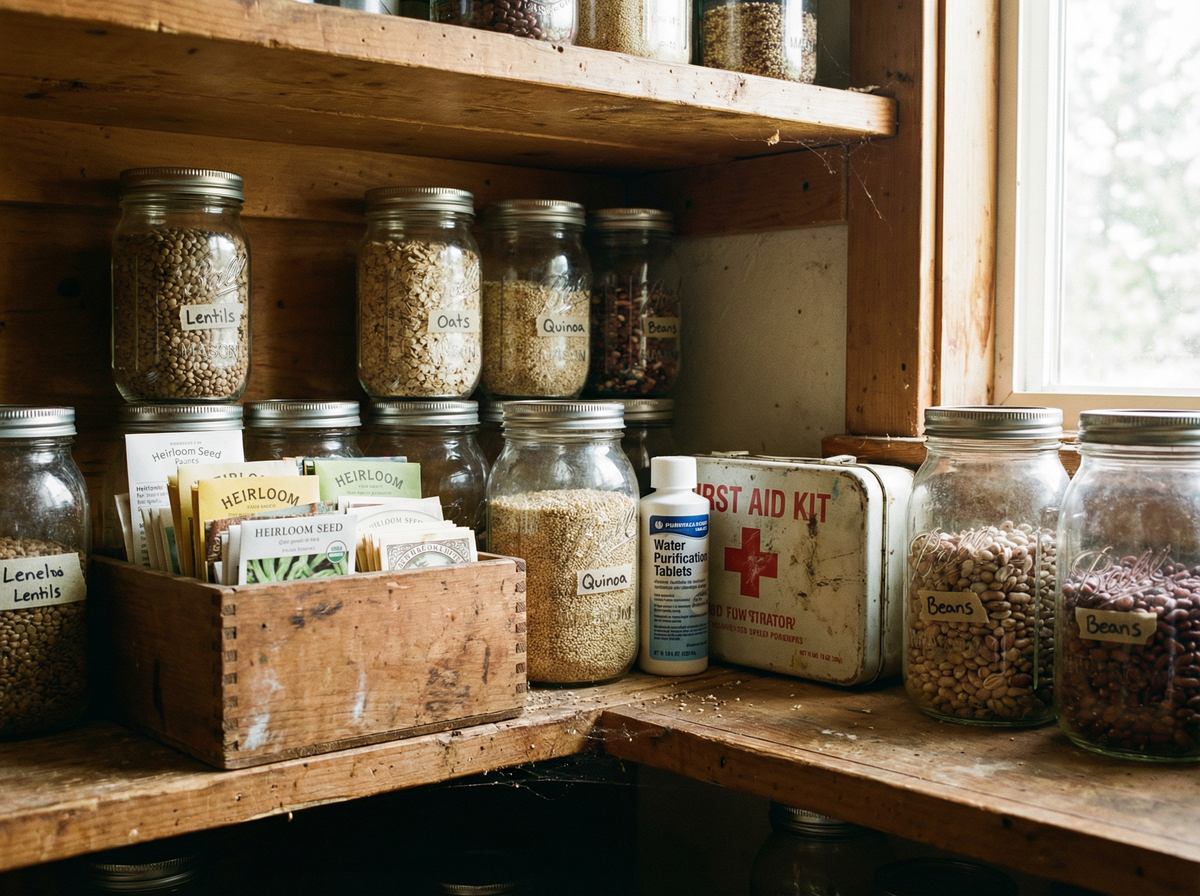
Take a ruthless inventory of what you can produce or stockpile.
This isn’t just about having a few extra canned goods in the pantry.
Think about high-value, tradable commodities like heirloom seeds, water filters, medical supplies, and raw materials.
You need to possess items that other people will desperately need when the stores are empty.
Step 2: Identify Your High-Value Skills
Physical goods will eventually run out, but skills are infinitely tradable.
Can you repair small engines or fix a generator?
Do you know how to preserve meat, ferment vegetables, or purify water?
Can you provide basic first aid or herbal remedies?
Your knowledge is your most valuable currency in a collapsed economy.
Write down three skills you possess that you could trade for food or supplies.
Step 3: Map Your Local Ecosystem
Identify three to five people in your immediate area who possess complementary skills or goods.
You do not need a massive network of hundreds of people.
You need a reliable mechanic, a skilled gardener, someone with medical training, and someone who knows how to hunt or fish.
Start quietly observing your neighbors and local community members to see who possesses these critical capabilities.
Step 4: Establish the “Shadow Currency”
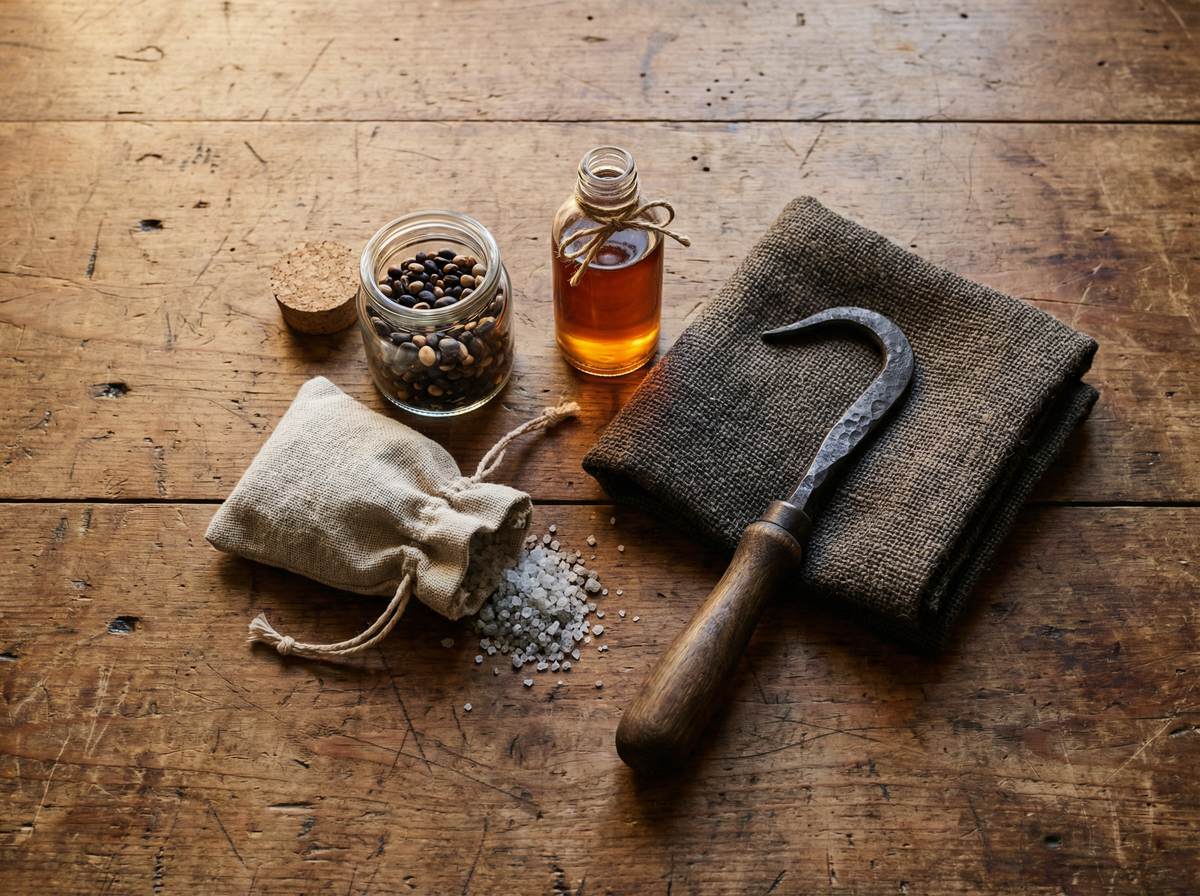
Stockpile items that hold universal value in a crisis, regardless of what happens to the dollar.
Alcohol, ammunition, salt, coffee, sugar, and heirloom seeds are the gold and silver of a collapsed economy.
These items have a long shelf life, are universally desired, and can be divided into smaller quantities for minor trades.
Step 5: Initiate Low-Stakes Trades Now
Do not wait for a crisis to test your network.
You must build the muscle memory of commerce without cash today.
Trade a dozen eggs for a jar of honey this weekend.
Offer to fix a neighbor’s lawnmower in exchange for some fresh vegetables from their garden.
Normalize the act of bartering so that when the system fails, your network is already fully operational.
Step 6: Secure Your Storage and Security
A barter network makes you a target if you are not careful.
You must store your trade goods securely and discreetly.
Never advertise the full extent of your stockpile.
Only bring out what you intend to trade, and conduct your exchanges in neutral, safe locations.
Longer-Term Strategies and Next Steps
Building a local barter network is just the first step toward true independence.
To truly insulate your family from the coming economic shifts and supply chain failures, you must expand your self-reliance across every domain.
A barter network is only as strong as the individuals within it.
First, secure your physical health outside the medical-industrial complex.
The system will not save you when supply chains for pharmaceuticals break down.
You must learn to treat minor ailments and maintain your health independently.
Start by exploring natural remedies and holistic approaches at Seven Holistics.
For daily actionable advice on maintaining your physical independence, read Freedom Health Daily.
And to stay ahead of emerging medical supply shortages and health threats, keep a close eye on Freedom Health Alerts.
Second, secure your food supply.
A barter network is useless if you have absolutely nothing to trade.
You must become a producer, not just a consumer.
Learn how to produce massive caloric yields in small spaces with the 4 Foot Farm Blueprint.
Equip yourself with the right tools, off-grid supplies, and homesteading knowledge from Homesteader Depot.
Third, secure your perimeter and your wealth.
You cannot protect your family if you do not understand the broader political and societal collapse happening around you.
Stay informed by reading American Downfall.
Protect your family, your property, and your trade goods with the tactical strategies found at Survival Stronghold.
For premium, deep-dive emergency readiness and advanced survival tactics, consult The Ready Report.
And to understand the financial patterns that dictate these historical cycles, study The Pattern Ledgers.
Ultimately, your survival depends on your actions today.
The Songhai Empire fell because it relied on a centralized system that was easily broken.
Do not make the same mistake.
Read more guides like this at the Self Reliance Report.
Stop relying on the empire’s trade routes. Build your own.