The American political machine is tearing itself apart at the exact moment the country can least afford it.
This week, the federal government sued three states over regulatory control, while a coalition of state attorneys general sued the federal government over election laws.
The United States is no longer functioning as a unified entity.
It is operating as a collection of rival factions fighting for control of a shrinking pie.
While Washington is paralyzed by internal lawsuits and a $39 trillion debt crisis, the external world is moving fast.
We are watching a superpower fracture from within while external threats multiply.
It feels unprecedented.
But it is not.
The Empire That Chose Division Over Survival
In the 11th century, Kievan Rus was the undisputed superpower of Eastern Europe.
Stretching from the Baltic Sea to the Black Sea, it controlled the most lucrative trade routes in the known world.
Under the rule of Yaroslav the Wise, the capital city of Kiev was richer and more advanced than London or Paris.
But when Yaroslav died in 1054, he left behind a fatal flaw in the system.
Instead of passing power to a single strong successor, he divided the empire among his five sons.
He instituted the “Rota System” — a complex ladder of succession where power moved laterally from brother to brother, rather than father to son.
It was a recipe for endless civil war.
Almost immediately, the brothers turned on each other.
The unified empire fractured into 13 independent principalities.
Instead of defending their borders or expanding their trade networks, the princes spent all their energy, wealth, and military power fighting their own blood relatives for control of the capital.
By 1097, the situation was so dire that the princes held the Council of Liubech to stop the bleeding.
They agreed to a new rule: “Let each hold his patrimony.”
They thought they were creating peace.
In reality, they were formalizing their own destruction.
The principalities became permanently divided. The local elites — the boyars — gained immense power, preferring weak, squabbling princes over a strong central authority. The economy stagnated as internal borders and tariffs choked off trade.
And then, the Mongols arrived.
In 1237, Batu Khan’s armies swept across the steppes.
If Kievan Rus had been united, they might have stood a chance.
But the princes were too busy fighting each other to mount a coordinated defense.
They fell one by one.
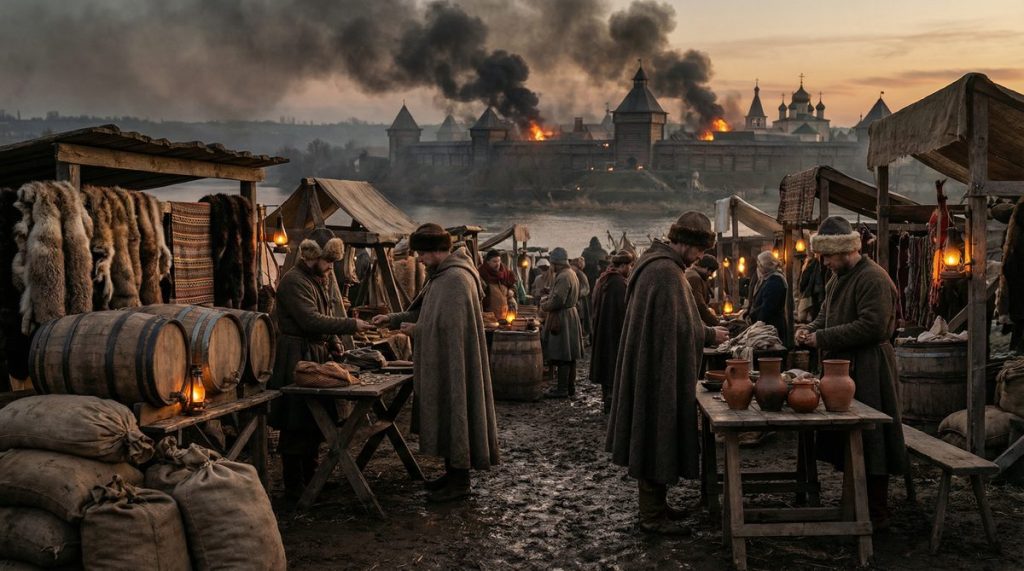
In 1240, the Mongols reached Kiev. The city that was once the jewel of Eastern Europe was burned to the ground. Out of 50,000 inhabitants, only 2,000 survived.
The Novgorod Solution: Building Local Sovereignty
It is easy to look at political paralysis and feel a sense of despair.
To feel like a passenger on a sinking ship.
But history teaches another, more powerful lesson.
The fall of Kiev was not the end of the Rus people.
The survivors were not the ones who stayed in the burning capital, hoping the princes would finally unite.
The survivors were the ones who built local resilience.
While Kiev burned, the northern city of Novgorod thrived.
They ignored the dynastic squabbles of the south and built a resilient, independent merchant republic.
They focused on local trade, local defense, and local sovereignty.
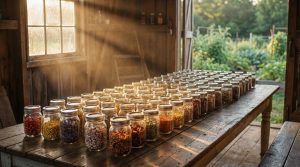
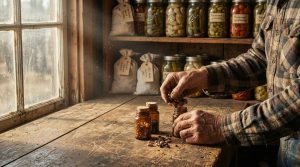
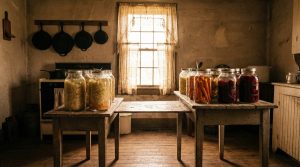
The people of Novgorod did not wait for the princes to solve their problems. They built hyper-local trade networks based on hard assets: furs, wax, honey, and preserved food. They created what we would today call a Barter Pantry — a stockpile of high-value, long-shelf-life goods specifically intended for trade with neighbors when the centralized supply chain fails.
When the centralized system fails, it creates a vacuum.
And into that vacuum rushes the opportunity for something new.
You cannot fix the political gridlock in Washington. You cannot stop the national debt from growing. But you can absolutely control your own exposure to the fallout.
Building a resilient future starts with a single, powerful step: taking control of your own supply chains.
The Teachable Strategy: The Hyper-Local Barter Pantry
A Barter Pantry is different from a standard survival stockpile.
Your survival stockpile is for your family to consume.
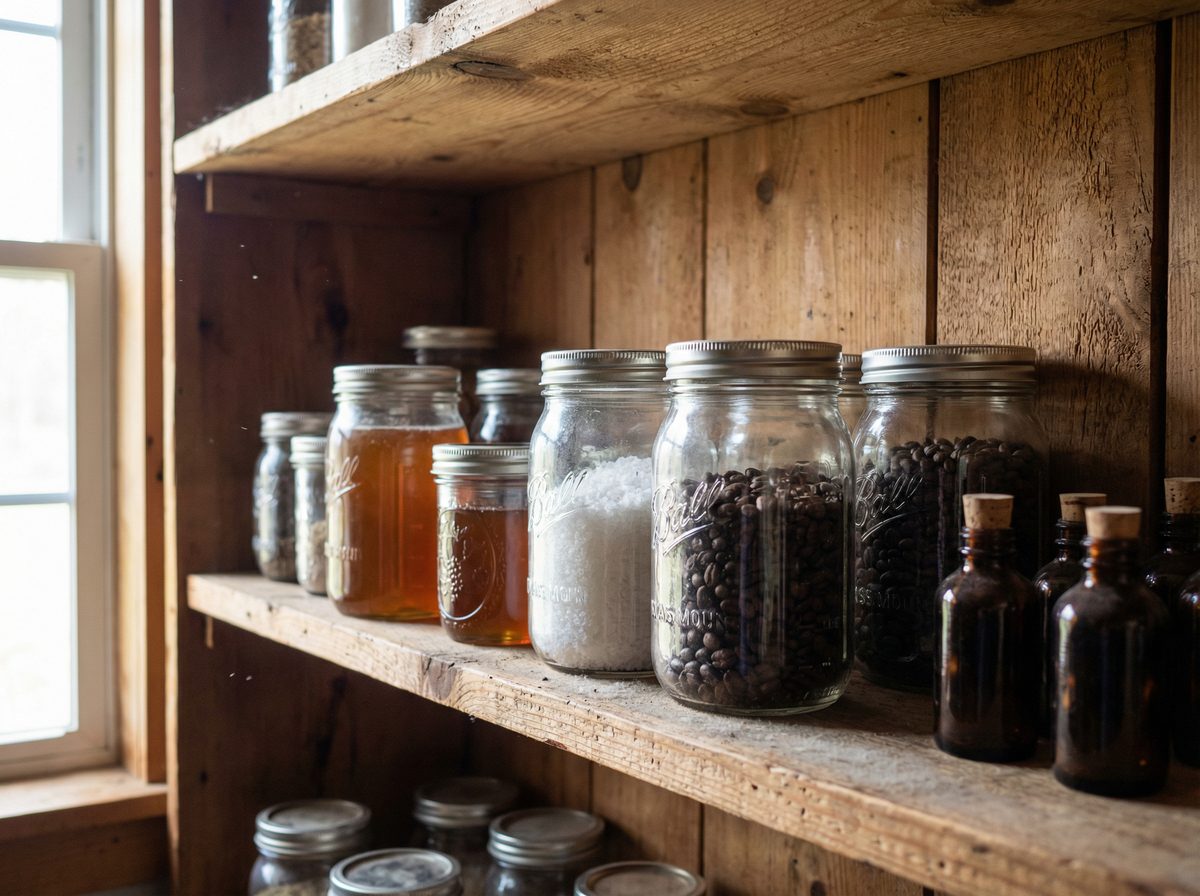
Your Barter Pantry is stocked specifically with high-value, long-shelf-life items that you intend to trade with your neighbors when the centralized supply chain fails.
It is the foundation of a local sovereignty network.
When the dollar loses its purchasing power, or when the grocery store shelves are empty, the person with the Barter Pantry becomes the local merchant prince.
You don’t need a massive warehouse to start.
You just need to understand what holds value when the system fractures.
Step-by-Step: Building Your Barter Pantry This Week
Here is exactly how to build a Novgorod-style Barter Pantry this week, for under $100.
Materials List:
- Bulk salt (5–10 lbs) — under $5
- Whole bean coffee (2–3 lbs) — $15–20
- Raw honey (2–3 lbs) — $15–25
- High-proof vodka or grain alcohol (1–2 handles) — $20–30
- Bar soap (12-pack), toothpaste (3-pack), basic first aid kit — $25–35
- Mylar bags (quart and gallon sizes) or small glass mason jars — $10–15
- Permanent marker for labeling
Step 1: Focus on the “Vice and Spice” Staples
In every historical collapse, the first things to disappear are the small comforts and flavor enhancers. Stock up on cheap, long-lasting items that people will crave. Coffee (whole bean lasts longer than ground), salt, sugar, black pepper, and honey. Honey is the ultimate barter item because it literally never spoils. Archaeologists have found 3,000-year-old honey in Egyptian tombs that was still edible.
Step 2: Stock Medical and Hygiene Basics
When the pharmacies run dry, basic hygiene becomes a matter of life and death. Buy bulk packs of bar soap, toothpaste, feminine hygiene products, and basic first aid supplies — bandages, rubbing alcohol, hydrogen peroxide. These items are cheap now but become priceless during a disruption. A single bar of soap can be traded for a meal.
Step 3: Acquire High-Proof Alcohol
You don’t have to drink to understand the value of alcohol in a crisis. Cheap vodka or grain alcohol serves three purposes: it is a disinfectant, a solvent for herbal tinctures, and a highly liquid barter currency. Buy the cheap stuff in plastic handles. The Novgorod merchants knew this — mead and fermented beverages were a cornerstone of their local economy.
Step 4: Package for Micro-Transactions
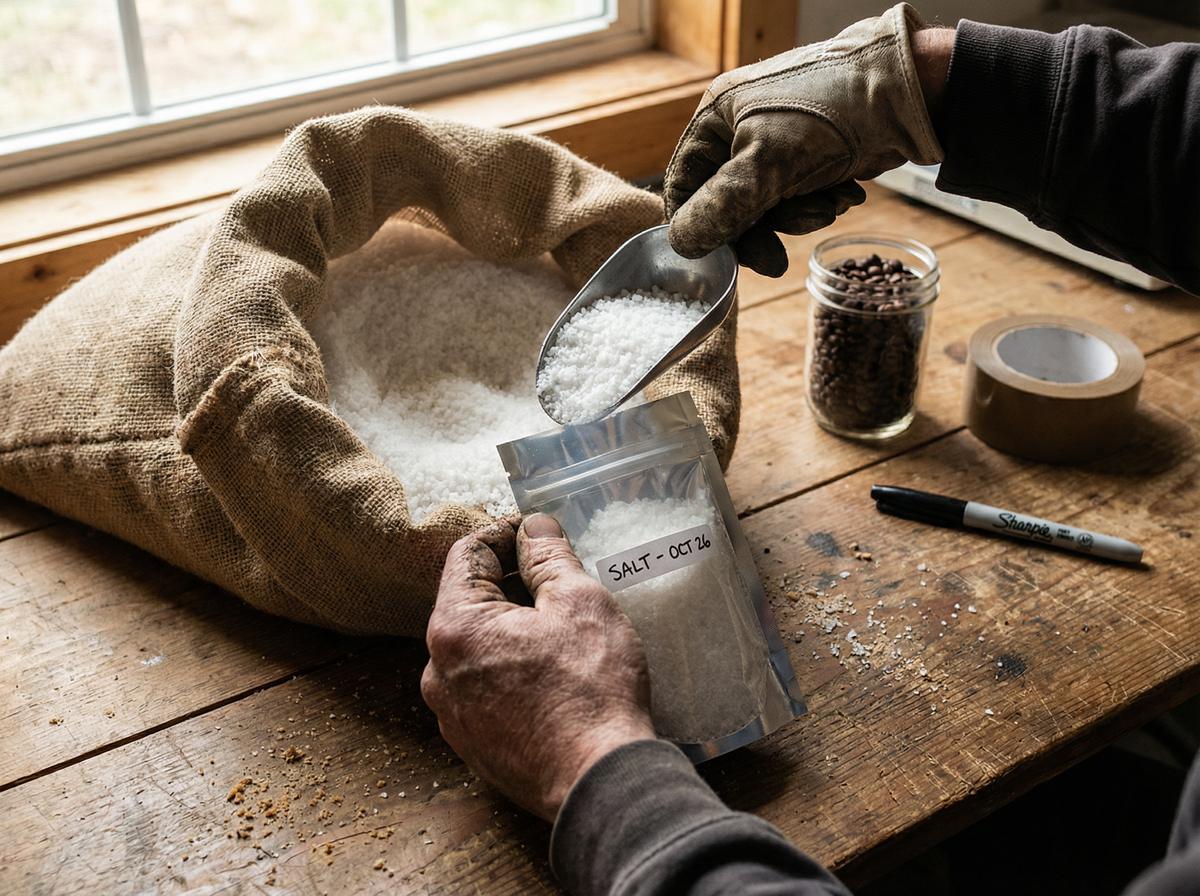
You cannot trade a 50-pound bag of rice for a single favor. You need small denominations. Break down your bulk goods into smaller, sealed containers. Use Mylar bags or small glass jars to portion out salt, sugar, and coffee. This allows you to make small trades without revealing the extent of your stockpile.
Step 5: Identify Your Local Trading Partners
A Barter Pantry is useless if you have no one to trade with. Start quietly identifying the people in your immediate vicinity who have complementary skills. The neighbor who knows small engine repair. The family that gardens. The person with medical training. These are the nodes in your new local sovereignty network — your own Novgorod merchant republic, built one relationship at a time.
The Blueprint for Hope: Longer-Term Strategies
Do not wait for the princes to stop fighting.
Start building your own resilient principality today.
By producing your own calories and controlling your own supply lines, you insulate yourself from the inflation and supply chain shocks caused by political dysfunction. The 4 Foot Farm Blueprint is not just about growing food — it is about sovereignty. It is the first chapter in your family’s story of independence, a story where you are the builder, not the victim.
But food is only the beginning. To truly thrive while the system fractures, you need a comprehensive strategy that covers your health, your security, and your financial resilience.
Strategy 1: Secure Your Perimeter and Resources
Before the centralized system fractures further, harden your home and property. Survival Stronghold provides the tactical framework for securing your perimeter, your water supply, and your energy independence. The Novgorod republic didn’t just trade — it also built walls.
Strategy 2: Build the Skills to Sustain Your Household
The tools and skills you need to build a life independent of the federal grid are available right now, before the crisis hits. Homesteader Depot is your catalog for practical self-reliance tools — from seed-starting supplies to hand tools that work without electricity. Pair this with the daily health insights from Freedom Health Daily to keep your household operating at full capacity, and Freedom Health Alerts for urgent updates on medical supply chain disruptions and natural alternatives.
Strategy 3: Stay Informed, Stay Ahead
The princes of Kievan Rus fell because they were blind to the external threats multiplying around them. Don’t make the same mistake. American Downfall tracks the collapse of the centralized system so you can stay one step ahead. The Ready Report provides advanced strategies for navigating the economic fallout of political paralysis. And The Pattern Ledgers helps you understand the historical cycles of collapse and rebirth to protect your wealth. For your overall wellbeing during this period of stress and uncertainty, Seven Holistics provides the tools to protect your physical and mental health.
The empire may be dividing.
But your household doesn’t have to.
Build your pantry. Find your people. Become sovereign.
For more daily strategies on building a resilient, independent life, stay connected with Self Reliance Report.