

The United States is currently bleeding its treasury dry to control a chokepoint 7,000 miles away, while the homeland suffers under the weight of inflation and supply chain fragility.
As the $1 billion-a-day war in the Persian Gulf rages on, the cost of everything from fuel to food is skyrocketing.
This isn’t just a geopolitical crisis; it’s a direct threat to your household’s ability to function.
When an empire overextends its military to protect distant trade routes, the citizens at home are always the ones left holding the bag.
True self-reliance means decoupling your family’s survival from these fragile, overextended global supply lines.
The Historical Parallel: The Chola Empire’s Collapse
We have seen this exact scenario play out before.
In the 11th century, the Chola Empire of South India was an economic and military juggernaut.
They controlled the vital Strait of Malacca, dominating the global spice trade.
But to maintain this control, they launched massive, expensive naval campaigns thousands of miles from home.
To fund these endless wars, the Chola emperors squeezed their citizens dry with crushing taxes.
The agricultural base—the true source of the empire’s wealth—was neglected in favor of military spending.
As the economy faltered, internal revolts erupted, and the empire eventually collapsed under the weight of its own overextension.
But while the empire crumbled, ordinary people survived by turning inward.
The Tamil merchant guilds that outlasted the Chola collapse didn’t survive because they were powerful.
They survived because they were self-reliant, locally rooted, and adaptable.
They built hyper-local networks of trade and mutual support that didn’t rely on the empire’s fragile supply lines.
When the centralized systems failed, these local networks became the new foundation of society.
They understood that true security doesn’t come from a distant emperor’s navy; it comes from the resources you control in your own community.
The Teachable Strategy: Building a Hyper-Local Resource Cache
The lesson from the Chola collapse is clear: when the empire’s supply lines break, you must have your own.
Today, the most vulnerable point in our supply chain is energy and the resources required to maintain daily life.
The specific skill you need to master right now is building a Hyper-Local Resource Cache.
This isn’t just about hoarding canned goods; it’s about creating a decentralized, off-grid system for energy, water, and essential supplies that can sustain your household when the global system falters.
You don’t need a massive bunker to start.
You just need to systematically decouple your most critical needs from the grid.
A resource cache is a living, breathing system that you interact with daily, not a dusty box of supplies hidden in the basement.
It requires active management, rotation, and a deep understanding of your household’s true consumption rate.
Step-by-Step Instructions: Creating Your Resource Cache
Here is exactly how you can start building your Hyper-Local Resource Cache this week.
Step 1: Audit Your Vulnerabilities
Identify the top three resources your household consumes daily that rely entirely on the grid or global supply chains.
For most, this is electricity, municipal water, and grocery store food.
Track your usage for one week to understand exactly how much you need to replace.
Step 2: Establish Off-Grid Energy Independence
Start small. You don’t need a $30,000 solar array immediately.
Invest in a portable solar generator and a few high-capacity power banks.
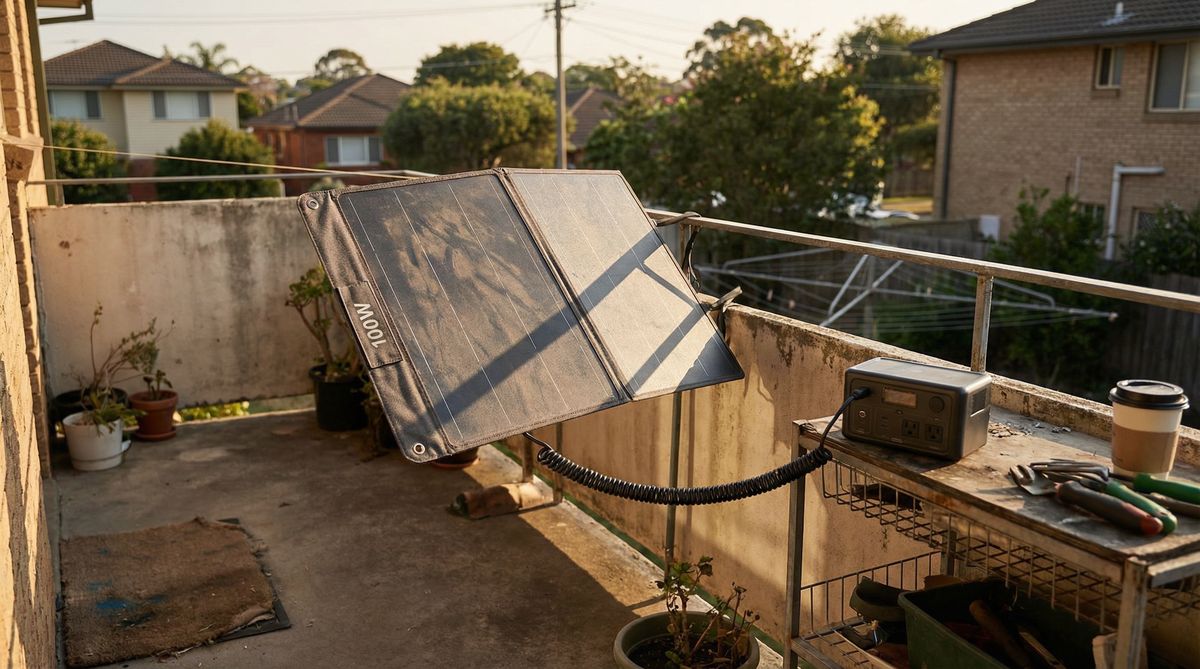
This ensures you can keep critical devices, medical equipment, and emergency radios powered even during rolling blackouts.
Expand this system over time to include larger battery banks and more efficient panels.
Step 3: Secure a Decentralized Water Supply
Municipal water systems are highly vulnerable to power grid failures.
Set up a simple rainwater catchment system using food-grade barrels.
Ensure you have a robust gravity-fed water filtration system (like a Berkey or similar) to make that water safe for consumption.
Learn how to properly sanitize and store water for long-term use without relying on chemical treatments that expire.
Step 4: Build a Shadow Pantry
Move beyond the standard 72-hour kit.
Begin stocking a “shadow pantry” with calorie-dense, long shelf-life staples like rice, beans, and freeze-dried goods.
Store these in airtight, pest-proof containers in a cool, dark place.
Rotate these supplies into your daily cooking to ensure nothing goes to waste and your family is accustomed to eating them.
Step 5: Develop Local Barter Skills
When currency devalues due to imperial overextension, skills become the new money.
Learn a tangible skill—like basic carpentry, small engine repair, or food preservation—that you can trade with neighbors.
A skill cannot be taxed, confiscated, or inflated away by a desperate government.
Step 6: Establish a Medical Cache
Supply chain disruptions hit pharmacies fast and hard.
Stockpile essential over-the-counter medications, trauma supplies, and prescription backups if possible.
Learn basic first aid and trauma care so you aren’t entirely dependent on an overwhelmed emergency medical system.
Step 7: Create a Communications Plan
When the grid goes down, so do cell towers and the internet.
Invest in a hand-crank emergency radio and a set of GMRS or Ham radios for local communication.
Establish a communication protocol with your family and trusted neighbors so you can coordinate without relying on corporate infrastructure.
Longer-Term Strategies for True Sovereignty
Building a resource cache is just the beginning.
To truly insulate your family from the collapse of global supply lines, you must build long-term sovereignty.
1. Cultivate Your Own Food Supply
The ultimate hedge against inflation and supply chain disruption is growing your own food.
You don’t need hundreds of acres. The 4 Foot Farm Blueprint teaches you how to produce massive yields in incredibly small spaces.
Every vegetable you grow is a direct strike against the fragile global food system.
Start with high-calorie crops like potatoes and squash, and expand into nutrient-dense greens and herbs.
2. Fortify Your Household Economy
As the dollar loses value, you must protect your wealth.
The Pattern Ledgers provides critical insights into financial patterns and how to build independence outside the traditional banking system.
Combine this with the physical tools and supplies from Homesteader Depot to build a tangible, resilient household economy.
Invest in hard assets, tools, and knowledge rather than fragile fiat currency.
3. Prioritize Health Independence
When supply chains break, pharmaceuticals are often the first to disappear.
Take control of your well-being with natural, holistic approaches from Seven Holistics and stay informed on daily health independence strategies via Freedom Health Daily.
For urgent awareness of emerging health threats, monitor Freedom Health Alerts.
A healthy body is your most critical prep; you cannot defend your home or grow your food if you are physically compromised.
4. Secure Your Perimeter
A well-stocked home is a target in desperate times.
Learn how to protect your family and resources with the advanced preparedness and security strategies at Survival Stronghold.
Focus on deterrence, early warning systems, and physical barriers rather than relying solely on firearms.
5. Stay Informed and Connected
Knowledge is your most critical prep.
Understand the broader political and societal context driving these crises by reading American Downfall.
For actionable emergency readiness plans, rely on The Ready Report.
And continue to build your skills right here at the Self Reliance Report.
Information is the only resource that multiplies when you share it.
The empire may be choking on its own supply lines, but your family doesn’t have to.
Start building your local fortress today.
Do not wait for the government to announce a crisis; by then, the shelves will already be empty.
Take action now, while the supply lines are still functioning, however fragile they may be.
Your family’s future depends on the steps you take today.