
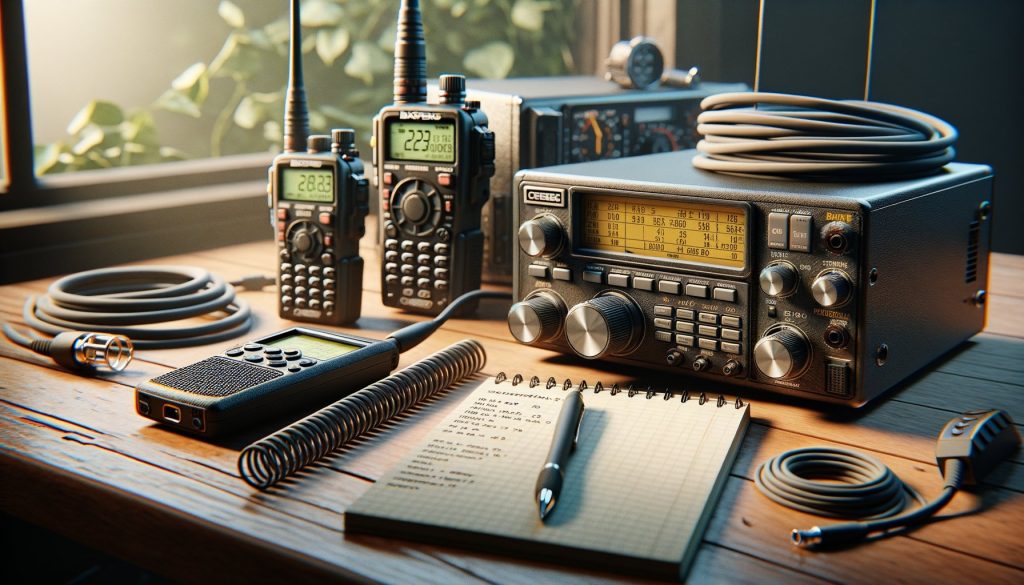
Communications Blackout Survival: Radio Systems for Grid-Down Scenarios
Imagine the power grid failing. Cell towers go silent. The internet vanishes. How do you communicate with family, neighbors, or emergency services? A communications blackout is a serious threat, and relying solely on modern infrastructure is a gamble. We need resilient, independent systems.
This isn’t about doomsday prepping; it’s about responsible preparedness. Understanding radio communication is a vital skill, allowing you to share critical information, coordinate aid, and maintain contact when all else fails. It’s about taking control of your safety and the safety of those around you.
Understanding the Communications Landscape
A true communications blackout means no cell service, no internet, and potentially no landline phones. Think beyond convenience and consider the cascading effects on emergency services and critical infrastructure. Preparation requires understanding these weaknesses.
Consider the distances you need to cover. Are you communicating within your neighborhood, across town, or across the state? Each range demands a different radio solution and power strategy. Knowing your needs is the first step toward effective communication.
The Power of Two-Way Radios (Walkie-Talkies)
Two-way radios, often called walkie-talkies, are a simple and effective short-range solution. They’re easy to use, relatively inexpensive, and require minimal setup. Perfect for neighborhood watch programs or communicating within a small group.
Sponsored
Until The Power Goes Out
When the grid fails, will you be ready? Learn the critical steps to take now.
Consider investing in models with good battery life and compatibility with rechargeable batteries. Extra batteries are essential. Remember that range is limited by terrain and obstructions. Expect realistic ranges far below manufacturer claims.
GMRS: Greater Range and Power
General Mobile Radio Service (GMRS) offers increased range and power compared to basic walkie-talkies. GMRS radios require a license from the FCC, but the licensing process is straightforward and covers your entire family. The benefits are worth it.
With GMRS, you can use repeaters to significantly extend your communication range. Repeaters are strategically located transceivers that re-broadcast your signal. Local GMRS clubs often maintain repeaters for community use. Check for GMRS repeaters in your area.
The Versatility of Ham Radio (Amateur Radio)
Ham radio, or amateur radio, is a highly versatile option for long-distance communication. It requires a license, but the licensing process encourages learning about radio theory and operation. This knowledge is invaluable during a crisis.
Ham radio operators can communicate locally, nationally, and even internationally using various frequencies and modes. Many ham radio operators volunteer their services during emergencies to provide critical communications support to authorities and the public.
Setting Up a Base Station
A base station serves as your central communications hub. It should be located in a secure and accessible location within your home. This station provides a reliable platform for both transmitting and receiving important information.
Equip your base station with a robust antenna, a power supply (including battery backup), and multiple radios. Consider a scanner to monitor emergency frequencies and stay informed about unfolding events. Practice using your equipment regularly.
Powering Your Communications: Off-Grid Solutions
During a grid-down scenario, relying on wall power is not an option. Explore alternative power sources such as solar panels, generators, and battery banks. Redundancy is key. Don’t rely on a single power source.
Solar panels can provide a sustainable source of power, but they require sunlight. Generators offer reliable power but require fuel. Battery banks provide a backup power source but need to be recharged. A combination of these solutions offers the best resilience.
Antennas: The Key to Effective Communication
The antenna is a crucial component of any radio system. A poorly chosen or improperly installed antenna can significantly reduce your range and effectiveness. Understanding antenna types and characteristics is essential.
Consider the frequency you’ll be using and the distance you need to cover. Different antenna types are optimized for different frequencies and purposes. Experiment with different antenna configurations to find what works best for your location.
Practice and Training: Building Confidence
Having the right equipment is only half the battle. Regular practice and training are essential to building confidence and proficiency. Conduct regular drills with your family and neighbors to simulate emergency scenarios.
Join a local amateur radio club or GMRS group to learn from experienced operators and participate in emergency preparedness exercises. Familiarize yourself with radio etiquette and emergency communication protocols. Knowledge and skills are your most valuable assets.
Take Action: Your Next Steps
Don’t wait for a crisis to begin preparing. Take these steps today to build your communication resilience. Procrastination can have serious consequences when disaster strikes. Start small and build from there.
- Purchase a basic two-way radio (FRS/GMRS combo) and practice using it with your family. Aim for models with at least a 2-mile range in open areas.
- Research local GMRS repeaters and the licensing process. The FCC website is a good starting point.
- Identify a potential location for your base station. Consider accessibility, security, and antenna placement.
- Create a communications plan with your family and neighbors. Designate frequencies and establish emergency contact procedures.
- Allocate 2 hours this week to learn about antenna basics. Focus on the types appropriate for your chosen radio system.