The United States is currently trapped in an energy crisis of its own making.
By overextending its military reach to protect global chokepoints like the Strait of Hormuz, the empire has inadvertently disrupted the very supply chains it relies on.
Oil prices are surging, gas is draining family budgets, and the cost of transporting basic goods is skyrocketing.
This isn’t just a political failure; it’s a structural collapse of a system built on endless extraction and fragile dependencies.
When the centralized energy grid falters, the illusion of modern security shatters with it.
But you don’t have to be a victim of this overextension.
True security doesn’t come from a government protecting foreign oil routes.
It comes from building your own local sovereignty.
The Historical Parallel: The Frontier Energy Economy
When we look back at history, we see that ordinary people have faced massive systemic shifts before.
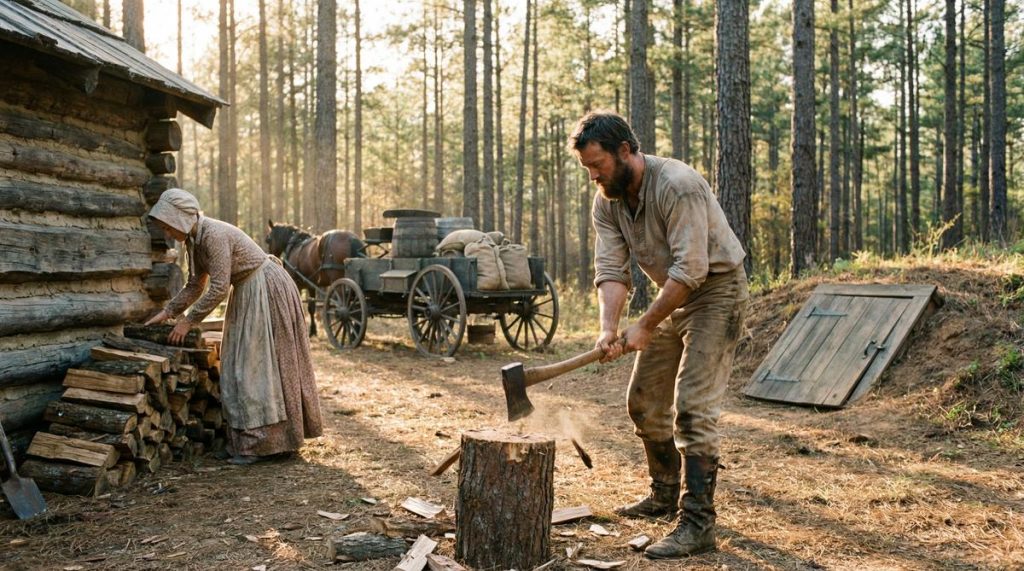
During the expansion of the American frontier in the 1800s, pioneers didn’t have a centralized power grid or global supply chains to rely on.
They were entirely responsible for their own energy production.
If they didn’t secure their fuel, they froze.
If they didn’t manage their resources, they starved.
They built an entire economy around local, renewable energy sources—primarily wood, water, and animal power.
They understood that energy wasn’t something you bought from a distant corporation; it was something you harvested, stored, and managed on your own land.
When the Scythian Empire collapsed because it overextended its trade routes, the people who survived were the ones who didn’t rely on the empire’s grain and horses.
Similarly, the pioneers who thrived were the ones who built resilient, closed-loop systems that couldn’t be disrupted by distant wars or economic panics.
They practiced a form of energy sovereignty that we desperately need to reclaim today.
The Teachable Strategy: Passive Thermal Mass Storage
You might not be ready to go completely off-grid with solar panels and wind turbines just yet.
But there is one specific, highly effective strategy from the frontier era that you can implement right now: Passive Thermal Mass Storage.
Before the invention of electric refrigeration and HVAC systems, pioneers used the earth itself to regulate temperature.
They built root cellars and springhouses to keep food cold in the summer and prevent it from freezing in the winter.
They understood that the ground below the frost line maintains a constant, stable temperature year-round.
By harnessing this natural thermal mass, they drastically reduced their need for active energy consumption.
Today, you can use this exact same principle to protect your food supply and reduce your reliance on the fragile electrical grid.
You don’t need a massive underground bunker to start.
You can build a simple, effective thermal mass storage system using minimal equipment.
Step-by-Step Instructions: Building a Subterranean Cold Box
Here is how you can build a modern adaptation of the pioneer root cellar—a subterranean cold box—to safely store your harvest and emergency supplies without electricity.
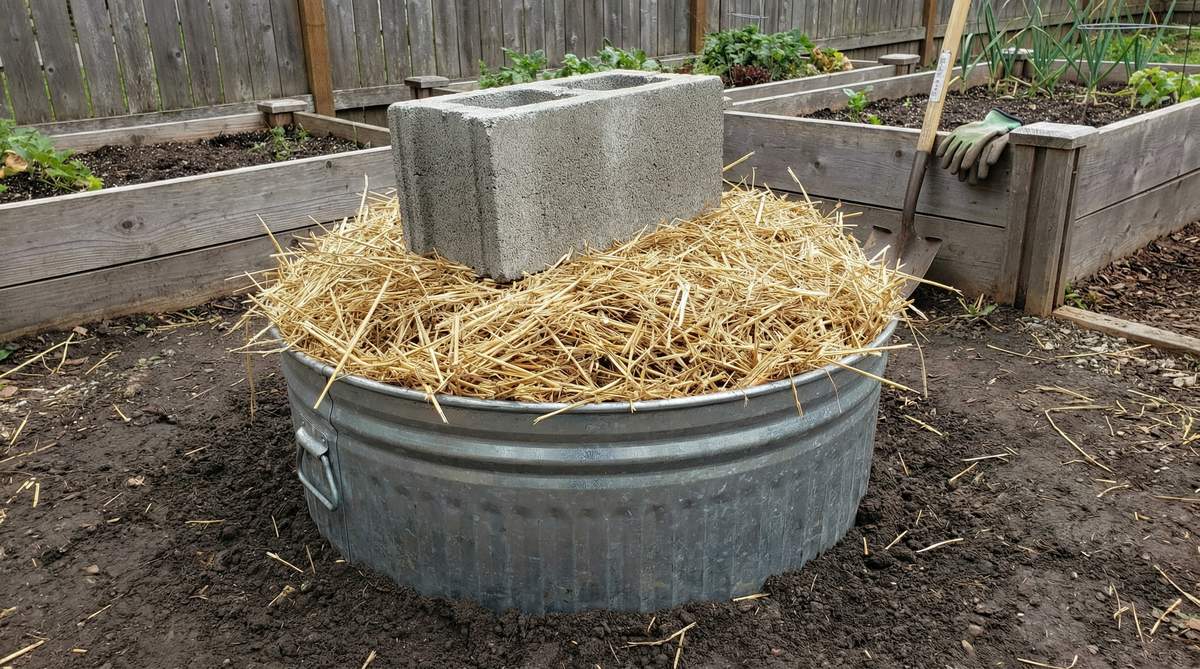
Materials Needed:
- One large galvanized steel trash can with a tight-fitting lid (20–30 gallons)
- A shovel
- Gravel or crushed stone (about 2 cubic feet)
- Straw, hay, or dry leaves for insulation
- A heavy rock or cinder block
Step 1: Select the Right Location
Find a spot in your yard that is well-drained and preferably shaded during the hottest parts of the day. Avoid low-lying areas where water tends to pool after heavy rain. The north side of a building or under a large tree is often ideal.
Step 2: Dig the Hole
Dig a hole that is slightly wider than your galvanized can and deep enough so that the top of the can will sit about 2 to 3 inches above the surrounding ground level. This slight elevation prevents surface water from running into the can.
Step 3: Create a Drainage Base
Pour about 3 to 4 inches of gravel or crushed stone into the bottom of the hole. This ensures that any moisture that does seep in will drain away from the bottom of your storage container.
Step 4: Position the Can
Place the galvanized can into the hole, resting it firmly on the gravel base. Backfill the dirt around the outside of the can, packing it down tightly to secure the container in place.
Step 5: Insulate and Load
Layer the bottom of the can with a few inches of straw or dry leaves. Place your root vegetables (like carrots, potatoes, and onions) or sealed emergency supplies inside. Add more straw between layers of food to prevent them from touching and to provide extra insulation.
Step 6: Secure the Lid
Place the lid tightly on the can. Cover the top of the lid with a thick layer of straw or a heavy tarp for additional insulation against freezing temperatures. Place a heavy rock or cinder block on top to keep animals out and secure the lid against high winds.
Longer-Term Strategies for Total Sovereignty
Building a subterranean cold box is your first step toward energy independence.
But to truly insulate your family from the coming shocks, you need to expand your sovereignty across all areas of your life.
Here are the longer-term strategies you must begin implementing today:
1. Secure Your Food Supply
When global energy prices spike, the cost of transporting food skyrockets. The fertilizer shock is already working its way through the agricultural system. The most radical act of defiance is to grow your own calories. The 4 Foot Farm Blueprint shows you exactly how to build a high-yield, space-efficient food system in your own backyard, insulating your family from the coming grocery store shocks.
2. Build Tangible Wealth
As the empire prints trillions to fund its wars, the dollar will continue to lose its purchasing power. You need assets that exist outside the digital banking system. Homesteader Depot provides the physical tools and equipment necessary to maintain a productive, self-reliant property that holds its value regardless of what the stock market does. Understanding these financial shifts is critical; The Pattern Ledgers can help you track these historical economic patterns and protect your wealth.
3. Master Essential Skills
True security comes from the ability to make, fix, and provide. Survival Stronghold offers the critical knowledge and training needed to handle emergencies, secure your property, and protect your family when centralized systems fail. For comprehensive emergency readiness, Ready Report provides the premium intelligence you need to stay ahead of the curve.
4. Protect Your Internal Sovereignty
A stressed, unhealthy body is a dependent body. When pharmaceutical supply chains fracture due to global trade disruptions, your health is your first line of defense. Seven Holistics provides the natural protocols and herbal knowledge to maintain your wellness independently. Stay informed on the latest threats to medical freedom with Freedom Health Daily and get urgent updates from Freedom Health Alerts.
5. Stay Ahead of the Pattern
The collapse of global monopolies isn’t a surprise to those who know what to look for. The signs are there. American Downfall tracks the political and societal shifts that signal these massive changes. And right here at Self Reliance Report, we will continue to provide the actionable intelligence and historical context you need to prepare before the crisis hits the mainstream news.
The empire has closed its own chokepoint.
The energy shock is here.
Do not wait for the system to fix itself.
Build your resilience now.