
Your Daily Install connects what’s happening now with a useful pattern from the past—and one simple step you can take today to make your household more resilient.
Print the action worksheet below, fill it in, and add it to your Household Resilience Network binder.
What’s happening now?
The Postal Service has published its 2026 holiday shipping dates. Its lower-48 recommendations differ by service: the delivery date you want changes when a parcel needs to leave.
“Order it when we run out” leaves shipping time out of the plan.
A gift can arrive late. An everyday supply running out can force a costly extra trip or a rushed replacement. Check the delivery estimate for your seller and address; a postal holiday chart is not a promise about that order.
Before the busy season, give one ordinary staple a reorder point. The useful unit is days left—not how full the bag looks.
Has this happened before?
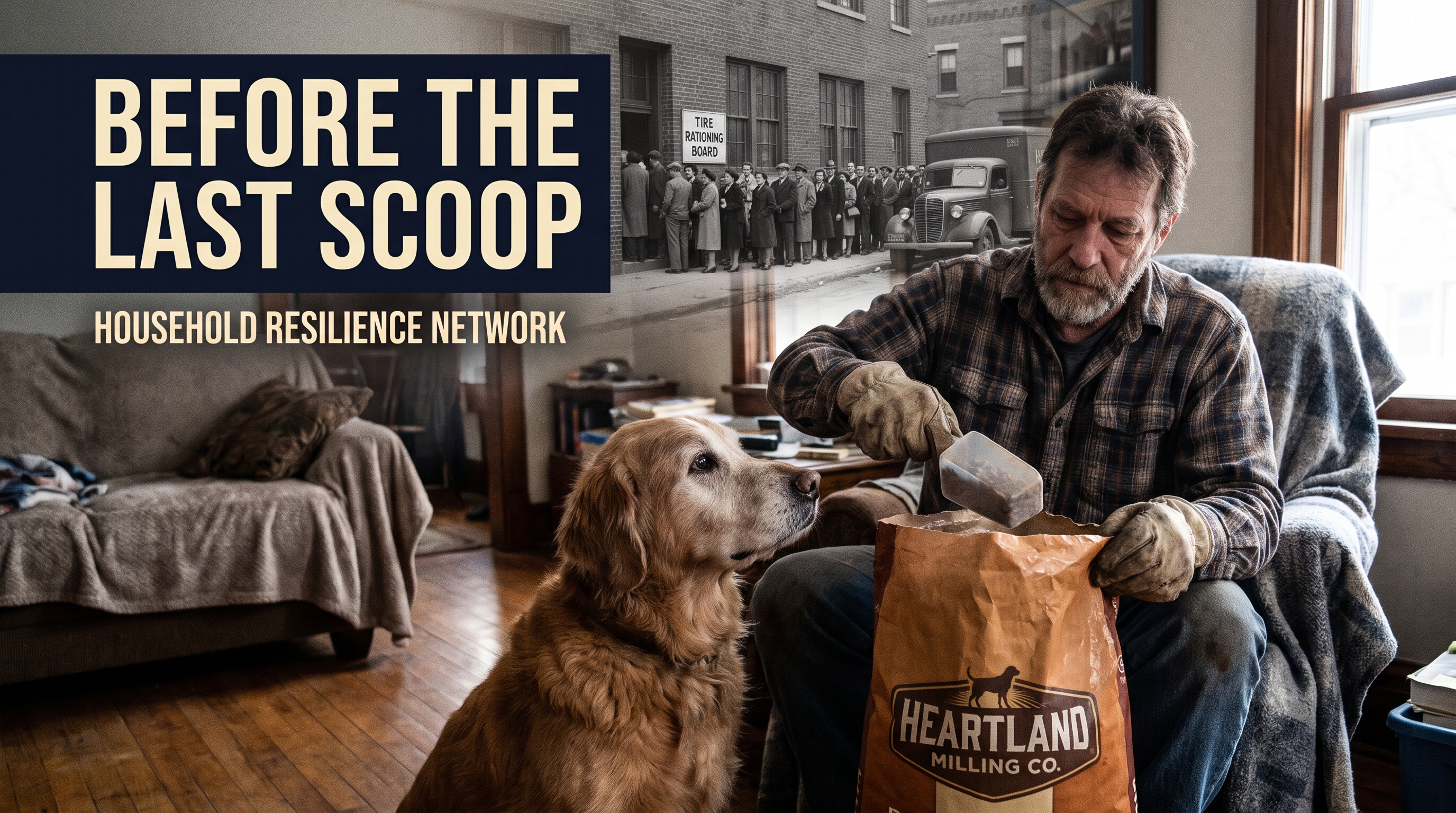
In January 1942, the United States began rationing tires. Rubber was needed for the war, and getting a new tire took more than money at the counter.
Rules decided who could buy. A driver could have the cash and still lack permission—or the tire itself. Supply had become the limit.
What happened next?
The response was not simply “buy more tires.” Drivers were urged to share rides, slow down, keep tires properly inflated and recap usable ones. The government also bought idle tires for reuse.
In December 1942, the Office of War Information reported that more than half of six million tires turned in could be used as they were or made usable through repairs or recapping.
People kept useful supply in service while replacements were hard to get. Looking after what they had helped cover the wait.
A holiday parcel is not wartime rationing. But the planning pattern holds: know how long the supply will last, how long replacement takes, and what you can do before the gap opens.
Why is your dog’s food brown?
You pick the brand. You pay for the bag. Your dog trusts you with the rest.
But that brown color—have you ever wondered where it comes from?
Before you buy the next bag, watch this.
What can I do?
Take 10 minutes and choose one non-medical staple. Use your normal rate of use to estimate days remaining. Add a small cushion to the normal time it takes to buy more.
For example, if replacement takes two days and you want a three-day cushion, reorder with about five days left. Keep the amount within your budget and storage space. This is a reorder cue, not a reason to stockpile.
Finish by setting the reminder now. Mark the reorder cue on a note beside the item or in your calendar. Do not put a new order on autopilot without checking quantity, price and storage needs.
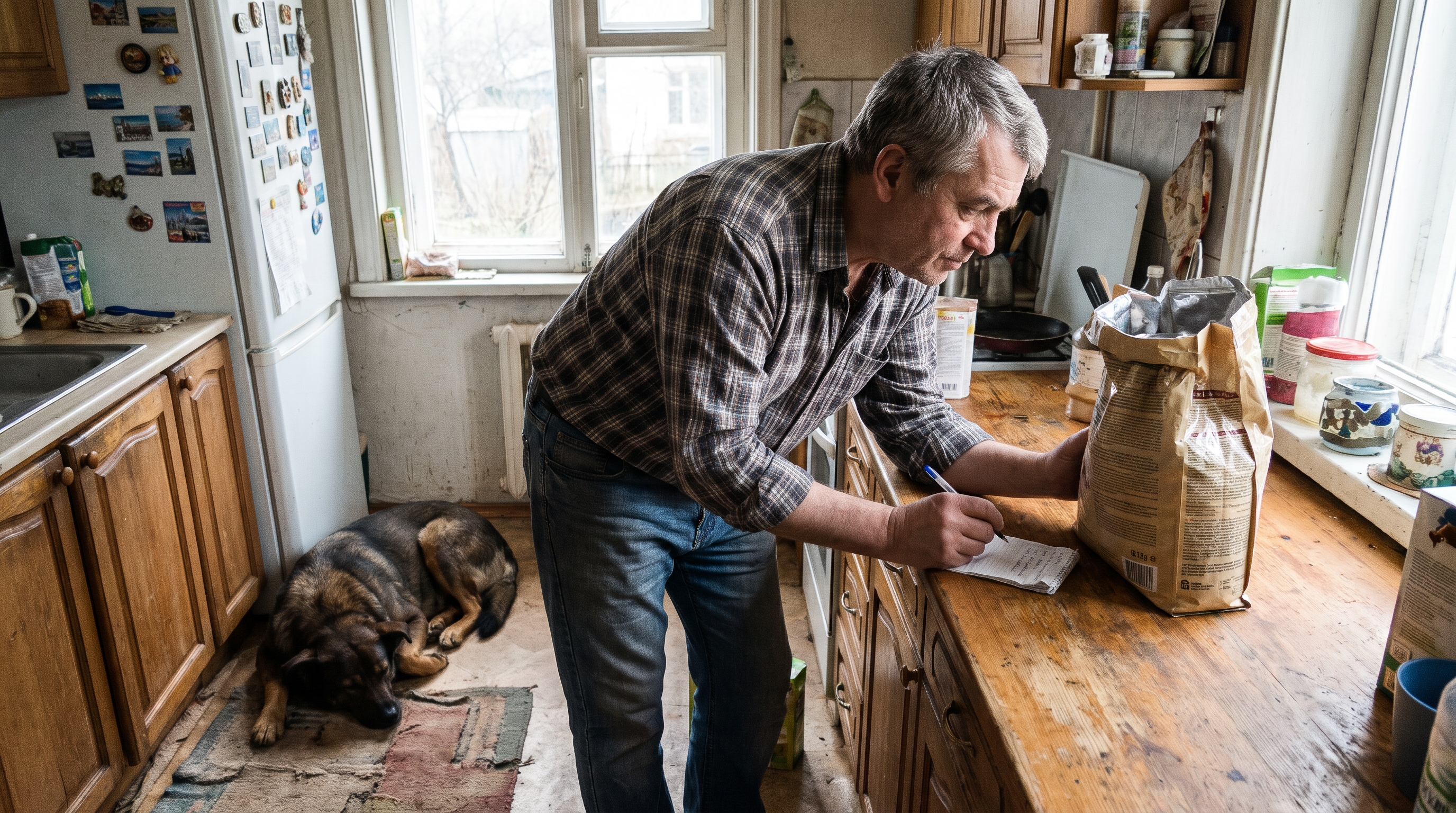
Illustrative supply check. Write the reorder cue while there is still food in the bag.
My Reorder-Before-Empty Plan
Print, fill in and file under Supplies. Choose one ordinary staple. Keep every number in days.
1. Know my item
Item / usual size:
Our normal use:
Amount left lasts about: _____ days
2. Set the cue
Normal time to get more: _____ days
Small extra cushion: _____ days
Add those two: _____ days
I will reorder when about _____ days remain.
3. Give the cue a place
☐ Reorder note posted or reminder set
My check or reminder:
Usual source:
Backup source:
Amount I can afford to buy:
Next check:
4. Spot the pattern
What else is easy to buy, but slow to replace?
Use for ordinary supplies, not medicine dosing or refills. Follow storage directions. Keep a modest amount you can use and afford.
Today’s win: one staple counted in days, a reorder point chosen and a reminder actually set. You have given yourself time to choose before it runs out.
What keeps sending you back to the store?
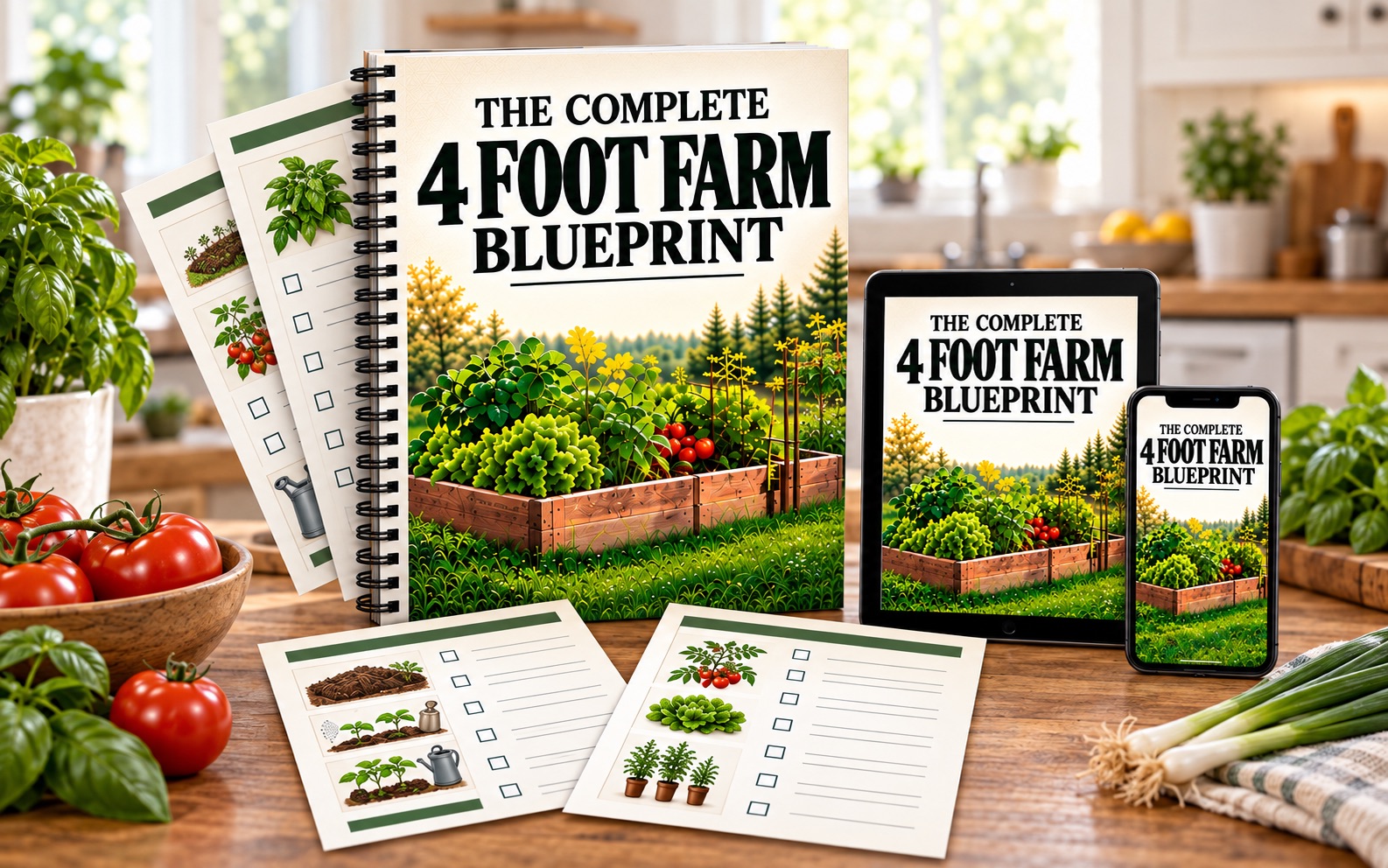
A bag of greens. A few tomatoes. Herbs for dinner. The same fresh foods land on the list, week after week.
What if you could pick a little of that food at home? Our friends at 4 Foot Farm put the steps in the COMPLETE Blueprint. Start with one food you love, one small spot and pictures to follow. A simple grow light can help you start indoors before spring.
Tap below. See what your first small food setup could look like.
| Tap Here to See the COMPLETE Blueprint → |
Stay steady,
Sam McCoy
Self Reliance Report
P.S. What item always seems to run out at the wrong time? Reply with it. Forward this to someone whose shopping list starts when the bag is empty.