
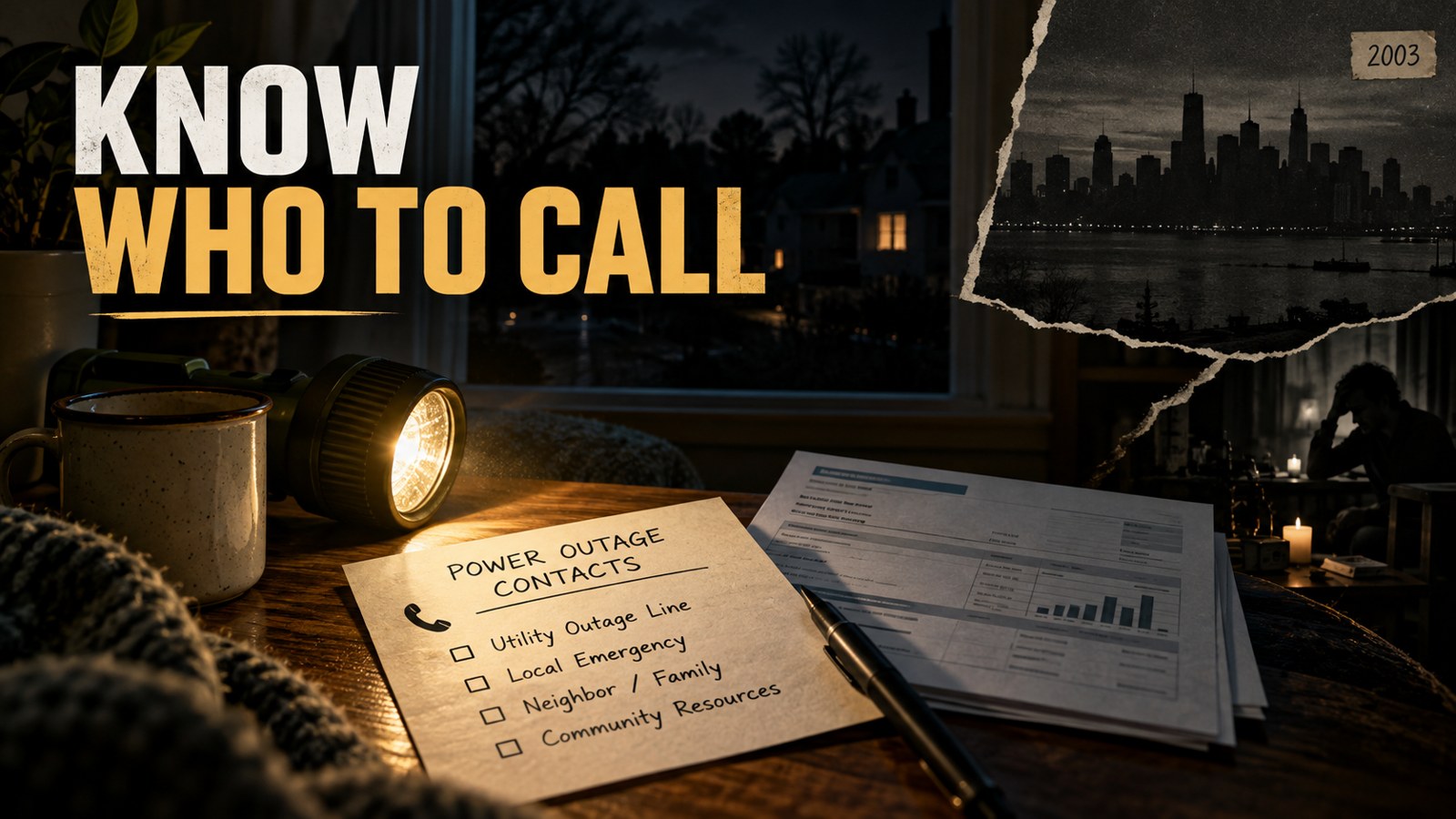
Your Daily Install connects what’s happening now with a useful pattern from the past—and one simple step you can take today to make your household more resilient.
Print the action worksheet below, fill it in, and add it to your Household Resilience Network binder.
What’s happening now?
The lights go out. You open the bill, find a company name and start calling. Then you learn it is the seller—not the crew that handles the wires.
Winter-awareness events are underway this week in several states. That makes this a useful moment to check one easily missed detail: who takes the outage report for your address?
In some areas, your electricity supplier and the local delivery utility are different companies. The company that owns the local wires handles their repair. Find its reporting route while the internet is working.
Has this happened before?
On August 14, 2003, power failures spread across parts of the United States and Canada. The investigation found several causes, including tree contact and problems with grid monitoring.
In one control room, alarm software failed. Operators lost warnings they relied on to understand changing conditions.
The equipment problem and the information problem fed into the same bad afternoon. Knowing what was happening—and getting that information to the right place—mattered.
What happened next?
The investigation produced recommendations on grid reliability, maintenance, training and monitoring. Better reporting was one piece of a much larger repair.
The household pattern: know the right route before the usual route fails. Your phone call cannot prevent a grid failure. But a clear contact plan can keep you from wasting your battery in the wrong queue.
You just had the word. Where did it go?
You stop in the middle of a sentence. The word was there a moment ago. Why does this memory-support video begin with the brain’s cleanup process?
Tap Here to Watch the Memory-Support Story →What can I do?
Use 10 minutes to make a paper outage card. Check a recent bill or the delivery utility’s official site. Find the outage-reporting number and whether it offers outage texts. Do not report a fake outage as a test.
Write the company name, reporting number and your service address. Save the number in your phone, too. Keep account numbers on a separate private record if the utility requires them.
Add a separate danger rule: downed wires are an emergency. Stay well away, keep others back and call 911 and the utility. Do not approach a wire to find out whether it is live.
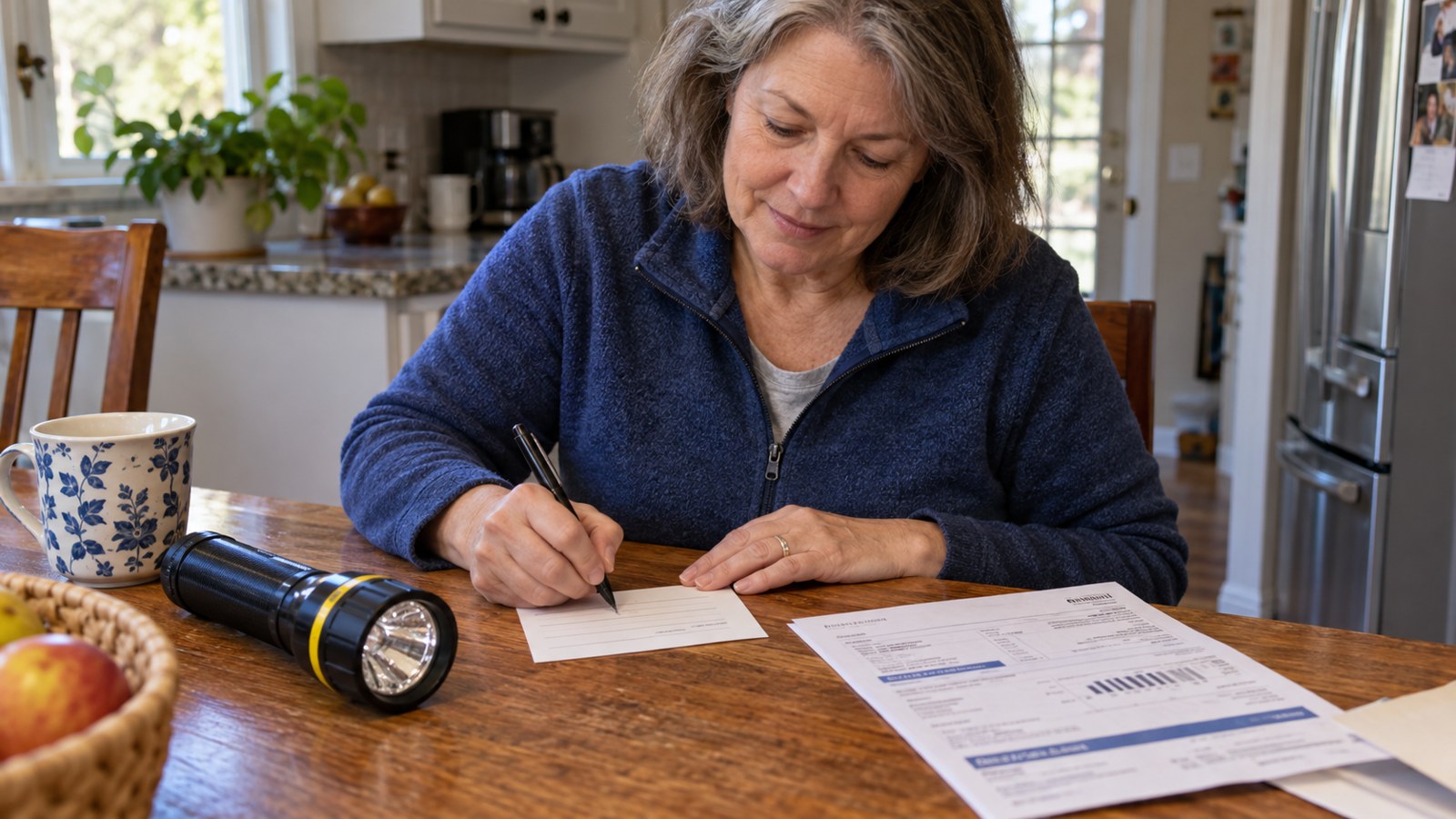
Illustrative household example. Use the worksheet for your own details.
My Power-Outage Contact Card
Date: __________ File under: Household Supplies
1. Find the delivery utility
Local wires / delivery company:
Verified from bill or official site:
2. Save the reporting route
Outage number:
Service address:
☐ Phone contact saved ☐ Paper copy made
3. Check another route
Official outage-text option:
☐ No false test report sent
4. Keep it handy
Paper card location:
☐ Household knows the downed-wire rule
Today’s win: Your actual delivery utility and reporting number are saved on paper and in your phone.
The outlets are dead. What is Plan B?

A row of dead outlets can change the whole day. What if your next backup started with a set of plans instead of another ready-made gadget?
See the DIY idea behind the Energy Revolution System. The video opens up the project and the parts it calls for.
| Tap Here to See the DIY Power Idea → |
Stay steady,
Sam McCoy
Self Reliance Report
P.S. Did your bill list two electricity companies? Reply yes or no. Share the idea, not your account information.
P.P.S. One useful next read from the Household Resilience Network: Stronghold Install: Choose One Person Outside the Outage.