
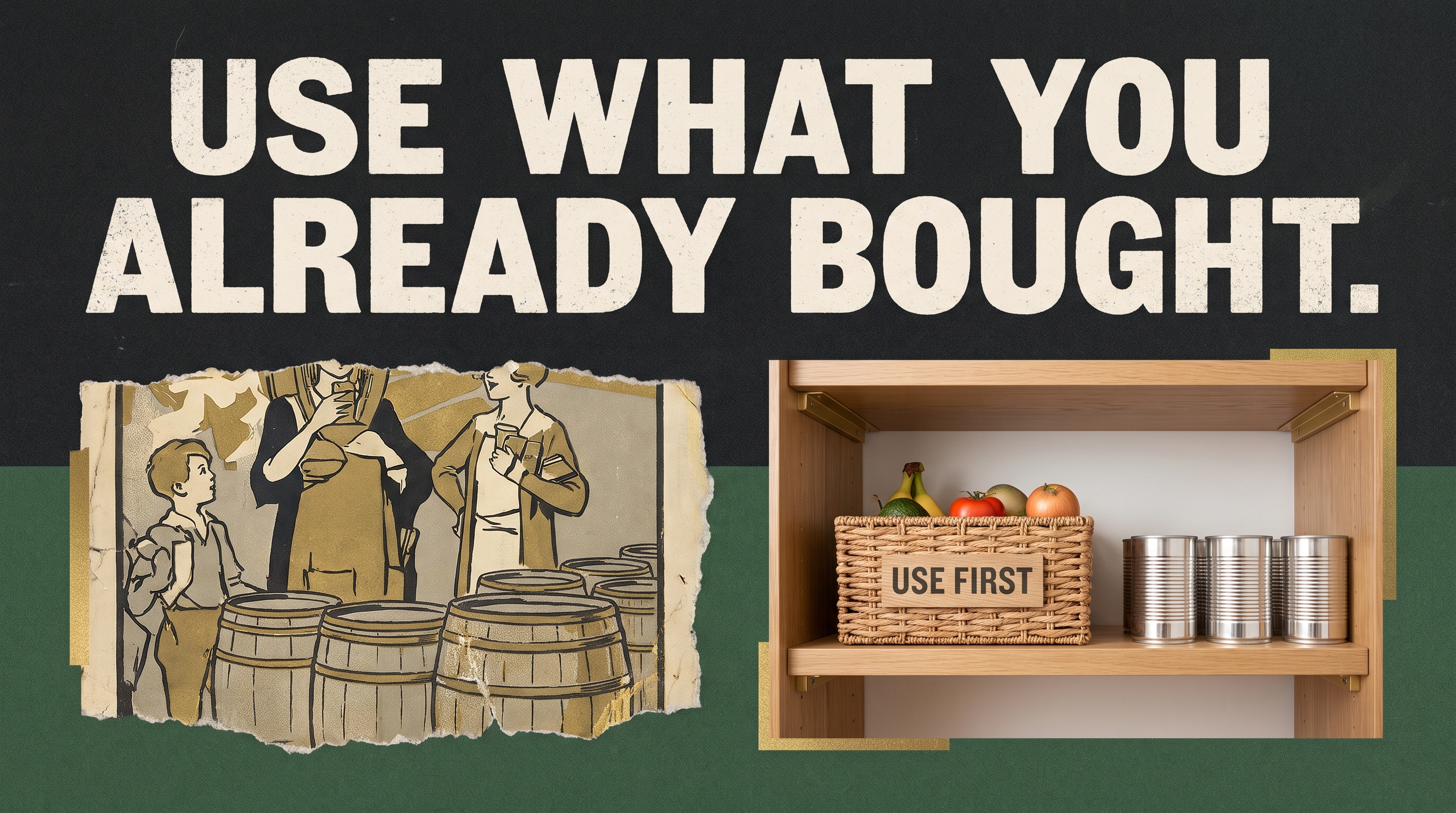
Your Daily Install connects what’s happening now with a useful pattern from the past—and one simple step you can take today to make your household more resilient.
Print the worksheet below, fill it in, and add it to your Household Resilience Network binder.
What’s happening now?
You buy beans for the pantry. At home, there are already three cans behind the pasta. The shelf is full. Dinner still feels undecided.
November starts today, and holiday food shopping will soon compete with the usual weekly list. Before adding more, give one shelf a useful job: make the older sound food easy to see and use.
Stored food becomes a stronger backup when it moves through meals. A full shelf is not the same as a working food plan.
Has this happened before?
In 1917, the United States created the Food Administration to help manage wartime food needs. Its campaign did not stop at asking farms to grow more. It asked households to waste less and change how they used food.
Posters and guidance put ordinary kitchen choices inside a much larger supply problem. A meal, a leftover and a shopping decision could all affect how much food remained available.
The wartime demands were different from today’s holiday shopping. But one household idea travels well: buying extra is only one way to strengthen supply. Using what you already paid for matters, too.
What happened next?
The campaign made food saving part of daily household work. It could not make every shortage disappear. It did give families a role beyond waiting for the next delivery.
Give the food an intended meal before you give it more shelf space. You are more likely to notice a gap—or avoid a duplicate—when you can name what you will cook.
Been pulling up this yellow flower?
You call it a weed. Someone who knows wild plants stops for a closer look. See the food-identification skill behind that second glance.
TAP Here to Watch the Foraging Lesson →What can I do?
Spend 15 minutes on one pantry shelf. Choose three sound, unopened foods you already use. Put older purchases at the front. Check labels, storage guidance and package condition.
Name one meal that uses at least two of them. Beans and canned tomatoes might become soup; pasta can turn them into another dinner. Add only the missing ingredients to your list.
Do not use swollen, leaking, badly rusted or deeply dented cans. Do not taste food to test its safety. Food dates often describe quality, but storage and package condition still matter. When unsure, use USDA guidance rather than guessing.
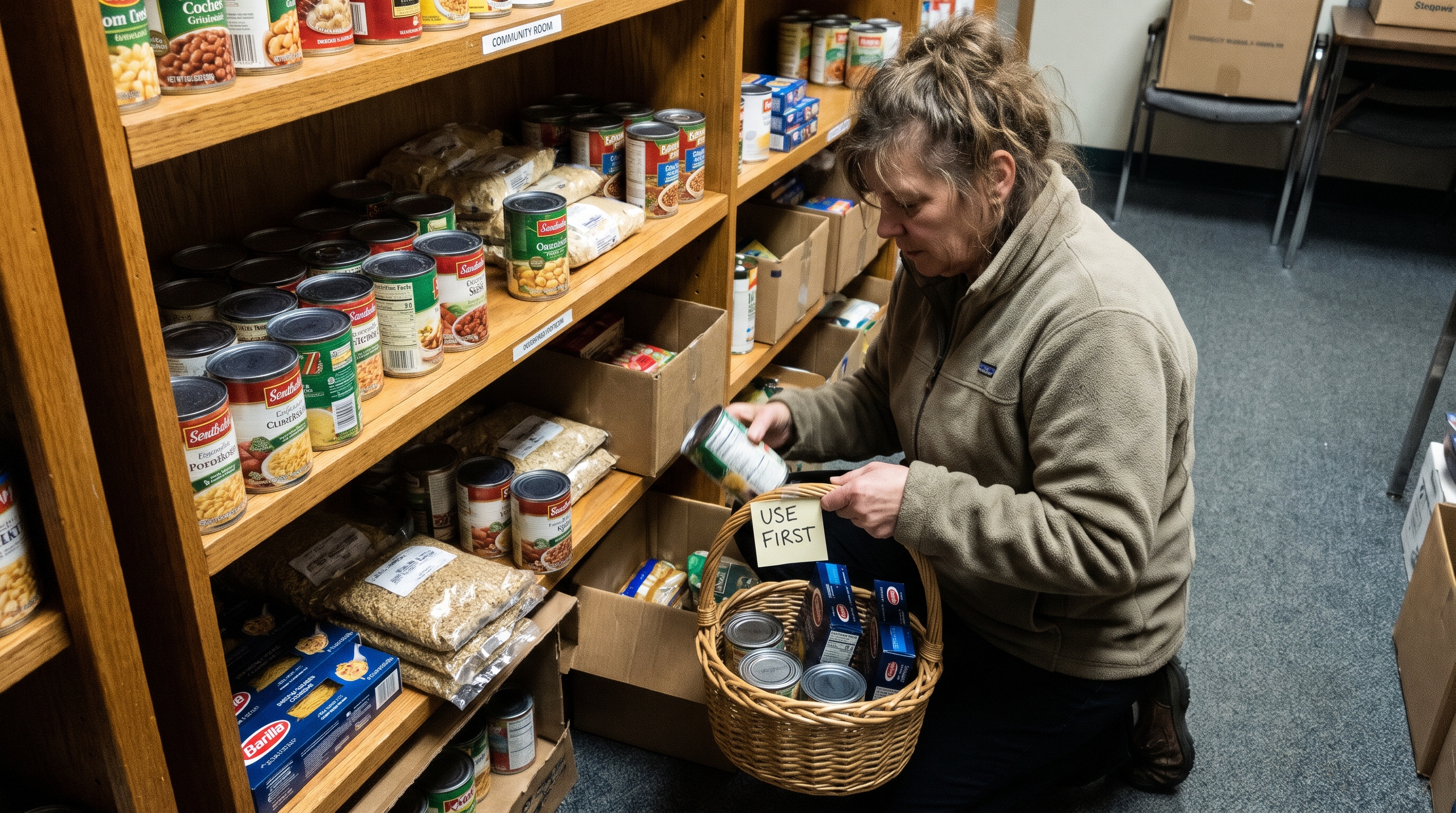
Illustrative household example. Fill in your own details below.
My Use-First Shelf
Date: __________
File under: Food Backup
Find what is already here
Three sound foods to use:
Meal using two of them:
Buy only the gap
Missing ingredient:
Meal date:
☐ Older purchases in front ☐ Packages checked
Today’s win: One meal is planned from food already paid for, with a shorter missing-ingredient list.
Your food backup can include something growing.
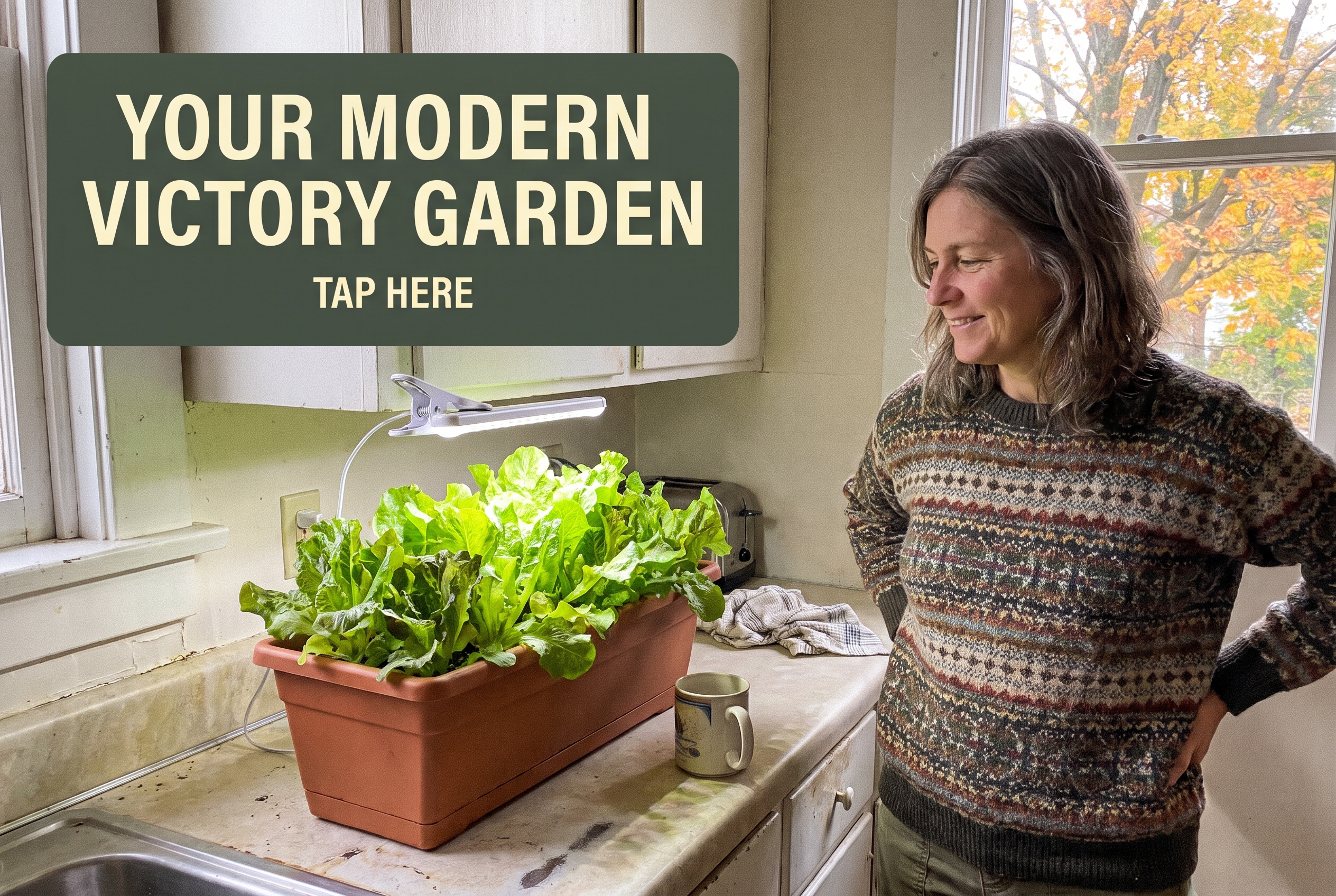
A stocked shelf is useful. So is fresh food you can pick for a meal.
Take one repeat purchase out of the store’s hands. Begin a modern Victory Garden with a food you actually use, in a container or a small indoor spot.
The COMPLETE Blueprint gives you picture steps, low-cost starting ideas and plant-light options. Build from one manageable win.
Get over 80% off the complete digital Blueprint plus both bonuses through this VIP link. See how to add a growing layer to your food plan.
| TAP Here for Your Modern Victory Garden → |
Stay steady,
Sam McCoy
Self Reliance Report
P.S. Which food keeps getting lost at the back of your cupboard? Hit reply with one. Forward this to someone making a holiday shopping list.
P.P.S. Want the short route to the COMPLETE small-space food-growing Blueprint? PRESS Here to See the Starting Plan →