
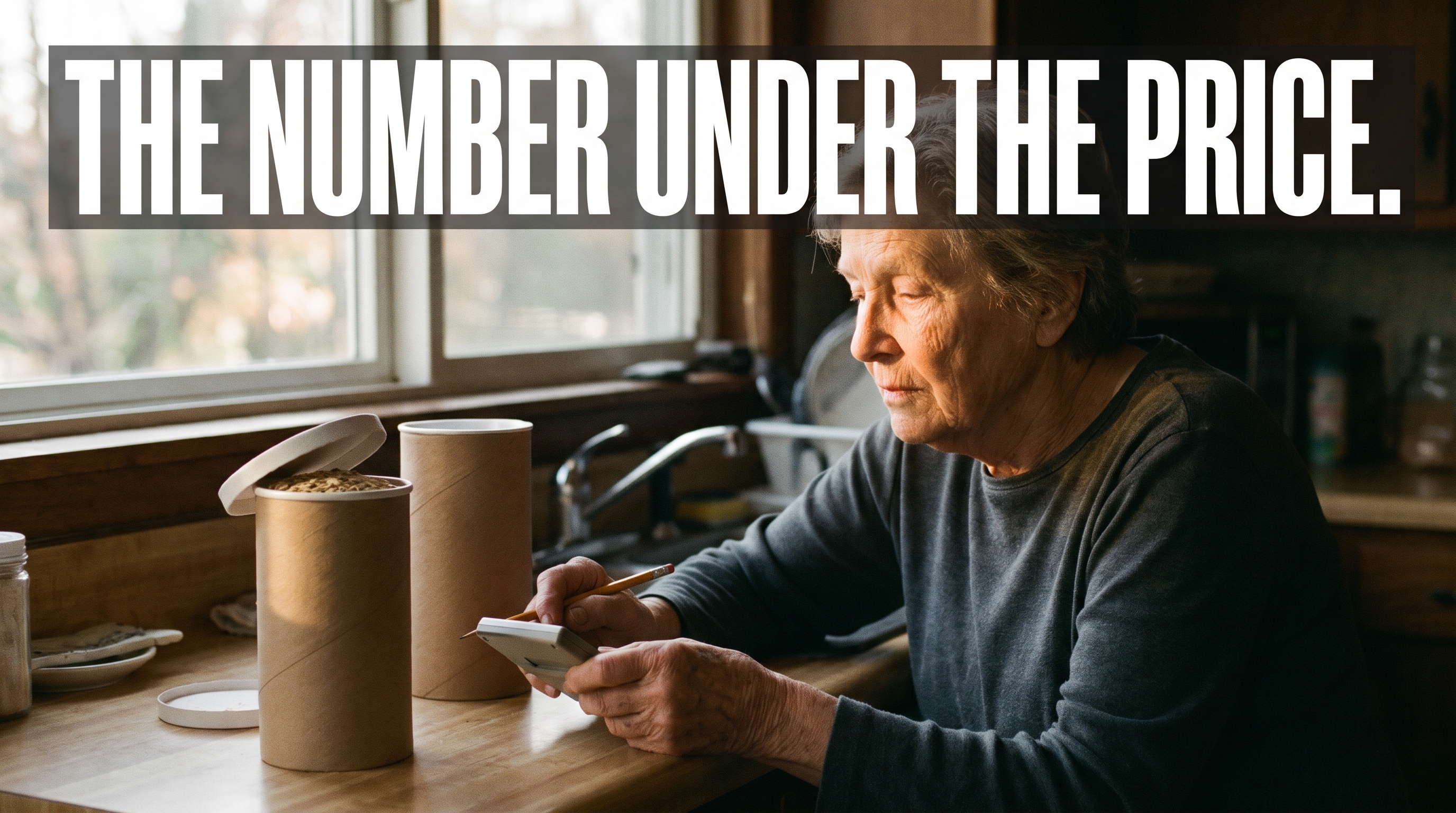
The large container looks like the sensible choice. The bright sale label helps. But neither tells you what the same amount of food costs in the smaller package.
That number is often sitting below the one your eye reaches first.
SPONSORED · 4 FOOT FARM BLUEPRINT
Could you skip buying the whole bunch next time?
A little fresh food at home can give you another place to start. The COMPLETE digital 4 Foot Farm Blueprint includes small-space and indoor growing steps. See the $7 Black Friday offer and choose one food you actually use.
| TAP Here for the COMPLETE Blueprint → |
Tonight’s Install
One useful change for the home you already have. Print the worksheet below and add it to your Household Resilience Network binder.
ACTION BRIEF
Time: 10 minutes
Do: Compare two sizes of one food using the same unit.
Win: you can name the cheaper amount and the package you will actually use.
What’s happening now?
USDA’s current grocery-ad report covers offers ending through November 5. Its comparisons with last year show some featured produce prices rising and others falling. That is an advertised-price survey, not your whole grocery bill.
The useful signal is that “everything is a bargain” and “everything costs more” are both too blunt for the aisle.
When supermarket labels began doing the math
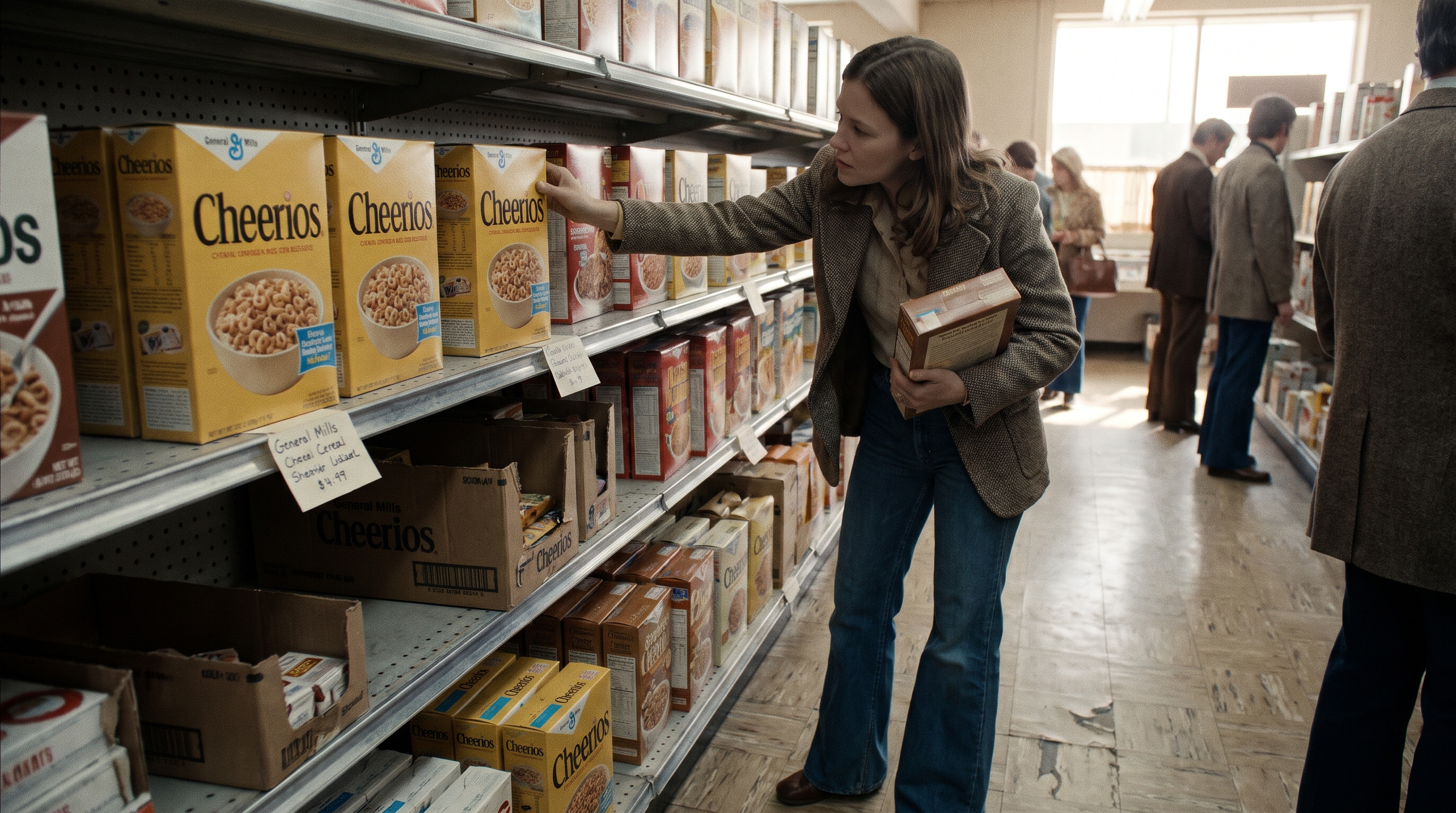
Illustrative historical reconstruction.
In the 1970s, American supermarkets were changing how people saw prices. More stores adopted scanners, and shoppers faced shelves full of different brands and package sizes. A sticker price was not always enough to make a fair comparison.
A federal report published in 1978 described unit pricing: shelf or package labels showing a cost per ounce, pound, quart, or another standard amount. It reported that by the end of 1976, many chain supermarkets had adopted the system.
That gave a shopper a different question to ask. Instead of comparing a small box’s total with a large box’s total, the shopper could compare the price of the same amount. A big package might win.
It might not.
NIST’s current guide carries that idea forward. Clear, consistent units make comparisons easier. If one shelf label uses ounces and the other uses pounds, the numbers are not ready to compare until you put them on the same basis.
The labels did not make every shopping decision simple. A unit price cannot tell you whether food will spoil, whether you have storage space, or whether your family likes it. It answers one limited but valuable question about cost.
That is why the household decision needs two steps. First, compare like with like. Then ask how much you will use.
A lower price per ounce is not a saving if much of the package goes in the bin. A slightly higher unit price may fit a small household better.
The useful invention was not a new kind of food. It was a clearer measuring stick. You can bring that same clarity to one purchase before your next grocery trip.
Why did a merchant need a stone duck?
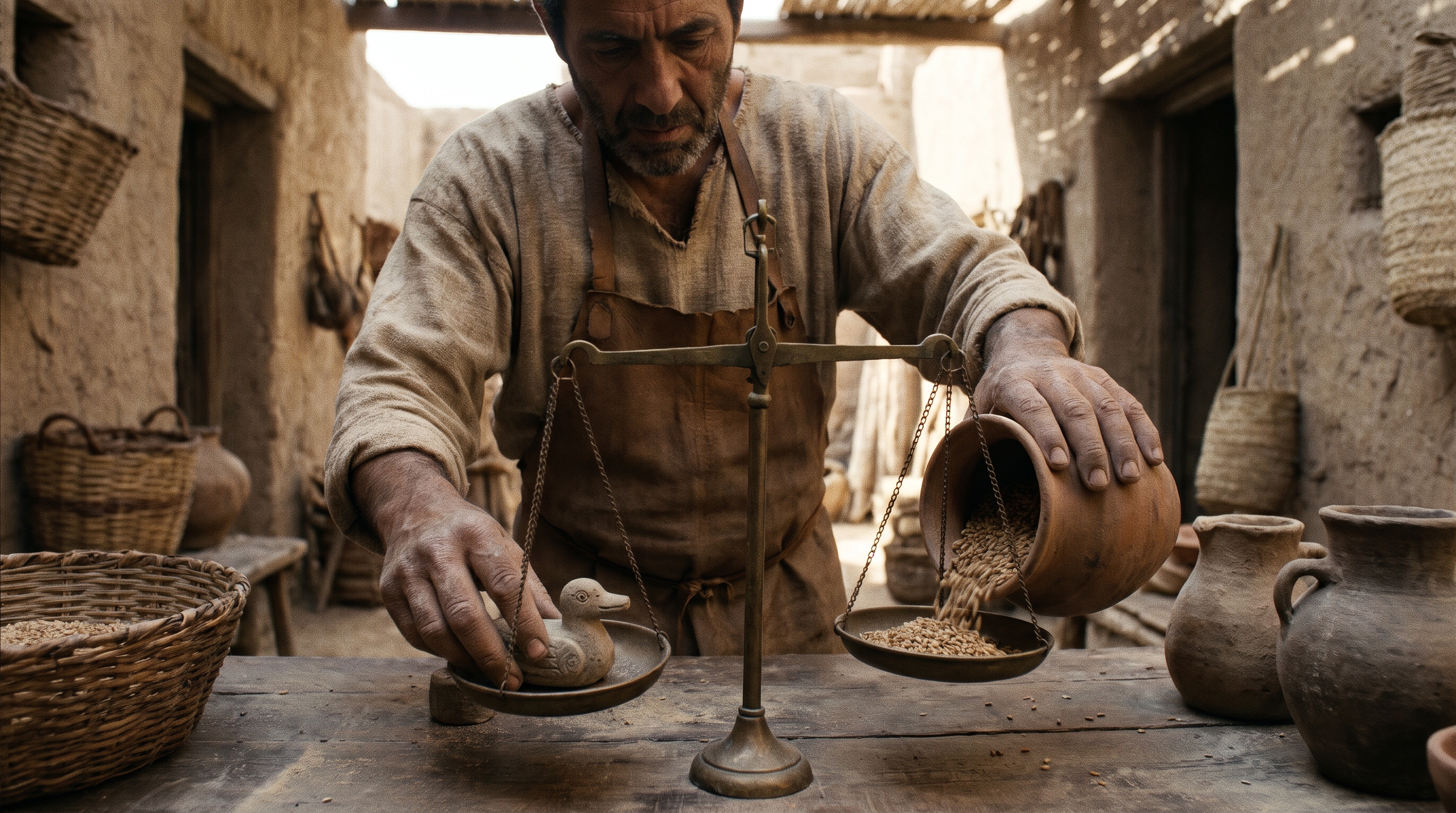
Illustrative historical reconstruction.
A small stone duck in a museum may look decorative. In ancient Mesopotamia, examples of that shape had a practical job: they were weights. The Metropolitan Museum dates one to the late third or early second millennium BC.
Other surviving duck weights carry statements of their weight or ownership. A merchant using a balance could compare a quantity with a known weight. The shape might be memorable, but its useful role was measurement.
Harvard’s Museum of the Ancient Near East describes the duck form as a standard type in Bronze Age Mesopotamia. These objects belong to a trading world that needed ways to measure goods and valuable materials.
That does not mean the whole region used one perfectly enforced system. Standards, places, and periods differed. Nor does an ancient weight prove that every trade was honest.
A measuring tool helps a comparison; it does not remove every source of unfairness.
The narrow connection to your grocery shelf is the unit. If two quantities are measured in different ways, the larger-looking number can mislead you. A shared measure gives the comparison a useful base.
At home, the stone duck becomes a few seconds with a calculator. Price divided by ounces gives price per ounce. Price divided by count gives price per item, when the items are truly comparable.
Then comes the household part that no balance can decide for you: will you use what you buy?
A full pantry is not the same as a useful pantry. Choose the amount that fits your meals and storage, after you understand the price.
The old weight gives us a simple reminder. Before judging value, make sure the quantities being compared mean the same thing.
SPONSORED · Prostadine
Another bathroom trip before morning?
Another trip down the hall. Another broken stretch of sleep. Why does this prostate-support story begin with astronauts in zero gravity?
| TAP Here for the Astronaut Connection → |
THE PATTERN TO KEEP
Across BOTH examples, a shared unit made a fairer comparison possible; the size of the package alone did not.
What can I do tonight?
Take two sizes of the same food from your cupboard or an online grocery listing. Use the same product and the same unit. Divide price by ounces, pounds, or count.
Write both results. Choose the amount your household can use and store. If a sale requires several packages or a membership, include that condition before calling it a saving.
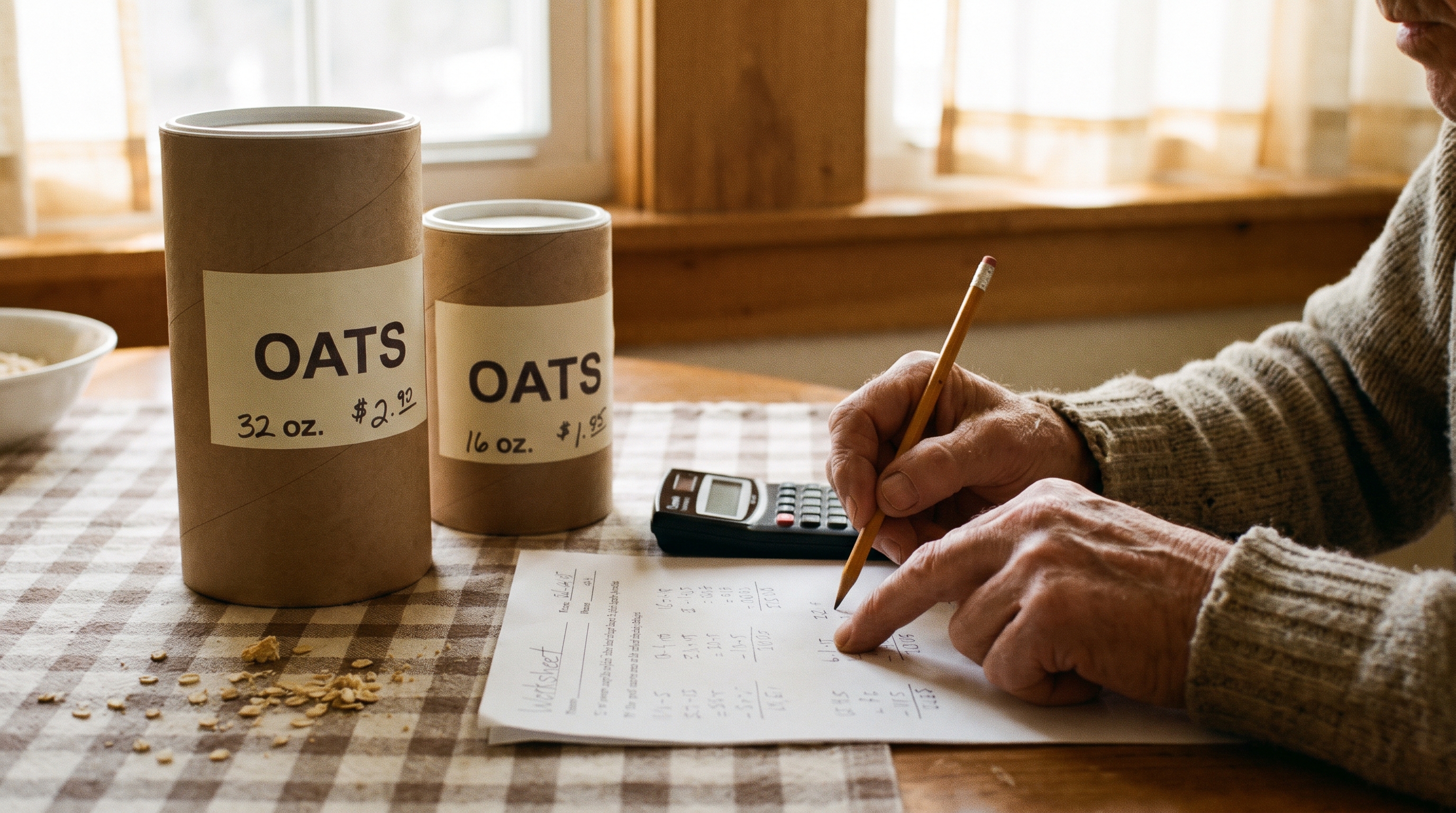
HOUSEHOLD RESILIENCE NETWORK · BINDER WORKSHEET
Read the Price Under the Price
Date: __________________
Same food and comparison unit
Package A: price, amount, unit cost
Package B: price, amount, unit cost
Our usable amount and choice
Status Check
Win: you can name the cheaper amount and the package you will actually use.
SPONSORED · 4Patriots
What could you keep running in a blackout?
Your phone is fading. The fridge has gone quiet. A rechargeable power station gives chosen devices another source of power. Could this one cover the essentials you would miss first?
The takeaway
Compare two sizes of one food using the same unit. Keep the change small enough to finish, and leave a record you can check again.
Stay steady,
Sam McCoy
Self-Reliance Report
Do more with what you have.
P.S. Which food had a surprising unit price? Reply with the food and the two package sizes. Forward this to your household’s grocery shopper.
One more useful read: Give potatoes a better storage spot →
P.P.S. · 4 FOOT FARM BLUEPRINT
Start with one food your household already eats. See the Modern Victory Garden →
USDA: advertised prices through November 5
GAO: 1978 food-price report
NIST: unit pricing
Met: duck-shaped weight
Harvard: duck weights
Images are illustrative reconstructions, not archival photographs.