
The U.S. national debt has breached $39 trillion, and the Federal Reserve is trapped in a debt spiral that mirrors the final days of Cleopatra’s Egypt. As the government continues to debase the dollar to service its massive obligations, inflation is crushing the American middle class. We are witnessing the classic signs of a dying fiat system. But while politicians argue over interest rates and tariffs, the real question is what you are doing to protect your family. When paper currency loses its value, you need a tangible asset that cannot be printed away. You need a currency that actually grows.
The Historical Parallel: Surviving the Ptolemaic Collapse
In the late Ptolemaic Kingdom of Egypt, rulers like Ptolemy XII and Cleopatra VII faced a massive debt crisis. To fund their endless foreign wars and lavish lifestyles, they systematically debased the silver drachmae.
They melted down the currency and mixed it with cheap copper until its silver content plummeted to a mere 33 percent.
The result was catastrophic hyperinflation. The cost of basic goods skyrocketed overnight. The savings of the middle class were wiped out, and the state responded by imposing brutal wage and price controls. The government created an army of inspectors to enforce these new rules, squeezing the working class from every direction.
But ordinary Egyptians did not just wait to starve. They turned to the one asset that had intrinsic, undeniable value: grain.
In ancient Egypt, grain was not just food; it was a foundational currency. The state and private citizens operated a network of grain banks. When the silver coins became worthless, the people relied on the physical reality of seeds and wheat to trade, survive, and maintain their wealth outside the collapsing financial system.
They understood a fundamental truth that modern Americans have forgotten: true wealth grows from the ground, not from a government mint.
When the state destroys the money, the people must return to the earth. The ability to produce calories became the ultimate measure of wealth, far surpassing the debased coins issued by a failing empire.
The Teachable Strategy: The Perpetual Seed Bank
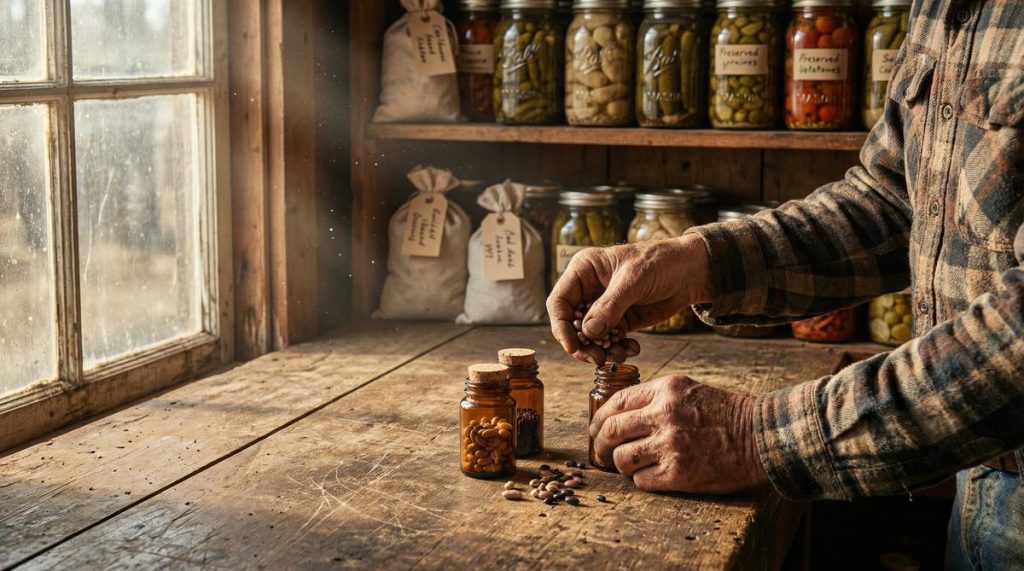
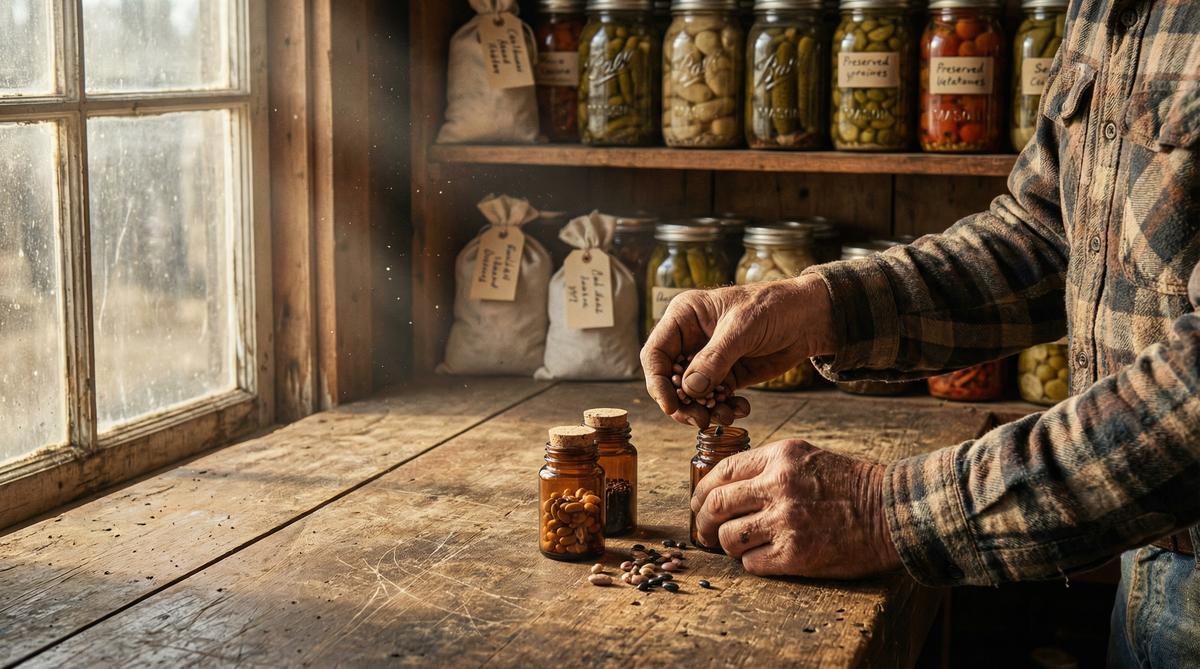
The modern equivalent of the Egyptian grain standard is the Perpetual Seed Bank.
When the dollar’s purchasing power evaporates, you cannot eat gold, and you cannot plant silver. Heirloom seeds become the ultimate “shadow currency.”
They are lightweight, highly tradable, and possess the unique ability to multiply their value exponentially. A single tomato seed can produce fifty tomatoes, each containing dozens of new seeds. A handful of corn kernels can yield a harvest that feeds a family for weeks.
Building a perpetual seed bank is not just about buying a bucket of seeds and throwing it in the back of your closet. It requires a specific method of selection, preservation, and rotation to ensure your “currency” remains viable for years.
This is a skill you can start mastering this week with minimal equipment, creating a tangible store of value that no central bank can inflate away. By establishing this system now, you are effectively printing your own money for the future.
Step-by-Step Instructions: Building Your Seed Bank
Follow these exact steps to create a secure, long-lasting seed bank that will serve as both your food supply and your barter currency.
Step 1: Select High-Calorie, Open-Pollinated Varieties
Do not waste space on hybrid (F1) seeds. Hybrids will not breed true in the second generation, meaning the seeds you save from them will be useless. You must acquire open-pollinated, heirloom seeds. Focus on high-calorie survival crops: beans, corn, squash, potatoes, and root vegetables. Add fast-growing greens for immediate nutritional needs.
Step 2: Desiccate the Seeds Properly
Moisture is the absolute enemy of seed longevity. Even a small amount of residual moisture can cause rot or trigger premature germination. Before storing, your seeds must be bone dry. Place your seeds in a paper envelope and put them in an airtight container with a large silica gel packet for two weeks. This process will draw out the hidden moisture that destroys seed viability.
Step 3: Create an Airtight, Light-Proof Environment
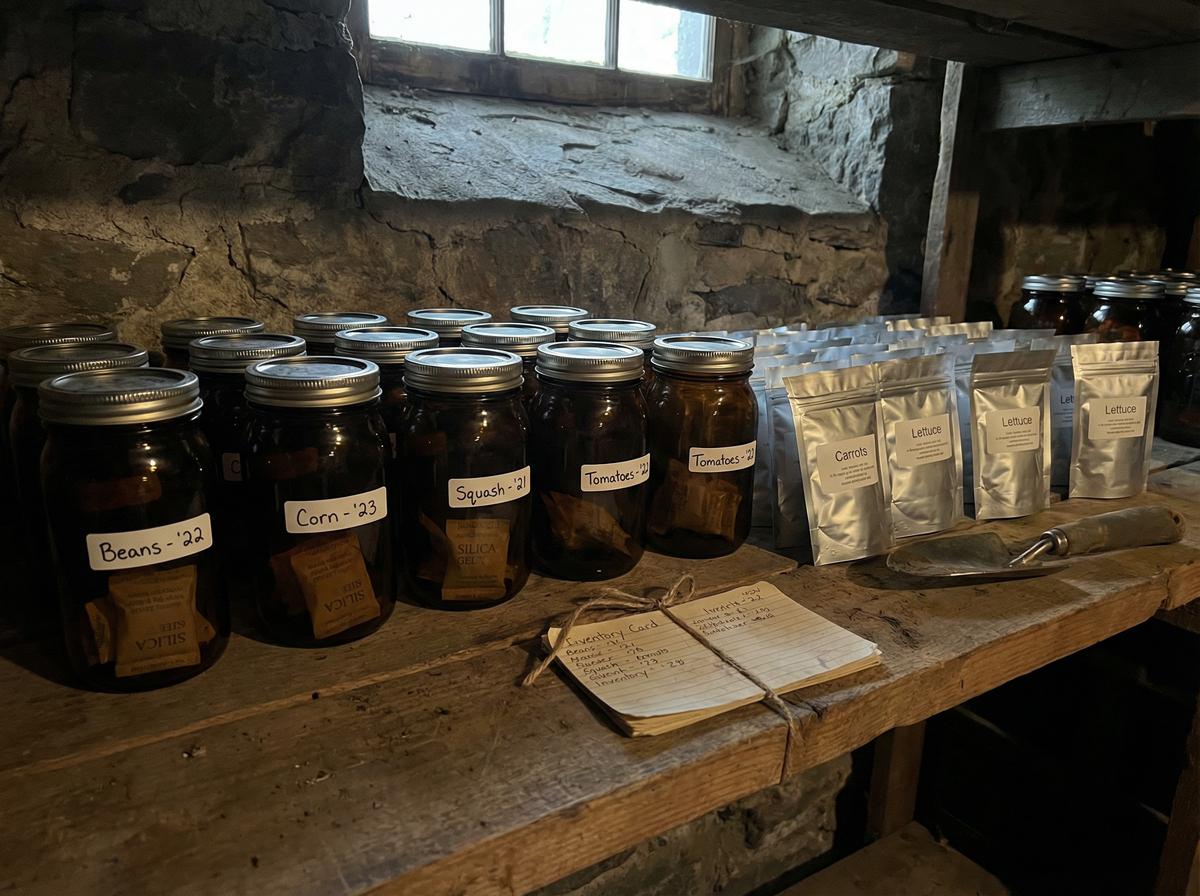
Light and oxygen degrade seed viability over time. Once your seeds are fully desiccated, transfer them into small, individual Mylar bags or amber glass jars. Add a fresh oxygen absorber to each container before sealing it tightly.
Step 4: Establish a Cool Temperature Baseline
Heat destroys seeds faster than almost anything else. For every 10-degree drop in temperature, the shelf life of a seed effectively doubles. Store your sealed containers in the coolest, most stable environment in your home. A basement, root cellar, or even a dedicated chest freezer is ideal. Avoid garages or attics where temperatures fluctuate wildly.
Step 5: Implement the Three-Year Rotation System
A seed bank is a living account, not a time capsule. You cannot just bury it and forget it. Divide your seeds into three batches. Plant batch one this year, save the best seeds from the harvest, and put them at the back of the line. Next year, plant batch two. This ensures your stock is constantly refreshed and adapted to your specific local microclimate over time.
Basic Materials List
| Item | Purpose | Estimated Cost |
|---|---|---|
| Open-pollinated heirloom seeds (beans, corn, squash) | Core seed stock | $20–$40 |
| Silica gel desiccant packets | Moisture removal | $8–$12 |
| Amber glass jars (4 oz) | Airtight, light-proof storage | $15–$25 |
| Oxygen absorbers (100cc) | Prevent oxidation | $10–$15 |
| Small Mylar bags | Secondary storage layer | $10–$15 |
Longer-Term Strategies for Economic Resilience
Building your seed bank is just the first step in insulating yourself from the coming economic storm. To truly thrive when the system fails, you must expand your capabilities and build a comprehensive self-reliance strategy.
1. Master Seed Saving from the Harvest
Stockpiling seeds is good; knowing how to harvest and process seeds from your own crops is better. Learn the difference between wet processing (for tomatoes and cucumbers) and dry processing (for beans and grains). This skill turns your garden into a literal money printer. Once you have your seeds, you need to know how to grow them efficiently in small spaces — a core principle taught in the 4 Foot Farm Blueprint.
2. Develop a Local Barter Network
Your seeds will become highly valuable trade goods. Start identifying like-minded individuals in your community now. Establish quiet agreements on what goods and services you can exchange. Understanding these historical economic cycles and how to position yourself is exactly what The Pattern Ledgers tracks. For broader security measures to protect your assets during an economic collapse, consult Survival Stronghold.
3. Integrate Medicinal and Nutritional Plants
Do not just store food crops. Include medicinal seeds in your bank to create natural remedies, aligning with the principles of Seven Holistics. Maintaining your physical well-being during a crisis is paramount; stay informed with Freedom Health Daily. For urgent updates on medical supply chain disruptions that might require you to rely on your own medicinal garden, monitor Freedom Health Alerts.
4. Build Redundant Storage Systems
Never keep all your wealth in one location. Once your primary seed bank is established, create a secondary, smaller cache stored in a different location. This protects your “shadow currency” from localized disasters like fire or flooding.
As noted in recent analysis by American Downfall, the debt spiral is accelerating. You cannot stop the collapse of the dollar, but you can control your exposure to it. Make your seed bank a core component of your emergency bug-in plan, as recommended by the Ready Report. You can find the necessary tools and supplies to build your self-reliant infrastructure at Homesteader Depot.
Explore more strategies for true independence right here on the Self Reliance Report. The time to build your shadow currency is now, while the seeds are still cheap and the system is still standing.