The United States is currently burning roughly $1 billion every single day on a war with no defined exit strategy.
While the political establishment continues to fund a multi-front global conflict, the domestic economy is cracking under the pressure of inflation, skyrocketing diesel prices, and fertilizer shocks.
This isn’t just a political crisis; it is a direct threat to your family’s financial survival.
When a superpower overextends itself globally, the cost is always passed down to the working class through hidden taxes and currency devaluation.
You cannot stop the Federal Reserve from printing money, but you can absolutely build a financial fortress around your own household.
The Historical Parallel: The Fall of the Umayyad Caliphate
We have seen this exact pattern of imperial overextension before.
In the early 8th century, the Umayyad Caliphate was the undisputed superpower of the globe, stretching from Spain to Central Asia.
They were a military juggernaut, but their strength was an illusion built on endless wars and crushing taxes.
To fund their military overextension, the Umayyad elite squeezed their own citizens, bleeding the working class dry to maintain garrisons thousands of miles away.
The breaking point came not from a foreign invasion, but from internal financial exhaustion.
When the Abbasid Revolution began in 747 AD, the empire had simply run out of money and goodwill, collapsing in less than three years.
The survivors of this collapse weren’t the ones who relied on the centralized state.
They were the families who had quietly built local resilience, diversified their wealth outside the imperial currency, and mastered skills that retained value regardless of who sat on the throne.
The Umayyad collapse teaches us a terrifying but vital lesson about the fragility of global empires.
When the central authority is paralyzed by debt and the global supply chains break down, the only security that matters is the security you have built with your own hands.
The people who grew the food, built the cities, and paid the taxes were treated as second-class citizens, bled dry to fund foreign wars they did not support.
This is the inevitable mathematical result of decades of financial exhaustion and political arrogance.
The parallel to modern America is terrifying, as we fund global overextension with printed money and debt, while the middle class is crushed by inflation and a cost of living that makes basic survival feel like a luxury.
The Umayyads proved that you cannot fund a global empire by bankrupting your own citizens, because the math always catches up.
The Teachable Strategy: The “Shadow Economy” Barter Pantry
When an empire bleeds its currency dry to fund foreign wars, the money in your bank account loses its purchasing power by the day.
The most effective defense is to convert depreciating fiat currency into tangible, high-value barter goods before the inflation curve steepens.
This is the concept of the “Shadow Economy” Barter Pantry.
During the Umayyad collapse, and in every major currency crisis since, the people who thrived were those who held physical goods that everyone else desperately needed.
You don’t need a vault of gold to protect your family’s purchasing power.
You need a strategic stockpile of everyday consumables that will become hyper-valuable when the supply chain snaps.
This strategy is actionable today, requires minimal upfront capital, and provides an immediate hedge against the hidden tax of imperial overextension.
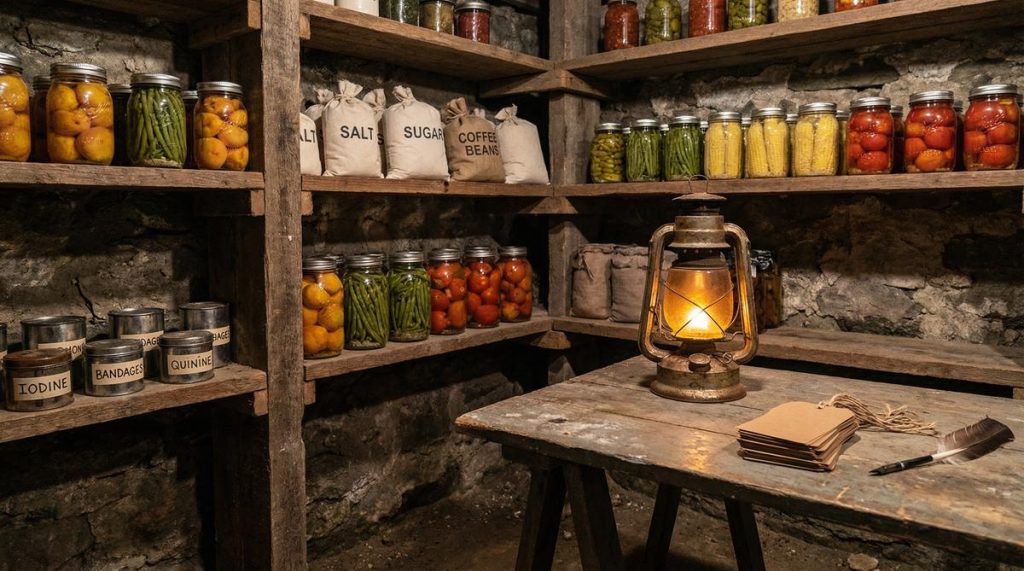
A barter pantry is not just a collection of random canned goods; it is a highly curated, liquid asset class that operates entirely outside the banking system.
When the grocery store shelves go bare, the true value of a pound of salt or a bottle of antibiotics becomes immediately apparent.
You are essentially building a decentralized bank in your basement, where the currency is measured in calories, hygiene, and medical utility.
This is how you insulate your family from the reckless spending of a dying empire.
Step-by-Step: Building Your Barter Pantry
Here is exactly how to start building your Shadow Economy Barter Pantry this week.
Materials List:
- Sturdy metal or wood shelving (at least 3 tiers)
- Airtight mason jars (quart and half-gallon sizes)
- Mylar bags with oxygen absorbers for bulk dry goods
- Permanent markers and adhesive labels
- A simple inventory spreadsheet or notebook
- A cool, dark storage location (basement or interior closet)
Step 1: Identify High-Velocity Barter Goods
Focus on items that are cheap now, have a long shelf life, and are universally consumed.
The best barter goods are often overlooked: salt, sugar, coffee, heirloom seeds, and basic medical supplies.
These items will trade at a massive premium when grocery store shelves go bare.
You must also consider items that are difficult to produce locally, such as high-quality cooking oils, spices, and specialized tools.
Step 2: Establish a Rotation System
Never stockpile what you don’t use.
Build a “first in, first out” rotation system on sturdy shelving in a cool, dark location.
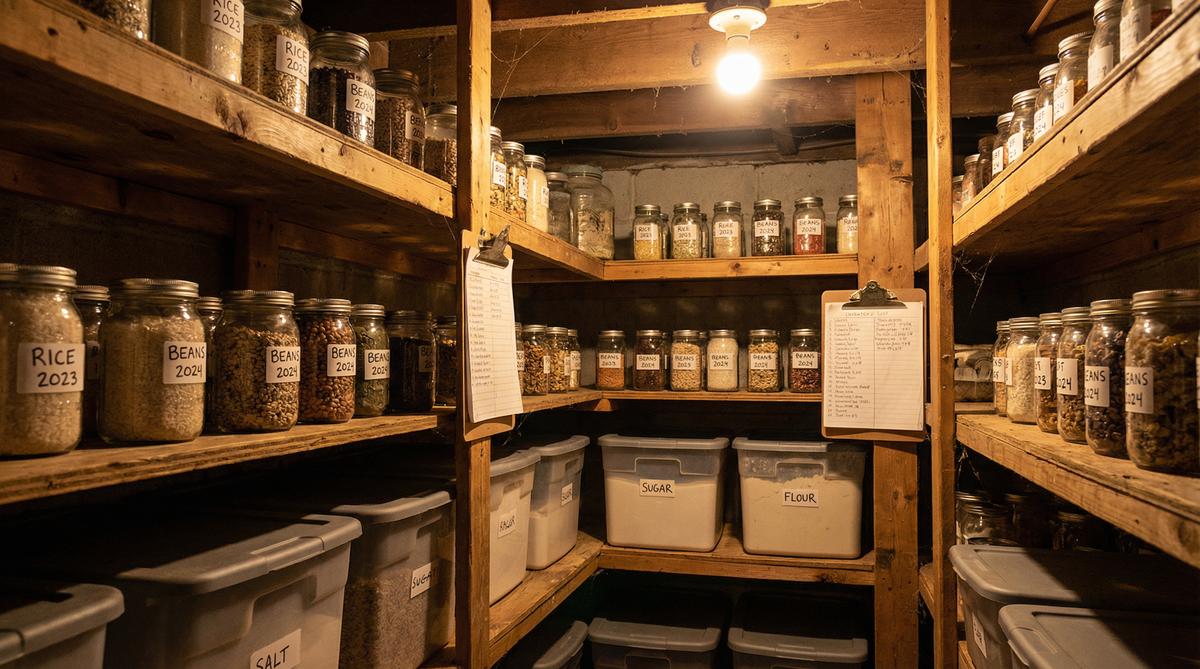
This ensures that your barter goods remain fresh and viable for trade.
A stagnant pantry is a wasted asset, so integrate your barter items into your daily consumption habits.
Step 3: Secure Your Water Independence
A barter pantry is useless if you don’t have the water required to process the food or maintain hygiene.
Before you buy your hundredth pound of rice, ensure you have a robust water catchment and filtration system in place.
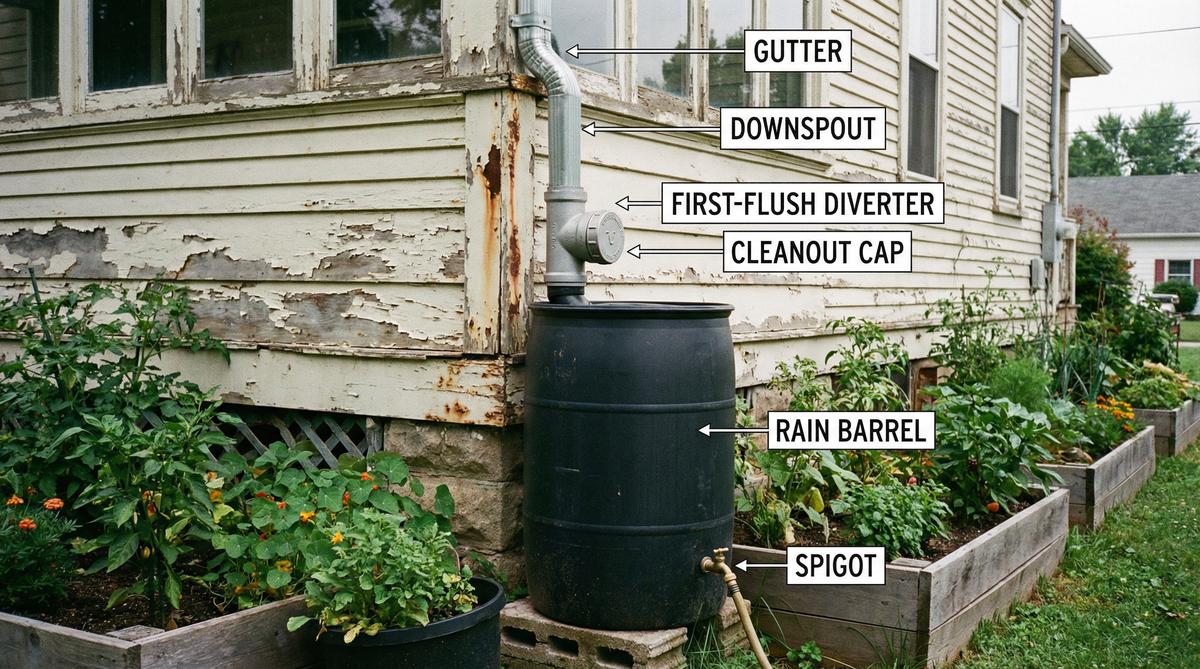
Water is the ultimate foundational asset, and without it, all other preparations are meaningless.
Step 4: Build Your Local Network
Barter requires partners.
Start quietly identifying neighbors who possess complementary skills or resources.
The man with the medical supplies will always be able to trade with the man who grows the food.
Building these relationships now, before the crisis hits, is the key to a functional shadow economy.
Step 5: Diversify Your Holdings
Do not put all your capital into a single type of barter good.
Spread your investments across food, medical supplies, tools, and hygiene products.
This diversification ensures that you will always have something of value to trade, regardless of the specific needs of your community.
Step 6: Maintain Operational Security
A well-stocked barter pantry is a massive target in a desperate environment.
Keep your preparations quiet, and only discuss your assets with trusted members of your local network.
Operational security is just as important as the physical goods you are storing.
Longer-Term Strategies for Total Sovereignty
Building a barter pantry is your immediate defense against the bleeding of the empire, but true self-reliance requires a multi-layered approach.
Once your immediate needs are secured, you must focus on producing your own resources rather than just storing them.
The most powerful step you can take is to establish a hyper-local food production system.
The 4 Foot Farm Blueprint provides the exact framework for growing a massive amount of calorie-dense food in a remarkably small space, turning your backyard into a perpetual asset.
To protect your physical health when the medical supply chain falters, you need the daily intelligence provided by Freedom Health Daily and the urgent threat warnings from Freedom Health Alerts.
For natural, off-grid remedies that don’t rely on pharmaceutical conglomerates, Seven Holistics offers the knowledge to build your own apothecary.
When you are ready to harden your property and build the physical infrastructure of independence, Homesteader Depot has the tools and supplies you need.
To understand the deeper historical cycles and position your family ahead of the curve, The Pattern Ledgers is the definitive guide to recognizing the rhymes of history.
For the tactical skills required to build true local resilience, Survival Stronghold and Self Reliance Report provide the daily intelligence you need to turn your property into a fortress of stability.
And to stay informed on the broader geopolitical and societal shifts that are driving these crises, American Downfall is your beacon for truth.
Finally, ensure your emergency readiness is absolute by following the protocols laid out in the Ready Report.
The empire may be bleeding itself dry, but your family’s future is entirely in your hands.
Every raised bed you plant is a direct hedge against inflation.
Every calorie you produce is a declaration of independence from a fragile, overextended system.
You cannot control the price of oil in the Strait of Hormuz, but you can absolutely control the food that goes on your family’s table.
The survivors of the Umayyad collapse didn’t try to save the dying empire; they built a new, thriving civilization from the ground up.
This is not a call to hide from the world, but a call to build a better one, starting in your own backyard.
When the federal government is paralyzed by debt and the global supply chains break down, the only security that matters is the security you have built with your own hands.
The empire may be overextended, but your family doesn’t have to be. Start building today.