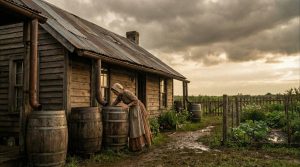
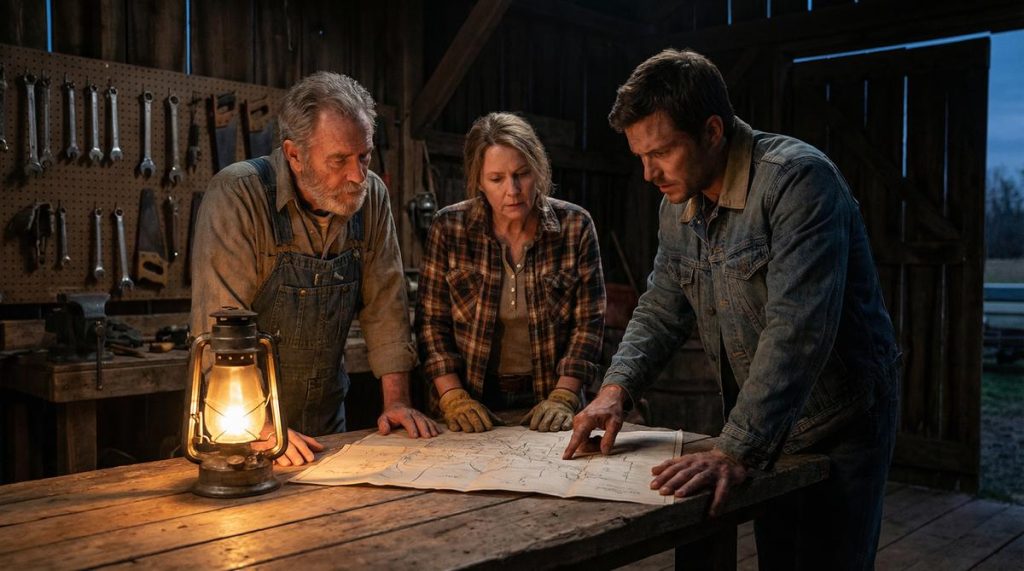
The political establishment believes that throwing another trillion dollars at the military will secure the empire, assuming technological superiority and massive armies can compensate for a hollowed-out domestic economy. But history tells a very different story about empires that overextend themselves while ignoring the rot within their own ranks. When the foundation of a society is built on fragile alliances and bought loyalty, it only takes one moment of pressure for the entire structure to collapse. For those of us focused on self-reliance, the lesson is clear: true security doesn’t come from massive budgets or distant authorities, but from the people immediately around you whom you can actually trust.
The Empire That Was Betrayed From Within
In the early 16th century, the Vijayanagara Empire was the undisputed master of southern India, boasting an army of over a million men and unimaginable wealth.
They believed their riches and advanced weaponry made them invincible.
But to maintain this massive military machine, the state squeezed its own citizens and relied on foreign mercenaries whose loyalty was bought, not earned.
During the decisive Battle of Talikota in 1565, two of Vijayanagara’s top generals — men paid handsomely by the state — suddenly switched sides and turned their weapons on their own emperor.
The command structure collapsed instantly.
In a matter of hours, the greatest empire in Asia was broken.
The victorious alliance plundered the capital for five months, reducing the “City of Victory” to rubble — never to recover.
The ordinary citizens who survived weren’t the ones relying on the emperor’s massive army.
They were the ones who had built quiet, hyper-local networks of mutual trust and shared resources long before the betrayal happened.
That is the lesson history keeps trying to teach us — and most people keep ignoring.
The empire’s generals were paid mercenaries. They had no skin in the game beyond their salary. The moment a better offer appeared, their loyalty evaporated.
But the farmers, the craftsmen, and the merchants who had spent years trading with their neighbors, sharing water rights, and building informal credit networks — those people had something no army could buy: genuine mutual dependence.
When the capital burned, those networks became the difference between survival and starvation.
The One Skill That Saved Them: The Mutual Assistance Group
The core survival skill from the fall of Vijayanagara isn’t about hoarding gold or building a personal fortress.
It’s about constructing a Mutual Assistance Group (MAG) — a small, vetted network of households based on earned trust rather than transactional convenience.
When institutional loyalty evaporates, your survival depends entirely on the three to five households in your immediate vicinity who share your values and complementary skills.
You cannot buy this kind of loyalty during a crisis.
It must be cultivated during times of relative peace — through shared labor, shared risk, and shared resources.
This is exactly what the survivors of Vijayanagara’s collapse did. They didn’t wait for the emperor to save them. They had already built their own networks before the battle was lost.
A MAG doesn’t need to be large. Research on community resilience consistently shows that small, tight-knit groups of five to twelve households outperform larger, loosely organized communities during disruptions. The reason is simple: trust scales inversely with group size.
The more people you add, the more you dilute the accountability that makes the group function.
Three households who know each other’s children, share tools, and have worked through a real problem together are worth more than thirty households who met once at a neighborhood meeting and exchanged phone numbers.
How to Build Your MAG This Week
Materials you need: A notebook, a pen, and a willingness to have honest conversations with your neighbors.
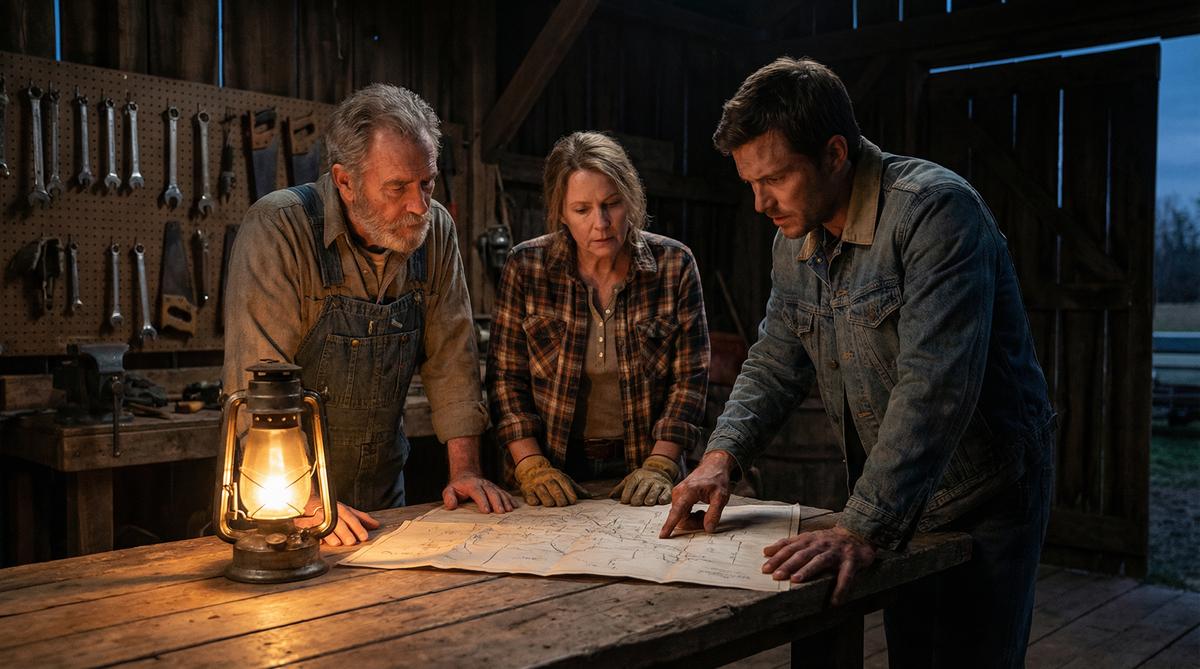
Step 1: Identify Your Core Circle
Start by identifying just two or three households within walking distance.
Look for people who already demonstrate self-reliance in small ways — perhaps they garden, hunt, repair their own vehicles, or preserve food.
These are your people. Not the ones who talk about prepping. The ones who already do it quietly.
Step 2: Initiate the “Low-Stakes” Ask
Do not approach them with a grand plan for the apocalypse.
Instead, initiate a low-stakes exchange of value. Offer them excess produce from your garden. Ask to borrow a specific tool you know they have.
Watch how they respond. Generosity under zero pressure is the most reliable predictor of generosity under extreme pressure.
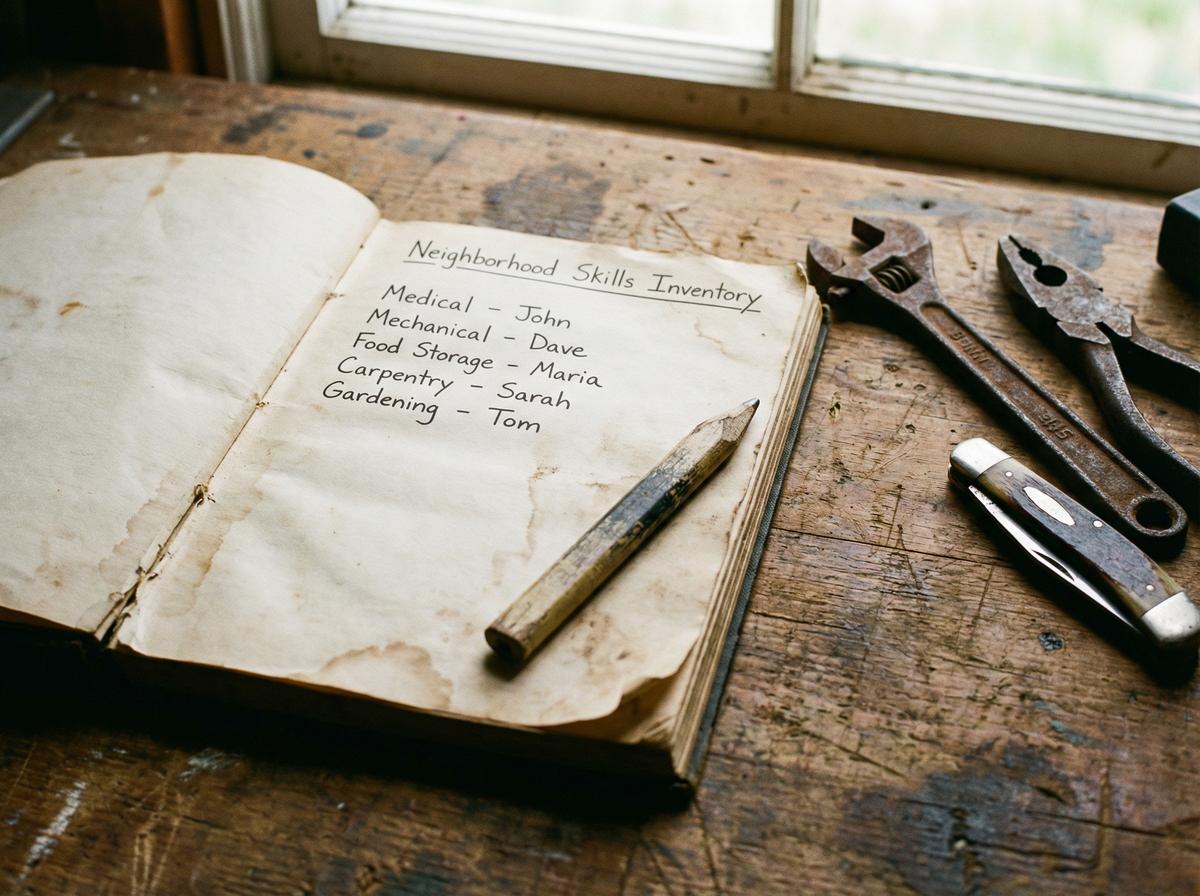
Step 3: Assess Skill Overlap and Gaps
Once a baseline of neighborly trust is established, casually assess their skill sets.
If you are strong in medical training but weak in mechanical repair, look for someone who balances that equation.
The goal is a group where every critical survival function — food, water, medical, security, communication — is covered by at least one person.
Step 4: Execute a Joint Project
The true test of a MAG is shared labor.
Propose a weekend project that benefits both households: felling a dead tree for firewood, repairing a shared fence, or bulk-ordering and splitting a delivery of staple grains.
Shared work reveals character faster than any conversation ever will.
Step 5: Establish Offline Communication
Once the group is solidified, establish a method of communication that does not rely on the grid.
This could be as simple as a designated daily check-in time using handheld GMRS radios, or a physical dead-drop location for written messages.
The goal isn’t to build a militia. The goal is to build a neighborhood that functions when the grid doesn’t.
One final note on vetting: pay attention to how people behave during low-stakes inconveniences.
Do they return borrowed tools in the same condition they received them? Do they follow through on small commitments? Do they complain constantly about circumstances outside their control, or do they adapt and solve problems?
Character under minor pressure is the best available predictor of character under catastrophic pressure.
The Vijayanagara generals were paid well and promoted quickly. But nobody had ever tested their loyalty under real adversity before the empire needed them most.
Don’t make that mistake with the people you’re counting on to protect your family.
The Longer Game: Building Total Household Independence
Building a Mutual Assistance Group is just the foundation of true independence. Once your local network is secure, you must begin decoupling from the fragile systems that failed the citizens of Vijayanagara.
First, secure your physical health outside the medical-industrial complex.
The strategies taught at Seven Holistics and the daily protocols from Freedom Health Daily are essential for maintaining your family’s well-being when pharmacies run dry. For urgent medical intelligence, stay plugged into Freedom Health Alerts.
Second, your MAG needs a sustainable food source that cannot be disrupted by supply chain failures.
The 4 Foot Farm Blueprint provides the exact framework for high-yield, low-space food production that every MAG member should have running within the year. Homesteader Depot offers the physical tools necessary to make it happen.
Third, protect your assets and your situational awareness.
The geopolitical analysis at American Downfall will help you see the betrayal coming before it hits the mainstream news. Combine this with the tactical defense strategies from Survival Stronghold and the daily situational awareness of Ready Report.
For those looking to protect their wealth from the inevitable currency collapse, the financial frameworks at The Pattern Ledgers are non-negotiable reading.
The Vijayanagara Empire had every advantage — wealth, technology, manpower — and it was destroyed in an afternoon because the people at the top had bought loyalty instead of earning it.
Don’t make the same mistake at the household level.
Build your MAG now, while the grid is still on. Because when the betrayal comes — and history says it always does — the only thing standing between your family and chaos will be the people who chose to stand with you before they had to.
Read more about building your local resilience right here on the Self Reliance Report.